
G31 Transaxles and 016/083 Transaxles
And O1E SupplimentBy Pete Tinucci
The information contained in this paper was compiled from the Porsche PET, Porsche factory manuals, disassembly and direct comparison of parts, bearing manufacture specs., discussions with transaxle specialists, and discussions with enthusiasts about modifications that they have performed.
<DIR><DIR><DIR><DIR>G31 Type Verses 016/083 Type Transaxles
</DIR></DIR></DIR></DIR>G31
These transaxles were used in the 924 series cars from 1978 to 1980 (82 for the Carrera GT series). These are commonly called "snail-shell" because of their shape. These transaxles were identical in design and had few internal differences. They were available in multiple designations: G31/01, G31/02, G31/03, 016Y, 016Z, and a special modified unit for the group D/GTS/GTR racecars.
There are four basic versions: 924 n/a, 924 turbo, European 924 turbo, and 924 Carrera GT. The basic differences are: the 924 n/a transaxle has a 20mm input shaft (016 Y & 016Z), the US 924 turbo (G31/02) has a 25mm input shaft, the European 924 turbo (G31/01) has a 25mm input shaft and a different 5<SUP>th gear and ring & pinion ratio, and the 924 Carrera GT (G31/03) is the same as the European 924 turbo except it has hardened gears.
These all could be had with 40% locking differentials. The G31/03 version had multiple variations. The Carrera GT and GTS was identical to the G31/01 but had hardened gears. The Group D and GTR versions also had an oil pump and cooler added and a choice of many gear sets, both 1-5 and ring & pinions. This transaxle also had different castings that had the provisions for the oil pump and oil injector ports. The Group D version also had a whole set of DP modified gears and shafts. This version used both the 20mm input shaft or the 25mm input shaft.
These transaxles share many parts from the 915 transaxle. Directly swappable components are 3-5th gear sets, some bearings, synchronizer rings, differential. Other parts can be swapped with minor changes. The 915 ring & pinions cannot be used because it is cut for the opposite rotation, so you would have 5 speeds in reverse and one speed forward. The ring gear cannot be flipped because the case shape does not have enough material for clearance. You would grind through the case before the gear would fit.
Dog teeth from the 930 first gear have been modified to fit first and second gear. I haven’t seen or obtained one yet but I suspect that since the 930 uses an internal snap ring and is taller, an external snap ring grove must be machined and the overall height need to be reduced slightly. More on this to come.This transaxle is considered to be the strongest 924/944 transaxle available. Based on the similarities with the 915, it should have at least the same torque capacity as the late 915 transaxles. It also has the most available ratios. Factory ring & pinions are 7:35 (5.00), 7:33 (4.7143) and 8:33 (4.1250.) There were two additional ratios available for racing: 3:66 (9:33) and 3:44 (9:31).
It is interesting to note that the 915 input shaft is slightly smaller in diameter than the early 924 n/a. It used a 19mm (3/4") 20 spline, the early 924 n/a used a 20mm (13/16") 24 spline. The 924 turbo and 944 used a 25mm (1") 23. It is possible that these transaxles have more torque capacity than a 915. The first rear engine transaxles to use a 25mm (1") 23 was the 930 transaxle, then the G50. The 915 has been rated by Renegade Hybrids to handle 450 HP and Rod Simpson Hybrids rates it at 450 Lbs. Ft. of torque so the same should be true of the snail-shell transaxles.
</SUP><TABLE cellSpacing=1 cellPadding=2 width=668 border=1><TBODY><TR><TD width="65%" colSpan=4 height=30><SUP>G31 Standard Ratios</SUP>
</TD><TD width="9%" height=30>
</TD><TD width="9%" height=30>
</TD><TD width="9%" height=30>
</TD><TD width="9%" height=30>
</TD></TR><TR><TD width="39%" height=17>
</TD><TD width="9%" height=17>
</TD><TD width="9%" height=17>
</TD><TD width="9%" height=17>
</TD><TD width="9%" height=17>
</TD><TD width="9%" height=17>
</TD><TD width="9%" height=17>
</TD><TD width="9%" height=17>
</TD></TR><TR><TD width="39%" height=23><SUP>type</SUP>
</TD><TD width="9%" height=23><SUP>1st</SUP>
</TD><TD width="9%" height=23><SUP>2nd</SUP>
</TD><TD width="9%" height=23><SUP>3rd</SUP>
</TD><TD width="9%" height=23><SUP>4th</SUP>
</TD><TD width="9%" height=23><SUP>5th</SUP>
</TD><TD width="9%" height=23><SUP>final</SUP>
</TD><TD width="9%" height=23><SUP>rev.</SUP>
</TD></TR><TR><TD width="39%" height=8>
</TD><TD width="9%" height=8>
</TD><TD width="9%" height=8>
</TD><TD width="9%" height=8>
</TD><TD width="9%" height=8>
</TD><TD width="9%" height=8>
</TD><TD width="9%" height=8>
</TD><TD width="9%" height=8>
</TD></TR><TR><TD width="39%" height=21><SUP>016Z euro</SUP>
</TD><TD width="9%" height=21><SUP>2.7857
</SUP>
</TD><TD width="9%" height=21><SUP>1.7222
</SUP>
</TD><TD width="9%" height=21><SUP>1.2174
</SUP>
</TD><TD width="9%" height=21><SUP>0.9310
</SUP>
</TD><TD width="9%" height=21><SUP>0.7059
</SUP>
</TD><TD width="9%" height=21><SUP>4.7143
</SUP>
</TD><TD width="9%" height=21><SUP>2.5034
</SUP>
</TD></TR><TR><TD vAlign=bottom width="39%" height=17><SUP>overall ratio</SUP>
</TD><TD width="9%" height=17><SUP>13.1326
</SUP>
</TD><TD width="9%" height=17><SUP>8.1190
</SUP>
</TD><TD width="9%" height=17><SUP>5.7392
</SUP>
</TD><TD width="9%" height=17><SUP>4.3890
</SUP>
</TD><TD width="9%" height=17><SUP>3.3278
</SUP>
</TD><TD width="9%" height=17><SUP></SUP>
</TD><TD width="9%" height=17><SUP>11.8018
</SUP>
</TD></TR><TR><TD width="39%" height=17><SUP>tooth count</SUP>
</TD><TD width="9%" height=17><SUP>14/39
</SUP>
</TD><TD width="9%" height=17><SUP>18/31
</SUP>
</TD><TD width="9%" height=17><SUP>25/28
</SUP>
</TD><TD width="9%" height=17><SUP>29/27
</SUP>
</TD><TD width="9%" height=17><SUP>34/24
</SUP>
</TD><TD width="9%" height=17><SUP>7/33
</SUP>
</TD><TD width="9%" height=17>
</TD></TR><TR><TD width="39%" height=8>
</TD><TD width="9%" height=8>
</TD><TD width="9%" height=8>
</TD><TD width="9%" height=8>
</TD><TD width="9%" height=8>
</TD><TD width="9%" height=8>
</TD><TD width="9%" height=8>
</TD><TD width="9%" height=8>
</TD></TR><TR><TD width="39%" height=40><SUP>016Y US, Can, Jap</SUP>
</TD><TD width="9%" height=40><SUP>2.7857
</SUP>
</TD><TD width="9%" height=40><SUP>1.6842
</SUP>
</TD><TD width="9%" height=40><SUP>1.1111
</SUP>
</TD><TD width="9%" height=40><SUP>0.8064
</SUP>
</TD><TD width="9%" height=40><SUP>0.6000
</SUP>
</TD><TD width="9%" height=40><SUP>5.0000
</SUP>
</TD><TD width="9%" height=40><SUP>2.5034
</SUP>
</TD></TR><TR><TD vAlign=bottom width="39%" height=17><SUP>overall ratio</SUP>
</TD><TD width="9%" height=17><SUP>13.9285
</SUP>
</TD><TD width="9%" height=17><SUP>8.4210
</SUP>
</TD><TD width="9%" height=17><SUP>5.5555
</SUP>
</TD><TD width="9%" height=17><SUP>4.0320
</SUP>
</TD><TD width="9%" height=17><SUP>3.0000
</SUP>
</TD><TD width="9%" height=17><SUP></SUP>
</TD><TD width="9%" height=17><SUP>12.5170
</SUP>
</TD></TR><TR><TD width="39%" height=17><SUP>tooth count</SUP>
</TD><TD width="9%" height=17><SUP>14/39
</SUP>
</TD><TD width="9%" height=17><SUP>19/32
</SUP>
</TD><TD width="9%" height=17><SUP>27/30
</SUP>
</TD><TD width="9%" height=17><SUP>31/25
</SUP>
</TD><TD width="9%" height=17><SUP>35/21
</SUP>
</TD><TD width="9%" height=17><SUP>7/35
</SUP>
</TD><TD width="9%" height=17>
</TD></TR><TR><TD width="39%" height=8>
</TD><TD width="9%" height=8>
</TD><TD width="9%" height=8>
</TD><TD width="9%" height=8>
</TD><TD width="9%" height=8>
</TD><TD width="9%" height=8>
</TD><TD width="9%" height=8>
</TD><TD width="9%" height=8>
</TD></TR><TR><TD width="39%" height=40><SUP>G31/01 Euro 924t</SUP>
</TD><TD width="9%" height=40><SUP>3.1666
</SUP>
</TD><TD width="9%" height=40><SUP>1.7777
</SUP>
</TD><TD width="9%" height=40><SUP>1.2174
</SUP>
</TD><TD width="9%" height=40><SUP>0.9310
</SUP>
</TD><TD width="9%" height=40><SUP>0.7059
</SUP>
</TD><TD width="9%" height=40><SUP>4.1250
</SUP>
</TD><TD width="9%" height=40><SUP>2.9091
</SUP>
</TD></TR><TR><TD vAlign=bottom width="39%" height=17><SUP>overall ratio</SUP>
</TD><TD width="9%" height=17><SUP>13.0622
</SUP>
</TD><TD width="9%" height=17><SUP>7.3330
</SUP>
</TD><TD width="9%" height=17><SUP>5.0218
</SUP>
</TD><TD width="9%" height=17><SUP>3.8404
</SUP>
</TD><TD width="9%" height=17><SUP>2.9118
</SUP>
</TD><TD width="9%" height=17><SUP></SUP>
</TD><TD width="9%" height=17><SUP>12.0000
</SUP>
</TD></TR><TR><TD width="39%" height=17><SUP>tooth count</SUP>
</TD><TD width="9%" height=17><SUP>12/38
</SUP>
</TD><TD width="9%" height=17><SUP>18/32
</SUP>
</TD><TD width="9%" height=17><SUP>23/28
</SUP>
</TD><TD width="9%" height=17><SUP>29/27
</SUP>
</TD><TD width="9%" height=17><SUP>34/24
</SUP>
</TD><TD width="9%" height=17><SUP>8/33
</SUP>
</TD><TD width="9%" height=17>
</TD></TR><TR><TD width="39%" height=8>
</TD><TD width="9%" height=8>
</TD><TD width="9%" height=8>
</TD><TD width="9%" height=8>
</TD><TD width="9%" height=8>
</TD><TD width="9%" height=8>
</TD><TD width="9%" height=8>
</TD><TD width="9%" height=8>
</TD></TR><TR><TD width="39%" height=40><SUP>G31/02 US, Can 924t</SUP>
</TD><TD width="9%" height=40><SUP>3.1666
</SUP>
</TD><TD width="9%" height=40><SUP>1.7777
</SUP>
</TD><TD width="9%" height=40><SUP>1.2174
</SUP>
</TD><TD width="9%" height=40><SUP>0.9310
</SUP>
</TD><TD width="9%" height=40><SUP>0.6000
</SUP>
</TD><TD width="9%" height=40><SUP>4.7143
</SUP>
</TD><TD width="9%" height=40><SUP>2.9091
</SUP>
</TD></TR><TR><TD vAlign=bottom width="39%" height=17><SUP>overall ratio</SUP>
</TD><TD width="9%" height=17><SUP>14.9283
</SUP>
</TD><TD width="9%" height=17><SUP>8.3806
</SUP>
</TD><TD width="9%" height=17><SUP>5.7392
</SUP>
</TD><TD width="9%" height=17><SUP>4.3890
</SUP>
</TD><TD width="9%" height=17><SUP>2.8286
</SUP>
</TD><TD width="9%" height=17><SUP></SUP>
</TD><TD width="9%" height=17><SUP>13.7144
</SUP>
</TD></TR><TR><TD width="39%" height=17><SUP>tooth count</SUP>
</TD><TD width="9%" height=17><SUP>12/38
</SUP>
</TD><TD width="9%" height=17><SUP>18/32
</SUP>
</TD><TD width="9%" height=17><SUP>23/28
</SUP>
</TD><TD width="9%" height=17><SUP>29/27
</SUP>
</TD><TD width="9%" height=17><SUP>35/21
</SUP>
</TD><TD width="9%" height=17><SUP>7/33
</SUP>
</TD><TD width="9%" height=17>
</TD></TR><TR><TD width="39%" height=9>
</TD><TD width="9%" height=9>
</TD><TD width="9%" height=9>
</TD><TD width="9%" height=9>
</TD><TD width="9%" height=9>
</TD><TD width="9%" height=9>
</TD><TD width="9%" height=9>
</TD><TD width="9%" height=9>
</TD></TR><TR><TD width="39%" height=81><SUP>G31/03 Carrera GT hardened gears</SUP>
</TD><TD width="9%" height=81><SUP>3.1666
</SUP>
</TD><TD width="9%" height=81><SUP>1.7777
</SUP>
</TD><TD width="9%" height=81><SUP>1.2174
</SUP>
</TD><TD width="9%" height=81><SUP>0.9310
</SUP>
</TD><TD width="9%" height=81><SUP>0.7059
</SUP>
</TD><TD width="9%" height=81><SUP>4.1250
</SUP>
</TD><TD width="9%" height=81><SUP>2.9091
</SUP>
</TD></TR><TR><TD vAlign=bottom width="39%" height=17><SUP>overall ratio</SUP>
</TD><TD width="9%" height=17><SUP>13.0622
</SUP>
</TD><TD width="9%" height=17><SUP>7.3330
</SUP>
</TD><TD width="9%" height=17><SUP>5.0218
</SUP>
</TD><TD width="9%" height=17><SUP>3.8404
</SUP>
</TD><TD width="9%" height=17><SUP>2.9118
</SUP>
</TD><TD width="9%" height=17><SUP></SUP>
</TD><TD width="9%" height=17><SUP>12.0000
</SUP>
</TD></TR><TR><TD width="39%" height=17><SUP>tooth count</SUP>
</TD><TD width="9%" height=17><SUP>12/38
</SUP>
</TD><TD width="9%" height=17><SUP>18/32
</SUP>
</TD><TD width="9%" height=17><SUP>23/28
</SUP>
</TD><TD width="9%" height=17><SUP>29/27
</SUP>
</TD><TD vAlign=bottom width="9%" height=17><SUP>35/21
</SUP>
</TD><TD vAlign=bottom width="9%" height=17><SUP>8/33
</SUP>
</TD><TD vAlign=bottom width="9%" height=17>
</TD></TR></TBODY></TABLE><SUP>AUDI 016/083 Based Transaxles
924, 944, 944S, 944S2, 944 turbo, 944 turboS
These were available in multiple configurations. These can be broken into 4 groups. 924 4 spd, (actually an 088); 924 5 spd (early); 924 turbo 5 spd (81-82)/944 (016); and 944S/S2 / 944 turbo. (early = 76-82 US & 76-84 R.O.W.)
There are two groups as far as strength. The strongest is the 944S/S2/turbo (083). All of the others are essentially the same. These are identified as follows:
<DIR><DIR>924 n/a early 016 ---codes ME; MF; VQ; VR; UV; MD
924 turbo 016 ---codes MB; MX
944 016J; 016K---codes QM; 8Q; 5Y; 5Z; 5S; 7V; ASG; ASH
</DIR></DIR>944S/S2 083D; 083F---codes AGP; AGR; AOS; AOT; ASV; ASW
<DIR><DIR>944 turbo 083 ; 083 ---codes AOR; 5R; 5P; UY; 9U; ASG; ASH; AOQ
(ASG; A0Q; 5R; 5P have oil cooler)
924 n/a early has 9:37 R & P (4.11)
924 t has 9:35 R & P (3.88)
944 has 9:35 R & P (3:88)
944S/S2 has 8:31 R & P (3.875)
944t has 8:27 R & P (3.375)
</DIR></DIR>The model 083 transaxles differ from the 016 transaxles in a few key areas. First, the ring & pinions are stronger. There is added strength here because the front pinion bearing is larger, the ring gear is .3" larger in diameter and the gear pattern was redesigned. 3rd gear is .15" wider. This makes the cast iron case .15" longer along with the pinion shaft. The turbo version transaxles are available with or without coolers and all have the option of limited slip differentials.
The turbo S transaxles (AOQ AOR) have the input shaft, 1st gear and the ring & pinion shot peened for increased strength. Otherwise, they are identical to the other turbo transaxles. The S and S2 also have a different ring & pinion than the earlier transaxles. These have an 8:31 (3.875) vs 9:35 (3.88) and use the larger front bearing from the turbo. This ring & pinion is as strong as the turbo 8:27.
The 944, 924S and 924 transaxles are essentially the same with the exception of the early 924 n/a transaxles, which have a 20mm (13/16") input shaft. This smaller shaft does not appear to have much impact in the strength. It is interesting to note that all of the AUDI 016 transaxles also share this size (20mm). The Audi 016 is a very popular transaxle for GT40 and Lamborghini replicas and the input shafts have no history of breakage. This input shaft size is also slightly larger in diameter than the Porsche 915 transaxle. The 915 has a ¾" input shaft.
The parts that typically break on the Audi 016 when used in V8 powered replicars are in this order:
1. Pinion pushes through the rear pinion bearing seat on the iron
<DIR><DIR>casting—R & P failures in 944’s are related and are likely from worn pinion
bearings and not changing the oil.
(the pinions pushing through the rear casting is a function of dropped
clutch starts [catastrophic] and the common 944 failure is from long term
usage with worn [loose] bearings and no oil changes.
2. Axle shafts
3. Differential spider gears
</DIR></DIR>The GT40 and Lamborghini Replicars don’t see the ring & pinion failure that the 944’s have. The talk is that this is caused by lack of maintenance (routinely changing oil) and worn pinion bearings. They only see the catastrophic failures.
The only differences that I can find between the Audi 016 transaxle and the early 944 transaxle are the input end of the mainshaft is smaller in diameter (20mm vs 25mm on the 944) and machined for a pilot bearing, the ring & pinion ratio along with some casting differences allowing bosses for a slave cylinder, fork pivot ball and t/o bearing guide sleeve.
The GT40 and Lamborghini Replicars also use high HP engines and the 016 holds up. A strengthening plate was designed to give added support to the rear pinion bearing which solved the casting breakage. The next area of breakage is axle shafts. When these are strengthened, the spider gears in the differential break. This, however is fixed by using a LSD. (4 spider gears instead of two)
The 944 turbo ring & pinion has been retrofitted into the Audi 016 (should be possible in the early 944 too). Since the pinion shaft is .15" longer, a spacer must be made to go between the front case and the cast iron case. Also, 4th gear has a shoulder of approximately .15" wide. You can turn it around to keep it lined up with the matching gear. Some shimming is necessary for 3rd gear. The shift shafts also need to be lengthened by .15". The front pinion bearing hole in the case needs to be machined larger .3.497±.001. Then the case needs to be relieved around the ring gear since it is .3" larger in diameter. This will strengthen the 944 transaxle by the addition of the stronger ring & pinion along with the larger front pinion bearing. The 944S/S2 cases already use the larger bearing and have been machined in the ring gear area. The turbo ring & pinion can just be a swapped into these.
</SUP><TABLE cellSpacing=1 cellPadding=0 width=667 border=1><TBODY><TR><TD width="55%" colSpan=4 height=31><SUP>016/083 Standard Ratios</SUP>
</TD><TD width="11%" height=31>
</TD><TD width="11%" height=31>
</TD><TD width="11%" height=31>
</TD><TD width="11%" height=31>
</TD></TR><TR><TD width="18%" height=21><SUP>type</SUP>
</TD><TD width="13%" height=21><SUP>1st</SUP>
</TD><TD width="12%" height=21><SUP>2nd</SUP>
</TD><TD width="12%" height=21><SUP>3rd</SUP>
</TD><TD width="11%" height=21><SUP>4th</SUP>
</TD><TD width="11%" height=21><SUP>5th</SUP>
</TD><TD width="11%" height=21><SUP>final</SUP>
</TD><TD width="11%" height=21><SUP>rev.</SUP>
</TD></TR><TR><TD width="18%" height=8>
</TD><TD width="13%" height=8>
</TD><TD width="12%" height=8>
</TD><TD width="12%" height=8>
</TD><TD width="11%" height=8>
</TD><TD width="11%" height=8>
</TD><TD width="11%" height=8>
</TD><TD width="11%" height=8>
</TD></TR><TR><TD width="18%" height=42><SUP>088/6 76-77 924</SUP>
</TD><TD width="13%" height=42><SUP>3.6000
</SUP>
</TD><TD width="12%" height=42><SUP>2.1250
</SUP>
</TD><TD width="12%" height=42><SUP>1.3600
</SUP>
</TD><TD width="11%" height=42><SUP>0.9660
</SUP>
</TD><TD width="11%" height=42><SUP>n/a</SUP>
</TD><TD width="11%" height=42><SUP>3.4444
</SUP>
</TD><TD width="11%" height=42><SUP>3.5000
</SUP>
</TD></TR><TR><TD vAlign=bottom width="18%" height=17><SUP>overall ratio</SUP>
</TD><TD width="13%" height=17><SUP>12.3998
</SUP>
</TD><TD width="12%" height=17><SUP>7.3194
</SUP>
</TD><TD width="12%" height=17><SUP>4.6844
</SUP>
</TD><TD width="11%" height=17><SUP>3.3273
</SUP>
</TD><TD width="11%" height=17><SUP>n/a</SUP>
</TD><TD width="11%" height=17>
</TD><TD width="11%" height=17><SUP>12.0554
</SUP>
</TD></TR><TR><TD width="18%" height=17><SUP>tooth count</SUP>
</TD><TD width="13%" height=17><SUP>10/36
</SUP>
</TD><TD width="12%" height=17><SUP>16/34
</SUP>
</TD><TD width="12%" height=17><SUP>25/34
</SUP>
</TD><TD width="11%" height=17><SUP>30/29
</SUP>
</TD><TD width="11%" height=17><SUP></SUP>
</TD><TD width="11%" height=17><SUP>9/31
</SUP>
</TD><TD width="11%" height=17><SUP></SUP>
</TD></TR><TR><TD width="18%" height=8>
</TD><TD width="13%" height=8>
</TD><TD width="12%" height=8>
</TD><TD width="12%" height=8>
</TD><TD width="11%" height=8>
</TD><TD width="11%" height=8>
</TD><TD width="11%" height=8>
</TD><TD width="11%" height=8>
</TD></TR><TR><TD width="18%" height=42><SUP>088/A 76-77 924</SUP>
</TD><TD width="13%" height=42><SUP>3.6000
</SUP>
</TD><TD width="12%" height=42><SUP>2.1250
</SUP>
</TD><TD width="12%" height=42><SUP>1.3600
</SUP>
</TD><TD width="11%" height=42><SUP>0.9660
</SUP>
</TD><TD width="11%" height=42><SUP>n/a</SUP>
</TD><TD width="11%" height=42><SUP>3.8889
</SUP>
</TD><TD width="11%" height=42><SUP>3.5000
</SUP>
</TD></TR><TR><TD vAlign=bottom width="18%" height=17><SUP>overall ratio</SUP>
</TD><TD width="13%" height=17><SUP>14.0000
</SUP>
</TD><TD width="12%" height=17><SUP>8.2639
</SUP>
</TD><TD width="12%" height=17><SUP>5.2889
</SUP>
</TD><TD width="11%" height=17><SUP>3.7567
</SUP>
</TD><TD width="11%" height=17><SUP>n/a</SUP>
</TD><TD width="11%" height=17>
</TD><TD width="11%" height=17><SUP>13.6112
</SUP>
</TD></TR><TR><TD width="18%" height=17><SUP>tooth count</SUP>
</TD><TD width="13%" height=17><SUP>10/36
</SUP>
</TD><TD width="12%" height=17><SUP>16/34
</SUP>
</TD><TD width="12%" height=17><SUP>25/34
</SUP>
</TD><TD width="11%" height=17><SUP>30/29
</SUP>
</TD><TD width="11%" height=17><SUP></SUP>
</TD><TD width="11%" height=17><SUP>9/35
</SUP>
</TD><TD width="11%" height=17><SUP></SUP>
</TD></TR><TR><TD width="18%" height=8>
</TD><TD width="13%" height=8>
</TD><TD width="12%" height=8>
</TD><TD width="12%" height=8>
</TD><TD width="11%" height=8>
</TD><TD width="11%" height=8>
</TD><TD width="11%" height=8>
</TD><TD width="11%" height=8>
</TD></TR><TR><TD width="18%" height=42><SUP>016/9 US 924 80-82</SUP>
</TD><TD width="13%" height=42><SUP>3.6000
</SUP>
</TD><TD width="12%" height=42><SUP>2.1250
</SUP>
</TD><TD width="12%" height=42><SUP>1.3600
</SUP>
</TD><TD width="11%" height=42><SUP>0.9660
</SUP>
</TD><TD width="11%" height=42><SUP>0.7290
</SUP>
</TD><TD width="11%" height=42><SUP>4.1111
</SUP>
</TD><TD width="11%" height=42><SUP>3.5000
</SUP>
</TD></TR><TR><TD vAlign=bottom width="18%" height=17><SUP>overall ratio</SUP>
</TD><TD width="13%" height=17><SUP>14.8000
</SUP>
</TD><TD width="12%" height=17><SUP>8.7361
</SUP>
</TD><TD width="12%" height=17><SUP>5.5911
</SUP>
</TD><TD width="11%" height=17><SUP>3.9713
</SUP>
</TD><TD width="11%" height=17><SUP>2.9970
</SUP>
</TD><TD width="11%" height=17><SUP></SUP>
</TD><TD width="11%" height=17><SUP>14.3889
</SUP>
</TD></TR><TR><TD width="18%" height=17><SUP>tooth count</SUP>
</TD><TD width="13%" height=17><SUP>10/36
</SUP>
</TD><TD width="12%" height=17><SUP>16/34
</SUP>
</TD><TD width="12%" height=17><SUP>25/34
</SUP>
</TD><TD width="11%" height=17><SUP>30/29
</SUP>
</TD><TD width="11%" height=17><SUP>37/27
</SUP>
</TD><TD width="11%" height=17><SUP>9/37
</SUP>
</TD><TD width="11%" height=17><SUP></SUP>
</TD></TR><TR><TD width="18%" height=8>
</TD><TD width="13%" height=8>
</TD><TD width="12%" height=8>
</TD><TD width="12%" height=8>
</TD><TD width="11%" height=8>
</TD><TD width="11%" height=8>
</TD><TD width="11%" height=8>
</TD><TD width="11%" height=8>
</TD></TR><TR><TD width="18%" height=42><SUP>016K US 944 924t</SUP>
</TD><TD width="13%" height=42><SUP>3.6000
</SUP>
</TD><TD width="12%" height=42><SUP>2.1250
</SUP>
</TD><TD width="12%" height=42><SUP>1.4583
</SUP>
</TD><TD width="11%" height=42><SUP>1.0714
</SUP>
</TD><TD width="11%" height=42><SUP>0.7297
</SUP>
</TD><TD width="11%" height=42><SUP>3.8889
</SUP>
</TD><TD width="11%" height=42><SUP>3.5000
</SUP>
</TD></TR><TR><TD vAlign=bottom width="18%" height=17><SUP>overall ratio</SUP>
</TD><TD width="13%" height=17><SUP>14.0000
</SUP>
</TD><TD width="12%" height=17><SUP>8.2639
</SUP>
</TD><TD width="12%" height=17><SUP>5.6712
</SUP>
</TD><TD width="11%" height=17><SUP>4.1666
</SUP>
</TD><TD width="11%" height=17><SUP>2.8377
</SUP>
</TD><TD width="11%" height=17><SUP></SUP>
</TD><TD width="11%" height=17><SUP>13.6112
</SUP>
</TD></TR><TR><TD width="18%" height=17><SUP>tooth count</SUP>
</TD><TD width="13%" height=17><SUP>10/36
</SUP>
</TD><TD width="12%" height=17><SUP>16/34
</SUP>
</TD><TD width="12%" height=17><SUP>24/35
</SUP>
</TD><TD width="11%" height=17><SUP>28/30
</SUP>
</TD><TD width="11%" height=17><SUP>37/27
</SUP>
</TD><TD width="11%" height=17><SUP>9/35
</SUP>
</TD><TD width="11%" height=17><SUP></SUP>
</TD></TR><TR><TD width="18%" height=8>
</TD><TD width="13%" height=8>
</TD><TD width="12%" height=8>
</TD><TD width="12%" height=8>
</TD><TD width="11%" height=8>
</TD><TD width="11%" height=8>
</TD><TD width="11%" height=8>
</TD><TD width="11%" height=8>
</TD></TR><TR><TD width="18%" height=42><SUP>016R 944T</SUP>
</TD><TD width="13%" height=42><SUP>3.5000
</SUP>
</TD><TD width="12%" height=42><SUP>2.0590
</SUP>
</TD><TD width="12%" height=42><SUP>1.4000
</SUP>
</TD><TD width="11%" height=42><SUP>1.0340
</SUP>
</TD><TD width="11%" height=42><SUP>0.8290
</SUP>
</TD><TD width="11%" height=42><SUP>3.3750
</SUP>
</TD><TD width="11%" height=42><SUP>3.5000
</SUP>
</TD></TR><TR><TD vAlign=bottom width="18%" height=17><SUP>overall ratio</SUP>
</TD><TD width="13%" height=17><SUP>11.8125
</SUP>
</TD><TD width="12%" height=17><SUP>6.9491
</SUP>
</TD><TD width="12%" height=17><SUP>4.7250
</SUP>
</TD><TD width="11%" height=17><SUP>3.4898
</SUP>
</TD><TD width="11%" height=17><SUP>2.7979
</SUP>
</TD><TD width="11%" height=17>
</TD><TD width="11%" height=17><SUP>11.8125
</SUP>
</TD></TR><TR><TD width="18%" height=17><SUP>tooth count</SUP>
</TD><TD vAlign=bottom width="13%" height=17><SUP>10/35
</SUP>
</TD><TD vAlign=bottom width="12%" height=17><SUP>17/35
</SUP>
</TD><TD vAlign=bottom width="12%" height=17><SUP>25/35
</SUP>
</TD><TD vAlign=bottom width="11%" height=17><SUP>29/30
</SUP>
</TD><TD vAlign=bottom width="11%" height=17><SUP>35/29
</SUP>
</TD><TD vAlign=bottom width="11%" height=17><SUP>8/27
</SUP>
</TD><TD vAlign=bottom width="11%" height=17><SUP></SUP>
</TD></TR></TBODY></TABLE><SUP>
Comparison of the 016/083 and G31 Transaxles
Shift Pattern
There are many differences in these two transaxles. Some are significant and related to strength. The most obvious difference can be seen by just looking inside of the car. The 016/083 has a conventional shift pattern and the G31 has a racing shift pattern with first gear to the left and down with reverse above it. There are major differences in the mounting, the shift mechanism, weight distribution, synchronizers, differentials, ring & pinion gears, and bearings.
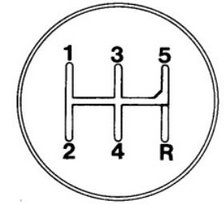
016 Pattern
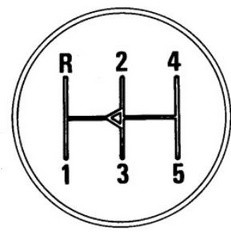
G31 Pattern
Transaxle Mounting
The 016 transaxle is mounted through insulators attached to a cross member on the body. The late cars have the crossmember mounted to the transaxle with an insulator and the crossmember is mounted to the body. The G31 is mounted to two beams extending from the trailing arm inner mounts. Instead of hanging from the mounts, it sits on the mounts.
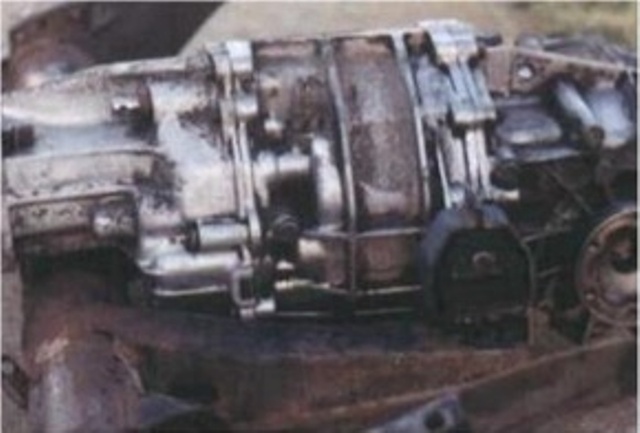
<DIR><DIR><DIR><DIR>G31 mounting
</DIR></DIR></DIR></DIR>Shift Linkage
The 016 shift lever has a ball on the bottom and this fits into a nylon socket mounted to the torque tube. The shift rod attaches to a pin on the lever and extends back to the transaxle. The G31 has a rod that has a socket that fits over a ball that is mounted on the rear of the torque tube. This attaches to a pin on the shift lever. The rod that attaches to the shift rod on the transaxle also attaches to a pin on the shift lever and also extends forward to a rubber insulated mount mounted to the tunnel. This was done to try to eliminate drivetrain vibration in the shifter.
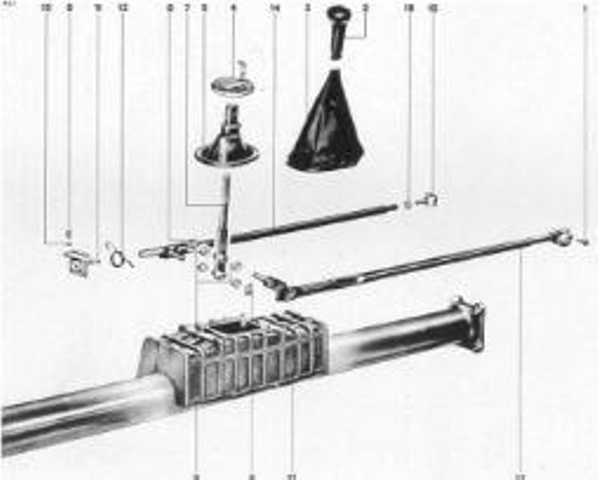
G31 Linkage
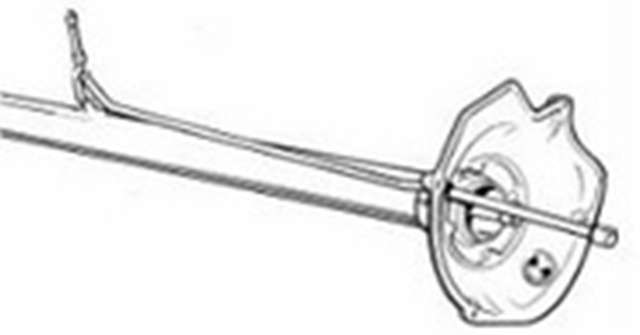
016 Linkage
Transaxle Configuration
The 016 has the transmission integrated behind the differential placing the weight behind the axle. The G31 has the transmission integrated in front of the differential which places the weight in front of the axle. The G31 is also lighter at 99 pounds VS 129 pounds for the 016. This does effects the weight distribution of the car slightly.
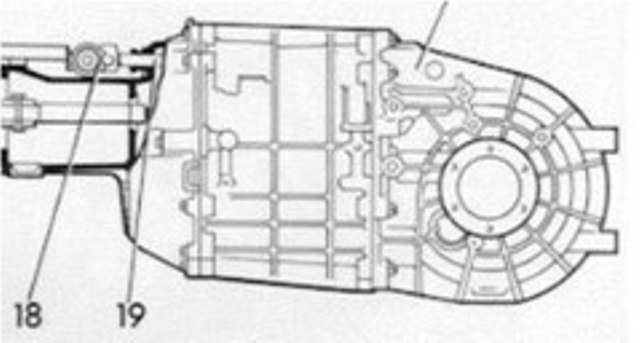
G31/016Y/016Z
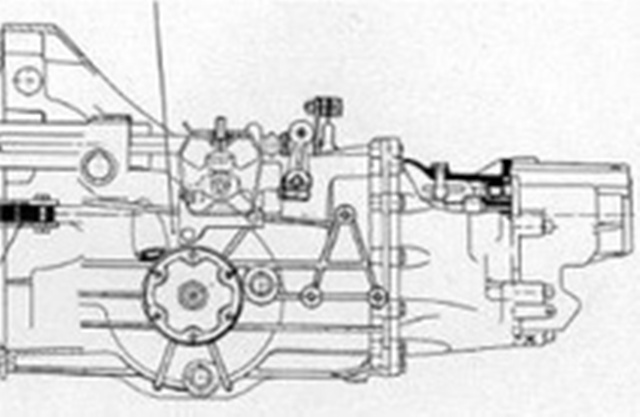
083--- 016 Similar
Gears
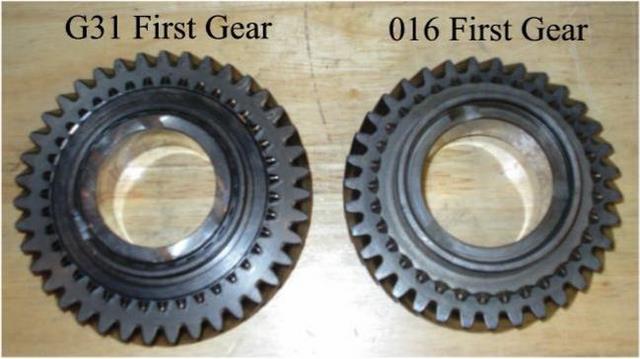
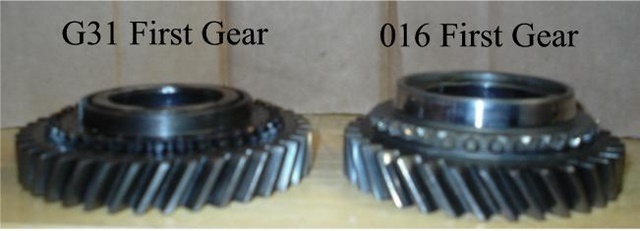
The gears between the G31 and the 016 are close to the same size as far as gear thickness and tooth design. The diameters and tooth counts differ. The G31 gears have much more finishing work performed. The teeth are all chamfered on the sides where the 016 gears do not. The G31 gears look as though they have had some kind of surface finishing performed too and the surfaces are all smooth and free from any sharp edges. The gears from the 016 do not have this extra finishing.
Synchronizers
The 016 uses the Borg Warner cone type synchronizers which work quick and positively. The G31 uses the Porsche balk ring type synchronizers, which makes shifting a little slower. Many people do not like the way these shift. Too much speed shifting also causes premature wear on the synchronizers, which contributes to their bad reputation.
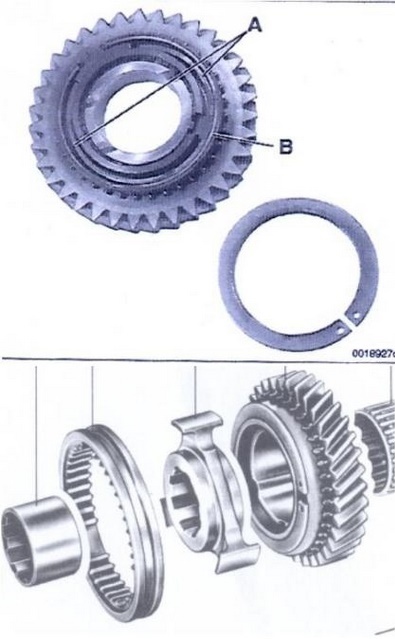
Balk Ring Type
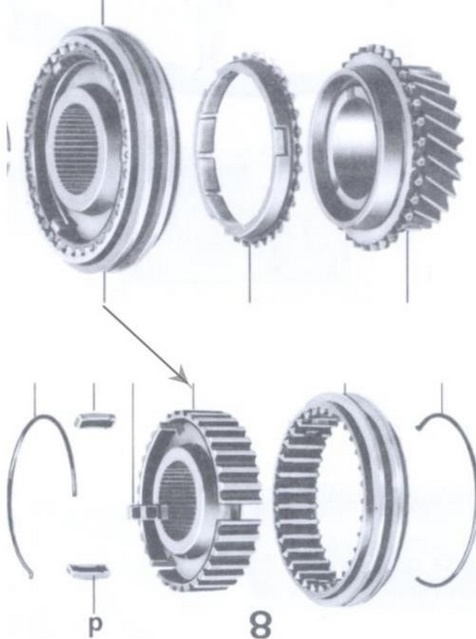
Cone Type
Mainshafts
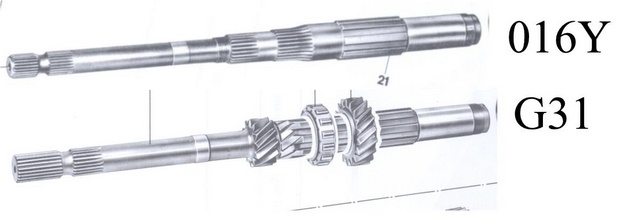
The mainshafts are very different. The 016Y/G31 is short without many diameter changes. This is a strong design. It also limits the amount of twist from one end to the other. The 016/083 has a long mainshaft with many diameter changes. It is about 1½ times as long as the 016Y/G31 which means that there will be about 1½ times the twist. The diameter changes also add high stress areas. However, there is no history of mainshaft breakage in either.
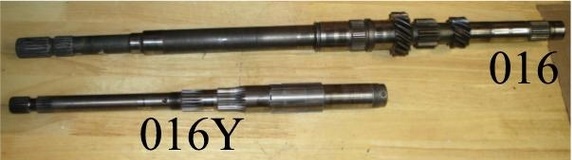
Unfortunately, I don’t have a G31 shaft available for pictures.
Here are some from the workshop manuals:
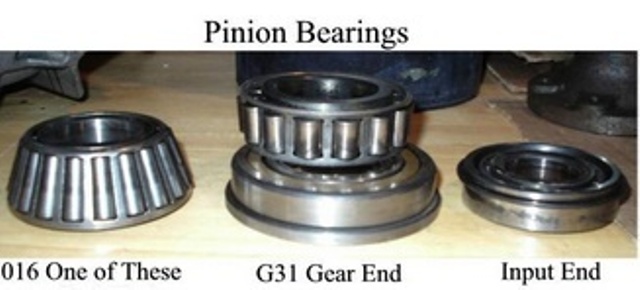
Mainshaft and Pinion Bearings
The G31 uses the same type of bearings as the 915 and 930 transaxles. The mainshaft has a cylinder roller bearing and a four point ball bearing at the differential end and a cylinder roller bearing on the input end. The pinion has the same types and placement, a cylinder roller bearing and a four point ball bearing at the differential end and a cylinder roller bearing on the input end. These bearings are all larger than the bearings used in the 016. The four point ball bearings bear the axial loading and the cylinder roller bearings bear the radial loading. This is a very robust and high load set up.
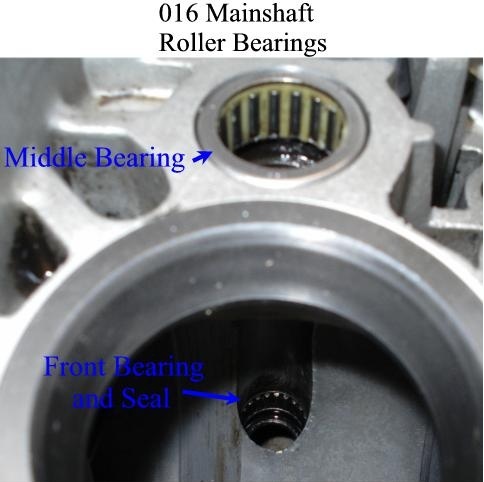
The 016/083 mainshaft uses a smaller four point ball bearing on the back end, a small cylinder roller bearing in the center housing and two needle roller bearings on the input end of the mainshaft. The bearings are all smaller than the G31 and the shaft is much longer. The pinion has a tapered roller bearing on each end. These take the axial and radial loads together. The proper preload is essential for long life and reliability. The problem with this is it only takes a slight amount of wear to loosen the preload to the point that it will affect the life of the ring and pinion.
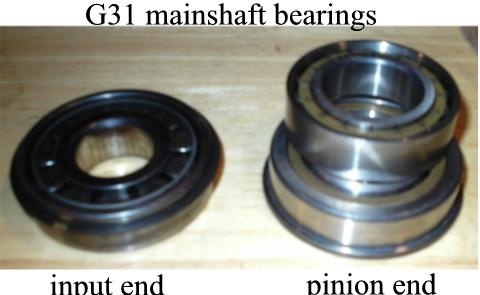
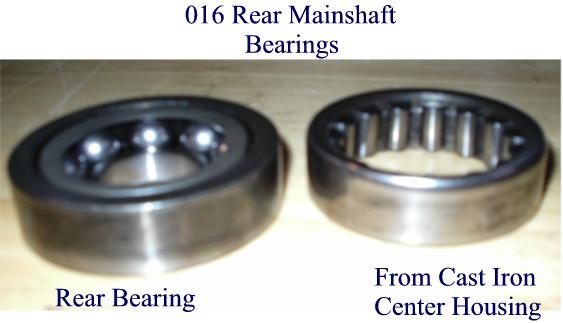
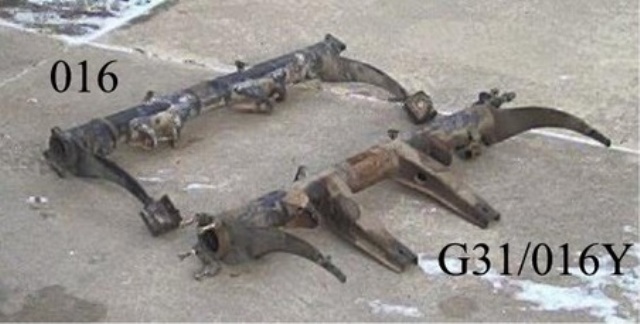
Shift Forks
These pictures are self-explanatory.
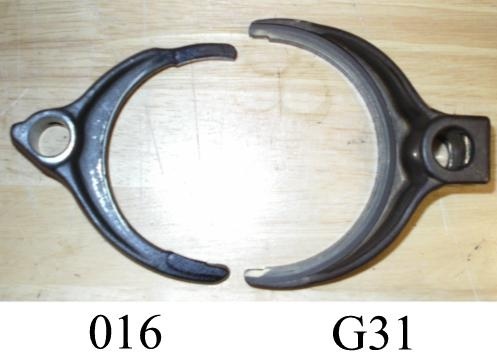
This also gives you an idea of the difference in size of the shifting sleeves.
Ring Gears and Attaching Bolts
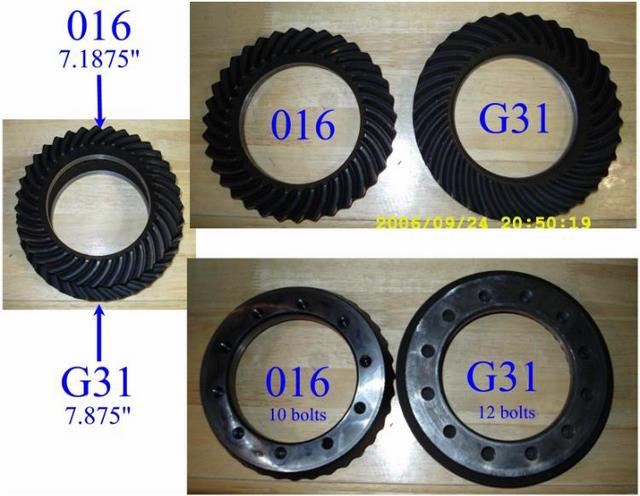
The ring gear is 7.875" in diameter on the G31. This is the same size as the 915 ring gear. The 016/083 ring gear is 7.1875" in diameter and the cross section is much smaller than the G31. The 944 turbo has a 7.4875" ring gear. The G31 ring gear is attached with twelve 12mm x 1.0 bolts. The 016/083 ring gear is held on with ten 8mm x 1.0 bolts.
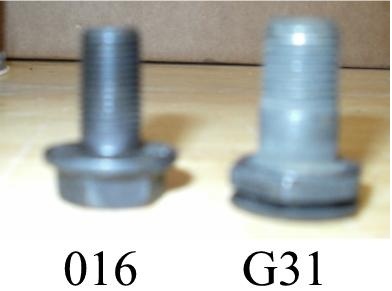
Differential Cases
The differential case for the G31 is considerably larger than the 016/083.
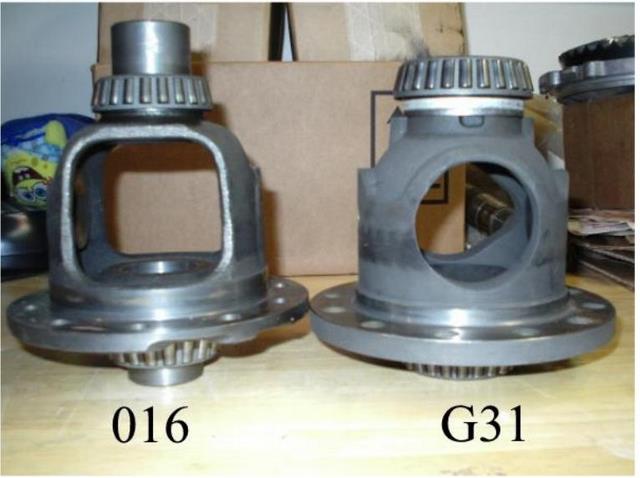
Notice the larger cross section in the center part of the G31 differential case. You can also see the larger side bearings and thicker ring gear flange. According to the SVF catalog, the G31 side bearings have almost twice the load capacity of the 016/083 bearings.
Side Gears and Spider Gears
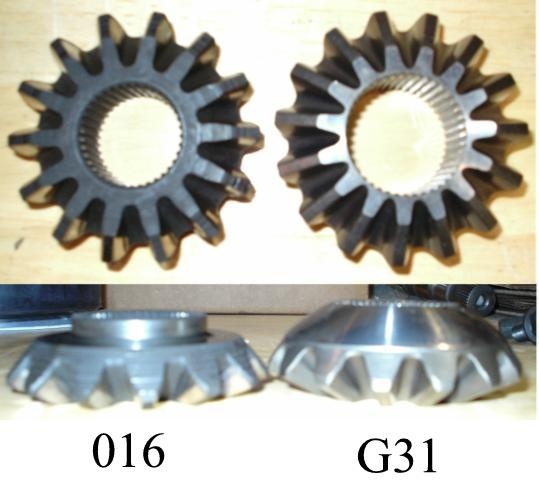
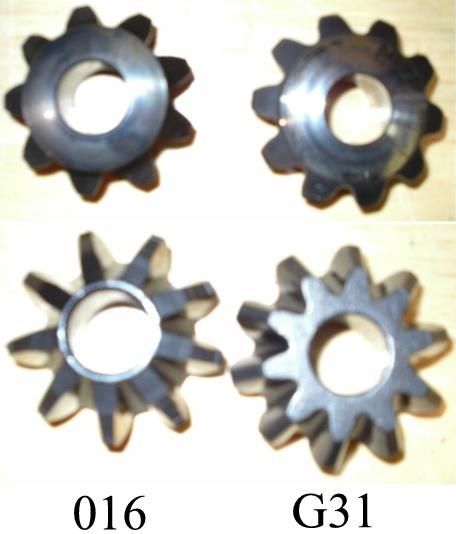
The G31 side gears and pinion gears are also beefier. The G31 side gears are thicker and the gear teeth have a slightly larger cross section.
<DIR><DIR><DIR><DIR><DIR><DIR>Side Gears
</DIR></DIR></DIR></DIR></DIR></DIR>
Spider Gears
Output Flanges
Although The G31 and 016/083 transaxles share the same CV joints, the output flanges are considerably beefier on the G31. The shaft diameter is larger and the flange has a thicker cross section along with thicker bosses for the CV bolt threads.
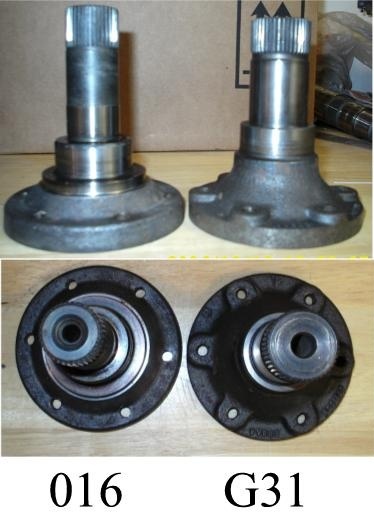
The G31 uses 10 x 1.25 bolts to attach these and the 016/083 uses 7 x 0.75 bolts.
Other G31 Options
<DIR><DIR>I am using the G31 in my V8 powered car because I believe it to be much stronger. However, based on my research, the 016/083 is not necessarily week. There are a
</DIR></DIR>few things that can be done to add significant strength to these. Unless you can’t keep from dropping the clutch, there may not be any reason to swap to the G31.
To change transaxles to the G31, you need the transaxle, the torque tube, the shift lever and two shafts, the front shaft mount insulator and either the correct suspension torsion tube or modifications to mount the transaxle. (either lengthening the inner swing arm mounts or fabricating brackets to use the 016/083 top mounts)
I am currently working on modifying my spare G31 case so I can make the necessary clearance for flipping the differential. If this works, I will be able to use a 915 8:31 (3.875) ring and pinion. This makes the G31 ratios much better for a V8 car. I am also considering using the 016Y input shaft so I can use the 2.7857:1 first gear ratio. This gives close to optimum ratios for the V8. (see below)
If this doesn’t work, there is the option of using the European 8:33 (4.125) ring and pinion in the 016Y. (see below) The only other option would be to try to locate a used racing gear set, either the 9:33 (3.66) or the 9:31 (3.44), but this would be difficult if not impossible.
</SUP><TABLE cellSpacing=1 cellPadding=0 width=668 border=1><TBODY><TR><TD vAlign=bottom width="53%" colSpan=4 height=33><SUP>Ratio Possibilities</SUP>
</TD><TD vAlign=bottom width="12%" height=33>
</TD><TD vAlign=bottom width="12%" height=33>
</TD><TD vAlign=bottom width="12%" height=33>
</TD><TD vAlign=bottom width="12%" height=33>
</TD></TR><TR><TD vAlign=bottom width="18%" height=24><SUP>Type</SUP>
</TD><TD vAlign=bottom width="12%" height=24><SUP>1st</SUP>
</TD><TD vAlign=bottom width="12%" height=24><SUP>2nd</SUP>
</TD><TD vAlign=bottom width="12%" height=24><SUP>3rd</SUP>
</TD><TD vAlign=bottom width="12%" height=24><SUP>4th</SUP>
</TD><TD vAlign=bottom width="12%" height=24><SUP>5th</SUP>
</TD><TD vAlign=bottom width="12%" height=24><SUP>final</SUP>
</TD><TD vAlign=bottom width="12%" height=24><SUP>rev.</SUP>
</TD></TR><TR><TD vAlign=bottom width="18%" height=17><SUP>G31/02 US</SUP>
</TD><TD vAlign=bottom width="12%" height=17><SUP>3.1666
</SUP>
</TD><TD vAlign=bottom width="12%" height=17><SUP>1.7777
</SUP>
</TD><TD vAlign=bottom width="12%" height=17><SUP>1.2174
</SUP>
</TD><TD vAlign=bottom width="12%" height=17><SUP>0.9310
</SUP>
</TD><TD vAlign=bottom width="12%" height=17><SUP>0.6000
</SUP>
</TD><TD vAlign=bottom width="12%" height=17><SUP>3.8750
</SUP>
</TD><TD vAlign=bottom width="12%" height=17><SUP>2.9091
</SUP>
</TD></TR><TR><TD vAlign=bottom width="18%" height=17><SUP>overall ratio</SUP>
</TD><TD vAlign=bottom width="12%" height=17><SUP>12.2706
</SUP>
</TD><TD vAlign=bottom width="12%" height=17><SUP>6.8886
</SUP>
</TD><TD vAlign=bottom width="12%" height=17><SUP>4.7174
</SUP>
</TD><TD vAlign=bottom width="12%" height=17><SUP>3.6076
</SUP>
</TD><TD vAlign=bottom width="12%" height=17><SUP>2.3250
</SUP>
</TD><TD vAlign=bottom width="12%" height=17><SUP></SUP>
</TD><TD vAlign=bottom width="12%" height=17><SUP>11.2728
</SUP>
</TD></TR><TR><TD vAlign=bottom width="18%" height=17><SUP>tooth count</SUP>
</TD><TD vAlign=bottom width="12%" height=17><SUP>12/38
</SUP>
</TD><TD vAlign=bottom width="12%" height=17><SUP>18/32
</SUP>
</TD><TD vAlign=bottom width="12%" height=17><SUP>23/28
</SUP>
</TD><TD vAlign=bottom width="12%" height=17><SUP>29/27
</SUP>
</TD><TD vAlign=bottom width="12%" height=17><SUP>35/21
</SUP>
</TD><TD vAlign=bottom width="12%" height=17><SUP></SUP>
</TD><TD vAlign=bottom width="12%" height=17><SUP></SUP>
</TD></TR><TR><TD vAlign=bottom width="18%" height=8><SUP></SUP>
</TD><TD vAlign=bottom width="12%" height=8><SUP></SUP>
</TD><TD vAlign=bottom width="12%" height=8><SUP></SUP>
</TD><TD vAlign=bottom width="12%" height=8><SUP></SUP>
</TD><TD vAlign=bottom width="12%" height=8><SUP></SUP>
</TD><TD vAlign=bottom width="12%" height=8><SUP></SUP>
</TD><TD vAlign=bottom width="12%" height=8><SUP></SUP>
</TD><TD vAlign=bottom width="12%" height=8><SUP></SUP>
</TD></TR><TR><TD vAlign=bottom width="18%" height=17><SUP>016Y US</SUP>
</TD><TD vAlign=bottom width="12%" height=17><SUP>2.7857
</SUP>
</TD><TD vAlign=bottom width="12%" height=17><SUP>1.6842
</SUP>
</TD><TD vAlign=bottom width="12%" height=17><SUP>1.1111
</SUP>
</TD><TD vAlign=bottom width="12%" height=17><SUP>0.8064
</SUP>
</TD><TD vAlign=bottom width="12%" height=17><SUP>0.6000
</SUP>
</TD><TD vAlign=bottom width="12%" height=17><SUP>3.8750
</SUP>
</TD><TD vAlign=bottom width="12%" height=17><SUP>2.5034
</SUP>
</TD></TR><TR><TD vAlign=bottom width="18%" height=17><SUP>overall ratio</SUP>
</TD><TD vAlign=bottom width="12%" height=17><SUP>10.7946
</SUP>
</TD><TD vAlign=bottom width="12%" height=17><SUP>6.5263
</SUP>
</TD><TD vAlign=bottom width="12%" height=17><SUP>4.3055
</SUP>
</TD><TD vAlign=bottom width="12%" height=17><SUP>3.1248
</SUP>
</TD><TD vAlign=bottom width="12%" height=17><SUP>2.3250
</SUP>
</TD><TD vAlign=bottom width="12%" height=17><SUP></SUP>
</TD><TD vAlign=bottom width="12%" height=17><SUP>9.7007
</SUP>
</TD></TR><TR><TD vAlign=bottom width="18%" height=17><SUP>tooth count</SUP>
</TD><TD vAlign=bottom width="12%" height=17><SUP>14/39
</SUP>
</TD><TD vAlign=bottom width="12%" height=17><SUP>19/32
</SUP>
</TD><TD vAlign=bottom width="12%" height=17><SUP>27/30
</SUP>
</TD><TD vAlign=bottom width="12%" height=17><SUP>31/25
</SUP>
</TD><TD vAlign=bottom width="12%" height=17><SUP>35/21
</SUP>
</TD><TD vAlign=bottom width="12%" height=17><SUP></SUP>
</TD><TD vAlign=bottom width="12%" height=17><SUP></SUP>
</TD></TR><TR><TD vAlign=bottom width="18%" height=8><SUP></SUP>
</TD><TD vAlign=bottom width="12%" height=8><SUP></SUP>
</TD><TD vAlign=bottom width="12%" height=8><SUP></SUP>
</TD><TD vAlign=bottom width="12%" height=8><SUP></SUP>
</TD><TD vAlign=bottom width="12%" height=8><SUP></SUP>
</TD><TD vAlign=bottom width="12%" height=8><SUP></SUP>
</TD><TD vAlign=bottom width="12%" height=8><SUP></SUP>
</TD><TD vAlign=bottom width="12%" height=8><SUP></SUP>
</TD></TR><TR><TD vAlign=bottom width="18%" height=17><SUP>016Y US</SUP>
</TD><TD vAlign=bottom width="12%" height=17><SUP>2.7857
</SUP>
</TD><TD vAlign=bottom width="12%" height=17><SUP>1.6842
</SUP>
</TD><TD vAlign=bottom width="12%" height=17><SUP>1.1111
</SUP>
</TD><TD vAlign=bottom width="12%" height=17><SUP>0.8064
</SUP>
</TD><TD vAlign=bottom width="12%" height=17><SUP>0.6000
</SUP>
</TD><TD vAlign=bottom width="12%" height=17><SUP>4.1250
</SUP>
</TD><TD vAlign=bottom width="12%" height=17><SUP>2.5034
</SUP>
</TD></TR><TR><TD vAlign=bottom width="18%" height=17><SUP>overall ratio</SUP>
</TD><TD vAlign=bottom width="12%" height=17><SUP>11.4910
</SUP>
</TD><TD vAlign=bottom width="12%" height=17><SUP>6.9473
</SUP>
</TD><TD vAlign=bottom width="12%" height=17><SUP>4.5833
</SUP>
</TD><TD vAlign=bottom width="12%" height=17><SUP>3.3264
</SUP>
</TD><TD vAlign=bottom width="12%" height=17><SUP>2.4750
</SUP>
</TD><TD vAlign=bottom width="12%" height=17><SUP></SUP>
</TD><TD vAlign=bottom width="12%" height=17><SUP>10.3265
</SUP>
</TD></TR><TR><TD vAlign=bottom width="18%" height=15><SUP>tooth count</SUP>
</TD><TD vAlign=bottom width="12%" height=15><SUP>14/39
</SUP>
</TD><TD vAlign=bottom width="12%" height=15><SUP>19/32
</SUP>
</TD><TD vAlign=bottom width="12%" height=15><SUP>27/30
</SUP>
</TD><TD vAlign=bottom width="12%" height=15><SUP>31/25
</SUP>
</TD><TD vAlign=bottom width="12%" height=15><SUP>35/21
</SUP>
</TD><TD vAlign=bottom width="12%" height=15><SUP></SUP>
</TD><TD vAlign=bottom width="12%" height=15><SUP></SUP>
</TD></TR></TBODY></TABLE><SUP>968 O1E 6 Speed
The 968 O1E 6 speed transaxle is based on the AUDI O1E design and previous 016 design with a few updates from the 083 version. However, the Porsche version did not receive any of the AUDI O1E updates.
The update that this transaxle got from the 083 version is the slightly larger ring gear (.3"), the larger pinion bearing, and the wider 3rd gear. (.15")
The case has one major difference is design, the differential cover is in the opposite side. The down side to this change is that now the loading of the ring gear is directed to the cover and not the case as before.
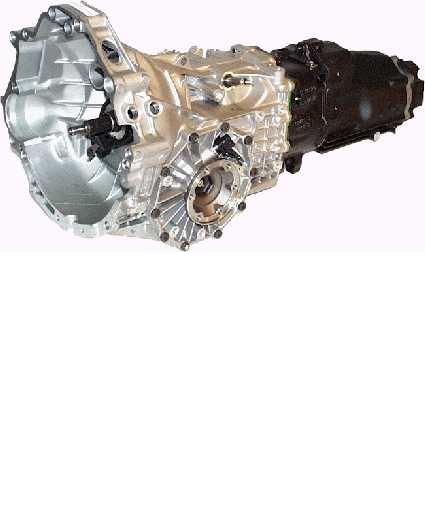
<DIR><DIR>016/083 O1E
</DIR></DIR>
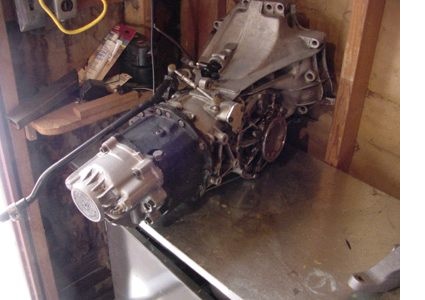
One update the 968 O1E did not get is a modification to first gear that was done to strengthen the O1E for AUDI 5000 turbos. First gear was made wider.
There are various other small differences between the AUDI and Porsche versions, but none that would effect strength.
Based on what I have found this transaxle should be equal in strength to the 951 083 5 speed. So other than different gear ratios, there is no strength advantage.
</SUP><TABLE cellSpacing=1 cellPadding=0 width=669 border=1><TBODY><TR><TD vAlign=bottom width="37%" colSpan=3 height=33><SUP>Standard Ratios</SUP>
</TD><TD vAlign=bottom width="11%" height=33>
</TD><TD vAlign=bottom width="11%" height=33>
</TD><TD vAlign=bottom width="11%" height=33>
</TD><TD vAlign=bottom width="11%" height=33>
</TD><TD vAlign=bottom width="11%" height=33>
</TD><TD vAlign=bottom width="11%" height=33>
</TD></TR><TR><TD vAlign=bottom width="16%" height=22><SUP>968 6 spd</SUP>
</TD><TD vAlign=bottom width="11%" height=22><SUP>1st</SUP>
</TD><TD vAlign=bottom width="10%" height=22><SUP>2nd</SUP>
</TD><TD vAlign=bottom width="11%" height=22><SUP>3rd</SUP>
</TD><TD vAlign=bottom width="11%" height=22><SUP>4th</SUP>
</TD><TD vAlign=bottom width="11%" height=22><SUP>5th</SUP>
</TD><TD vAlign=bottom width="11%" height=22><SUP>6th</SUP>
</TD><TD vAlign=bottom width="11%" height=22><SUP>final</SUP>
</TD><TD vAlign=bottom width="11%" height=22><SUP>reverse</SUP>
</TD></TR><TR><TD vAlign=bottom width="16%" height=22><SUP>O1E</SUP>
</TD><TD vAlign=bottom width="11%" height=22><SUP>3.1818
</SUP>
</TD><TD vAlign=bottom width="10%" height=22><SUP>2.0000
</SUP>
</TD><TD vAlign=bottom width="11%" height=22><SUP>1.4347
</SUP>
</TD><TD vAlign=bottom width="11%" height=22><SUP>1.1111
</SUP>
</TD><TD vAlign=bottom width="11%" height=22><SUP>0.9117
</SUP>
</TD><TD vAlign=bottom width="11%" height=22><SUP>0.7777
</SUP>
</TD><TD vAlign=bottom width="11%" height=22><SUP>3.7700
</SUP>
</TD><TD vAlign=bottom width="11%" height=22><SUP>3.4500
</SUP>
</TD></TR><TR><TD vAlign=bottom width="16%" height=18><SUP>overall ratio</SUP>
</TD><TD vAlign=bottom width="11%" height=18><SUP>11.9954
</SUP>
</TD><TD vAlign=bottom width="10%" height=18><SUP>7.5400
</SUP>
</TD><TD vAlign=bottom width="11%" height=18><SUP>5.4088
</SUP>
</TD><TD vAlign=bottom width="11%" height=18><SUP>4.1888
</SUP>
</TD><TD vAlign=bottom width="11%" height=18><SUP>3.4371
</SUP>
</TD><TD vAlign=bottom width="11%" height=18><SUP>2.9319
</SUP>
</TD><TD vAlign=bottom width="11%" height=18><SUP></SUP>
</TD><TD vAlign=bottom width="11%" height=18><SUP>13.0065
</SUP>
</TD></TR><TR><TD vAlign=bottom width="16%" height=18><SUP>tooth count</SUP>
</TD><TD vAlign=bottom width="11%" height=18><SUP>11/35
</SUP>
</TD><TD vAlign=bottom width="10%" height=18><SUP>19/38
</SUP>
</TD><TD vAlign=bottom width="11%" height=18><SUP>23/33
</SUP>
</TD><TD vAlign=bottom width="11%" height=18><SUP>27/30
</SUP>
</TD><TD vAlign=bottom width="11%" height=18><SUP>34/31
</SUP>
</TD><TD vAlign=bottom width="11%" height=18><SUP>36/28
</SUP>
</TD><TD vAlign=bottom width="11%" height=18><SUP>9/34
</SUP>
</TD><TD vAlign=bottom width="11%" height=18><SUP>11/38
</SUP>
</TD></TR></TBODY></TABLE><SUP>
November 11, 2007
ã 2007 by Peter Tinucci All rights reserved.
No Part of this document may be reproduced or transmitted in any form or by any means, electronic,
mechanical, photocopying, recording, or otherwise, without prior written permission of Peter Tinucci.
</SUP>

