rear sway bar kva mk1

Laurent

Supporter
Hi everyone!
I've reached a point in reassembly where I'm wondering about the importance and necessity of fitting stabilizer bars on the kva mk1, (Thanks for all the exciting threads on the subject already read on the site!)... because there weren't any on the vehicle when I bought it...

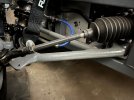
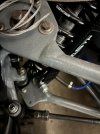
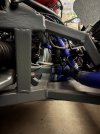
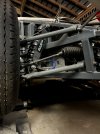
Does anyone have any photos of a fitting specifically on the front axle? (kva mk1 chassis type C granada fitting) I'm wondering if it's better to position the front bar under the car or rather between the suspension arms against the chassis...
 

Attachments

  • IMG_7980.JPG
    IMG_7980.JPG
    210.4 KB · Views: 157
  • IMG_7976.JPG
    IMG_7976.JPG
    308.1 KB · Views: 153
  • IMG_7977.JPG
    IMG_7977.JPG
    228.1 KB · Views: 141
  • IMG_7978.JPG
    IMG_7978.JPG
    195.7 KB · Views: 137
My KVA "B" chassis has non.
The "genuine" ones racing in historic races like Spa 6hrs, during races in the wet, they all disconect the rear swaybar so it doesn't work during the wet racing conditions.

With my suspension setup I don't feel I need to convert to swaybars. But thats my 50cnts.
 

Laurent

Supporter
Hi Jp,
It's reassuring to know that it can be driven without it! Thank you for confirming what I had read elsewhere, knowing that I think it is more useful to have one at the front rather than at the rear, :rolleyes:but since I have almost finished fitting the rear one, I think that the one at the front is essential... or else... I disconnect just like you!
:D
 

Mike Pass

Supporter
From the pics it looks like you have a C type chassis. This differs from the GTD in that the front of the chassis tapers towards the front whereas the GTD has parallel sides. This means that the front wishbones have unequal sides. This can limit the available lock as the rear of the wheel gets close to the back of the front wheel arch. Some cars have to put limit stops on the rack to stop rubbing. Depends on wheel/tyre choice. They both use the Ford Granada Mk2 uprights. The KVA C type chassis uses fabricated steel uprights at the rear with a large diameter middle section which carries the Ford Granada MK3 hubs. The rear suspension has the usual GT40 arrangement of long trailing arms, reversed lower wishbone and a top link.
 

Laurent

Supporter
Hi Mike, exactly! :D
t's my setup which remains a visual delight, and a nice adjustment headache for long winter evenings while waiting for spring...
I don't yet have permission to put it in the middle of the living room near the fireplace but I'm working on it...;)
 

Laurent

Supporter
Can someone tell me about the mechanical characteristics of the spring steel that needs to be put in place specifically for the front and different from the rear ?
I'm going to end up making the stabilizer bars myself, well... have them made by a local boilermaker...
I already have a rear one in 1” (25mm) but I think I might have to replace it with one of the same diameter because I already have all the supports but with the right mechanical torsion characteristics...
 
Can someone tell me about the mechanical characteristics of the spring steel that needs to be put in place specifically for the front and different from the rear ?
I'm going to end up making the stabilizer bars myself, well... have them made by a local boilermaker...
I already have a rear one in 1” (25mm) but I think I might have to replace it with one of the same diameter because I already have all the supports but with the right mechanical torsion characteristics...
I made my F & R anti-roll bars from 4130N chrome-moly aircraft tubing. Seamless, of course.
 

Laurent

Supporter
Ok thank U Neil !
Do you remember the diameter you choose for them ? It's for a gt40 or a car which have appromitatly the same weight distribution characteristics ?
 
Ok thank U Neil !
Do you remember the diameter you choose for them ? It's for a gt40 or a car which have appromitatly the same weight distribution characteristics ?
My bars were 3/4" 0.065" 4130N tubing. I placed a pattern of holes so thay by choosing different attachment points for the down links, the bar stiffness could be changed. Your application may require softer or stiffer anti-roll bars. Note: the stiffness of a tubing bar is determined mainly by its diameter, a small change can make a big difference.
Rear Anti-Roll Bar 1.jpg
 

Laurent

Supporter
Neil, thanks
your choice is good, I just found some information for other cars identical to yours.... (it's an example..)

Kit Fits:
Jeep Wrangler

Kit Includes:
Sway bar is made of 4130 heat treated chromoly for ultimate strength, which is the same quality used in professional off-road competition sway bars
NOTES:

This kit includes a .850” diameter sway bar. We recommend the use of our kit #CE-9900JLF, that features a .770” bar for vehicles with the lighter drivetrain combinations. However, this kit may still be used on these vehicle models in applications where a heavier weight sway bar is desired.

1759178471123.png
 

Laurent

Supporter
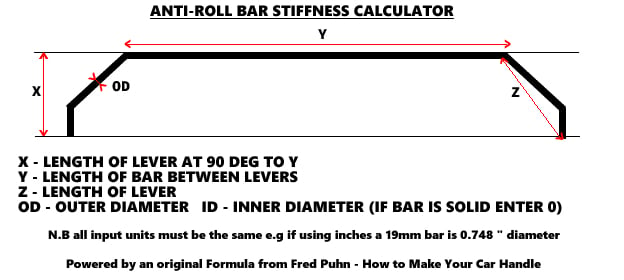
If anyone is interested in knowing the evolution of stiffness depending on the size of the bars and the position of the anchors of the vertical end links, here is an automatic calculator which can give you some ideas of evolution of figures, or even to know if your front bar, different from your rear bar, is more rigid or not, than the other...


  • Just enter your anti roll bar dimensions
  • Dimension 'X'
  • Dimension 'Y'
  • Dimension 'Z'
  • Dimension 'OD'
  • Dimension 'ID'
  • --> balancemotorsport gives your Torsional Stiffness (Lbs/In)

Sway-Bar-Insert.jpg
1759179548050.png
 
If anyone is interested in knowing the evolution of stiffness depending on the size of the bars and the position of the anchors of the vertical end links, here is an automatic calculator which can give you some ideas of evolution of figures, or even to know if your front bar, different from your rear bar, is more rigid or not, than the other...


  • Just enter your anti roll bar dimensions
  • Dimension 'X'
  • Dimension 'Y'
  • Dimension 'Z'
  • Dimension 'OD'
  • Dimension 'ID'
  • --> balancemotorsport gives your Torsional Stiffness (Lbs/In)

Sway-Bar-Insert.jpg
View attachment 149517
That calculator would have saved me quite a bit of calculation had it been available when I built my car. :p
 
My suggestion is not to do it the way Neil did the four attachment bolts for the rear bar, the generally accepted method is to weld a bar under where the 4 bolts are and drill the added piece with 4 holes putting your connection there., must better load distribution. By drilling the bar you are building in weak spots, increasing the chances of rear bar failure by breakage or bending. Generally speaking, the rear bar is always smaller in diameter than the front bar. I personally, would be looking at a front bar with a diameter of 25-30 mm and a rear bar in the 18 mm range. I must confess, I have no experience with your suspension systems but base my comments on original GT-40 requirements.

Billk
 
My suggestion is not to do it the way Neil did the four attachment bolts for the rear bar, the generally accepted method is to weld a bar under where the 4 bolts are and drill the added piece with 4 holes putting your connection there., must better load distribution. By drilling the bar you are building in weak spots, increasing the chances of rear bar failure by breakage or bending. Generally speaking, the rear bar is always smaller in diameter than the front bar. I personally, would be looking at a front bar with a diameter of 25-30 mm and a rear bar in the 18 mm range. I must confess, I have no experience with your suspension systems but base my comments on original GT-40 requirements.

Billk
If you look closely, the four holes for downlink attachment are not simply drilled through the tubing. Instead, there are short bushings welded into the tubing holes, adding strength to the bolted connection.
 

Laurent

Supporter
Yes, Neil, the calculator: it's all good, but now you can check the tension changes on the four holes in your bar, just for fun ! I zoomed in on your photo to actually see the reinforcement rings; it was both a good idea and necessary...

Indeed, Billk, welding a holed central bar is a good solution. Personally, I'll even weld two to position the sway bar end links vertically between the two, and avoid lateral twisting, especially with eyeball tie rod ends...
 
Back
Top