A long awaited reunion with the GT40

Ole Nylende

Supporter
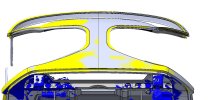
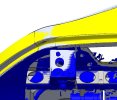
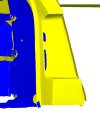
"cadcam" is nice and everything but "digitizing" a scan of an old tennant built roof and pillars is quite a paint from time to other, i think i have atleast 3 different orientations of it depending on which are i am working on.
In cad everything is "perfect" and when working from something that is twisted along its length, out of square and generally hand built it is alot of trade offs that needs to be made.
Could off course dump it into some reverseengineering software and make compound surfaces from the mesh but hardware heavy and difficult to work with later on.

Cool reading about the original production back in the day.
I am quite impressed that somebody where able to make the bits from the original prints, some of these are quite complex and difficult to just redraw. Cant imagine making it based on the prints and plain steel sheets when everything is shown in finished condition only.
 

Attachments

  • b pillar 1.jpg
    b pillar 1.jpg
    54.7 KB · Views: 55
  • roof1.jpg
    roof1.jpg
    142.4 KB · Views: 59
  • roof2.jpg
    roof2.jpg
    101.6 KB · Views: 61
I'm sure the roof B pillar and obviously all the exterior fibre glass panels were never drawn. Why would they as cadcam was just a dream in the 1960s. The only chips we had came with battered cod or haddock . The rest of the chassis is not difficult for competent sheet metal workers to fabricate. I do remember the roof was not symmetrical left to right and, correct me if I'm wrong, the B pillar widths are different by quite a bit.
 
For decades complex body shapes were infact drawn by skilled draughtsmen on at first paper then on a film called mylar which is very stable. Mylar came in two thicknesses 5 thou for the master and 2 thou for the workshop. The model makers would use a range of sweeps and consummate skill to reproduce mahogany model masters on bases that could be mounted on frames to like a 3D puzzle show the complete car. Over the years my model shop made hundreds of these masters. Then came cadcam.
Iain
 
Hi Iain, What a pleasure to read about your memories of building the "Tennant Panel" GT40 chassis units. It is very much how we ended up doing our "Superformance GT 40's. When I wanted to add the GT40's to our range I had visited the UK and had bought a GTD unseen but when it arrived I realized that we needed to find a way to replicate the real thing. I traveled to our dealer in Mooresville, Bobby Olthoff (who had been a Team Willement driver with Jack Sears), and he took me to visit Lee Holman. Lee, at that time had just advertised that he could supply a MK2, using Tennant chassis units. I tried to get him to let me build them for him but he really was not interested and we had to move on. He also would not sell one of the Tennant chassis either. Our last resort was our New York dealer, Bill Ostrower, who had an original MK2 and knew someone who would swap some chassis drawing and odd parts for $50K and one of our cobras. Bill allowed me to send a team over who took polydur plaster moldings of the body as well as tons of pictures.
And then the saga started, we found that the roof was offset by one inch which was hard to see until one had to put a painted centre stripe on the car. Needless to sat we realigned our cars. We had a press shop that we had put in to build all steel bodied 32 Ford Roadster for Bill Smith of Speedway Motors (that's another story for another day) so we made all our own steel dies for the roof inner and outer as well as the lower windscreen valance and the inner frames for the side tubs. That was all of 20 odd years ago and, for us anyway, we had no scanners and fancy digitizing equipment. In fact the was very little anywhere whereas today the youngsters just turn to Google. The manager of our press shop was an old school Spanish toolmaker who had three extra large drawing boards that he would do all his die designing on. We had chosen th MK2 to start with as most of our market was in the US and we assumed that the customer would prefer the "American built" GT but we had to chase to do the MK1 which was the prefered model. Due to the lack of ventilation we had to fit an airco but we managed to "hide" it under a copy of the MK2 dry sump oil tank which was in the front spare wheel rbate in the firewall area. The controls are in the front of the door box so they do not interfere with the dash layout. Although I have followed this site from those early days I have never posted but felt I just had to comment on yours, thankyou so much. By the way we are getting close to chassis number 550!
 

Rick Muck- Mark IV

GT40s Sponsor
Supporter
Hi Iain, What a pleasure to read about your memories of building the "Tennant Panel" GT40 chassis units. It is very much how we ended up doing our "Superformance GT 40's. When I wanted to add the GT40's to our range I had visited the UK and had bought a GTD unseen but when it arrived I realized that we needed to find a way to replicate the real thing. I traveled to our dealer in Mooresville, Bobby Olthoff (who had been a Team Willement driver with Jack Sears), and he took me to visit Lee Holman. Lee, at that time had just advertised that he could supply a MK2, using Tennant chassis units. I tried to get him to let me build them for him but he really was not interested and we had to move on. He also would not sell one of the Tennant chassis either. Our last resort was our New York dealer, Bill Ostrower, who had an original MK2 and knew someone who would swap some chassis drawing and odd parts for $50K and one of our cobras. Bill allowed me to send a team over who took polydur plaster moldings of the body as well as tons of pictures.
And then the saga started, we found that the roof was offset by one inch which was hard to see until one had to put a painted centre stripe on the car. Needless to sat we realigned our cars. We had a press shop that we had put in to build all steel bodied 32 Ford Roadster for Bill Smith of Speedway Motors (that's another story for another day) so we made all our own steel dies for the roof inner and outer as well as the lower windscreen valance and the inner frames for the side tubs. That was all of 20 odd years ago and, for us anyway, we had no scanners and fancy digitizing equipment. In fact the was very little anywhere whereas today the youngsters just turn to Google. The manager of our press shop was an old school Spanish toolmaker who had three extra large drawing boards that he would do all his die designing on. We had chosen th MK2 to start with as most of our market was in the US and we assumed that the customer would prefer the "American built" GT but we had to chase to do the MK1 which was the prefered model. Due to the lack of ventilation we had to fit an airco but we managed to "hide" it under a copy of the MK2 dry sump oil tank which was in the front spare wheel rbate in the firewall area. The controls are in the front of the door box so they do not interfere with the dash layout. Although I have followed this site from those early days I have never posted but felt I just had to comment on yours, thankyou so much. By the way we are getting close to chassis number 550!
Jim is minimizing the time and effort that went into the GT40 development. The investment that was made to allow proper, correct (yes, there are some differences in the cars, but really no two FAV cars are alike!) manufacture is substantial.
 
Hi Iain, What a pleasure to read about your memories of building the "Tennant Panel" GT40 chassis units. It is very much how we ended up doing our "Superformance GT 40's. When I wanted to add the GT40's to our range I had visited the UK and had bought a GTD unseen but when it arrived I realized that we needed to find a way to replicate the real thing. I traveled to our dealer in Mooresville, Bobby Olthoff (who had been a Team Willement driver with Jack Sears), and he took me to visit Lee Holman. Lee, at that time had just advertised that he could supply a MK2, using Tennant chassis units. I tried to get him to let me build them for him but he really was not interested and we had to move on. He also would not sell one of the Tennant chassis either. Our last resort was our New York dealer, Bill Ostrower, who had an original MK2 and knew someone who would swap some chassis drawing and odd parts for $50K and one of our cobras. Bill allowed me to send a team over who took polydur plaster moldings of the body as well as tons of pictures.
And then the saga started, we found that the roof was offset by one inch which was hard to see until one had to put a painted centre stripe on the car. Needless to sat we realigned our cars. We had a press shop that we had put in to build all steel bodied 32 Ford Roadster for Bill Smith of Speedway Motors (that's another story for another day) so we made all our own steel dies for the roof inner and outer as well as the lower windscreen valance and the inner frames for the side tubs. That was all of 20 odd years ago and, for us anyway, we had no scanners and fancy digitizing equipment. In fact the was very little anywhere whereas today the youngsters just turn to Google. The manager of our press shop was an old school Spanish toolmaker who had three extra large drawing boards that he would do all his die designing on. We had chosen th MK2 to start with as most of our market was in the US and we assumed that the customer would prefer the "American built" GT but we had to chase to do the MK1 which was the prefered model. Due to the lack of ventilation we had to fit an airco but we managed to "hide" it under a copy of the MK2 dry sump oil tank which was in the front spare wheel rbate in the firewall area. The controls are in the front of the door box so they do not interfere with the dash layout. Although I have followed this site from those early days I have never posted but felt I just had to comment on yours, thankyou so much. By the way we are getting close to chassis number 550!
Hi Jim, good to hear from another person who has been down the GT40 love hate relationship!
I remember we also made press tools for the rocker/fuel tank ribs. We pressed each one as a two piece assembly with two tools as when split in half the profile isn't symmetrical. One of my sheet metal guys by the name of Syd Croucher made all the ribs. A true London East Ender and the shops biggest p##s taker who took no prisoners . Shops in those days were full of characters, now at lunch breaks people just look at their phones......
That's a lot of GT40s, I've searched and your cars look excellent and a quality build. Hat's off to your effort. The microfiche original copy drawings Brian gave to us where life'd as the print faded after 5 or so years!
 
Back
Top