
Headlight Lens, Part III.
Time to find out whether the felt-lined, reinforced fiberglass forms will work.
Our supply of cheap, undersized Plexiglass exhausted, we ordered more, finding material available in a 16” x 20” size. There are two types of acrylic: cast and extruded. As we now discovered, our initial attempts used extruded material. The cast acrylic is more expensive, softens at a higher temperature, is more UV-stable, more scratch-resistant, and has better optical clarity, so it was ordered for the next attempts. From Amazon, of course!
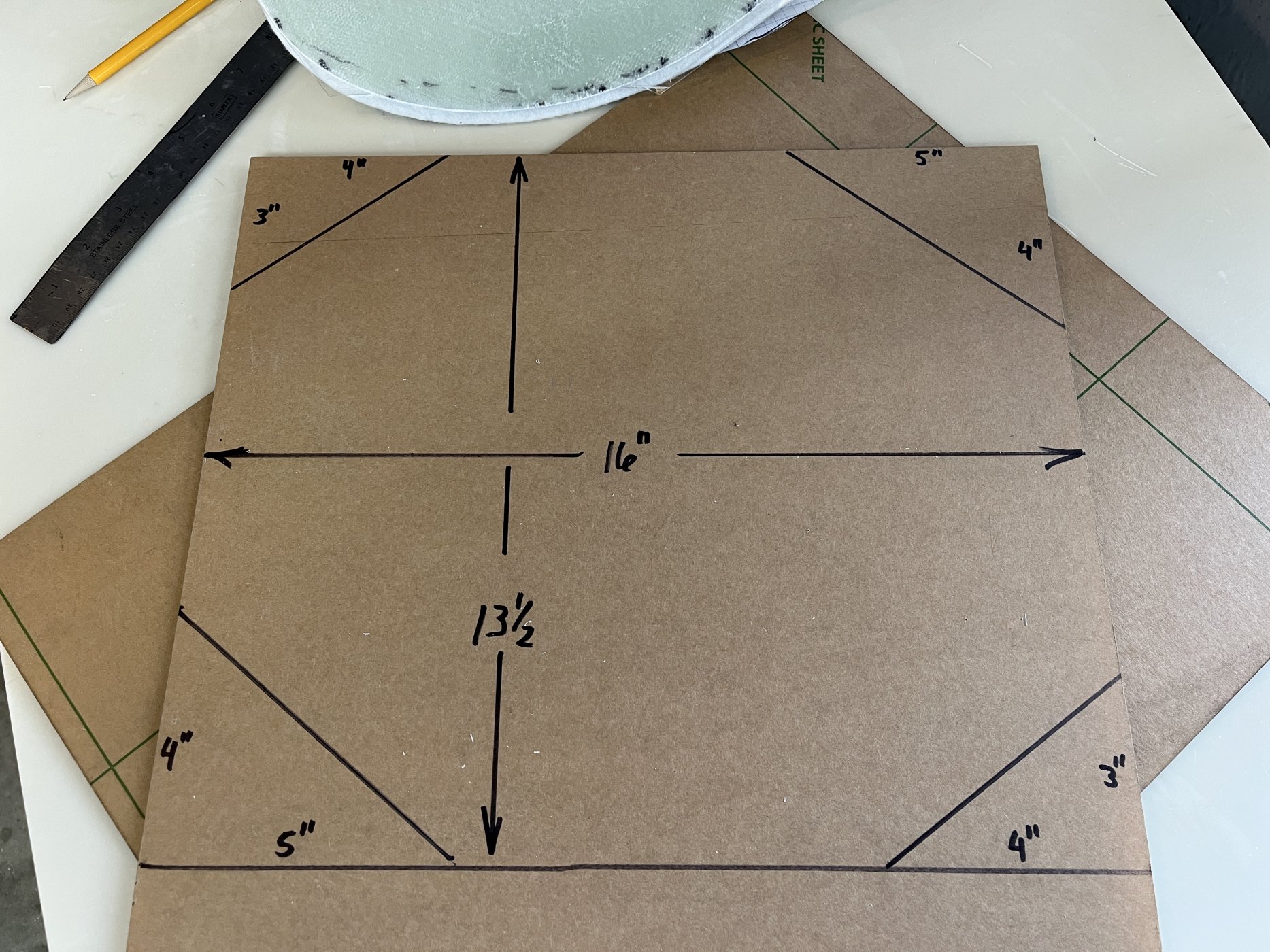
Once trimmed and ready to install on the D-type, the lenses will measure approximately 15” x 12”. The mold measures approximately 16” x 13 1/2 ”, providing a lip where the clips can be applied without warping the final product.
Before molding the plexi, the panels were trimmed to 16” x 13 1/2” and the corners trimmed using the “scribe and snap” technique so they would more closely approximate the mold's dimensions. (One way to tell cast from extruded acrylic is that the former is typically covered with brown paper, while the latter is covered with plastic film.)
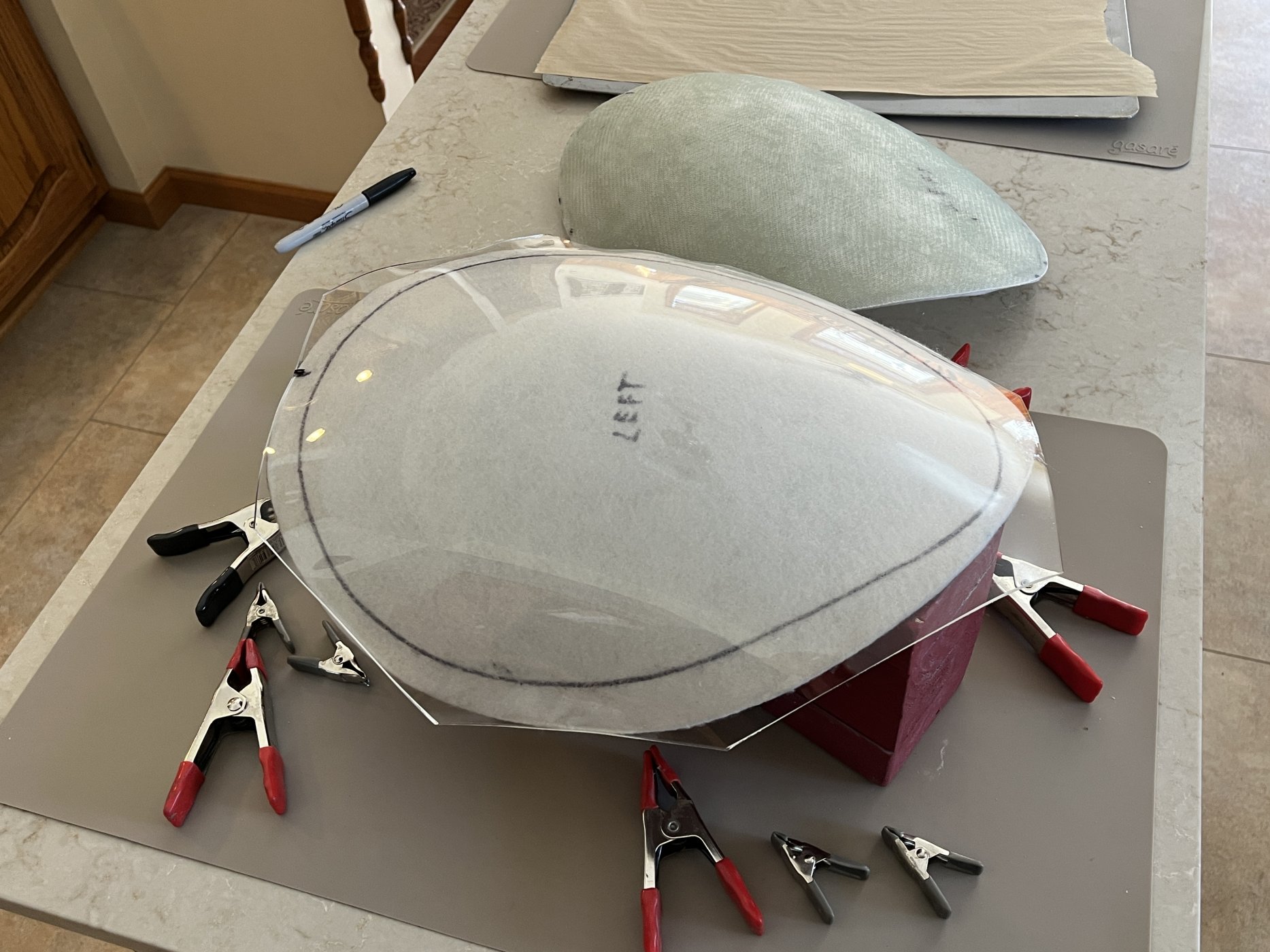
Supplies were set up, the oven preheated to 290 degrees, and the process we had done so many times over the last several weeks was repeated using the male and revised female molds and correctly sized Plexiglass. We quickly discovered that the temperature needed to be increased to 320 degrees because the cast acrylic requires a higher temperature. Instead of 5 minutes, 10 were needed for it to soften sufficiently.
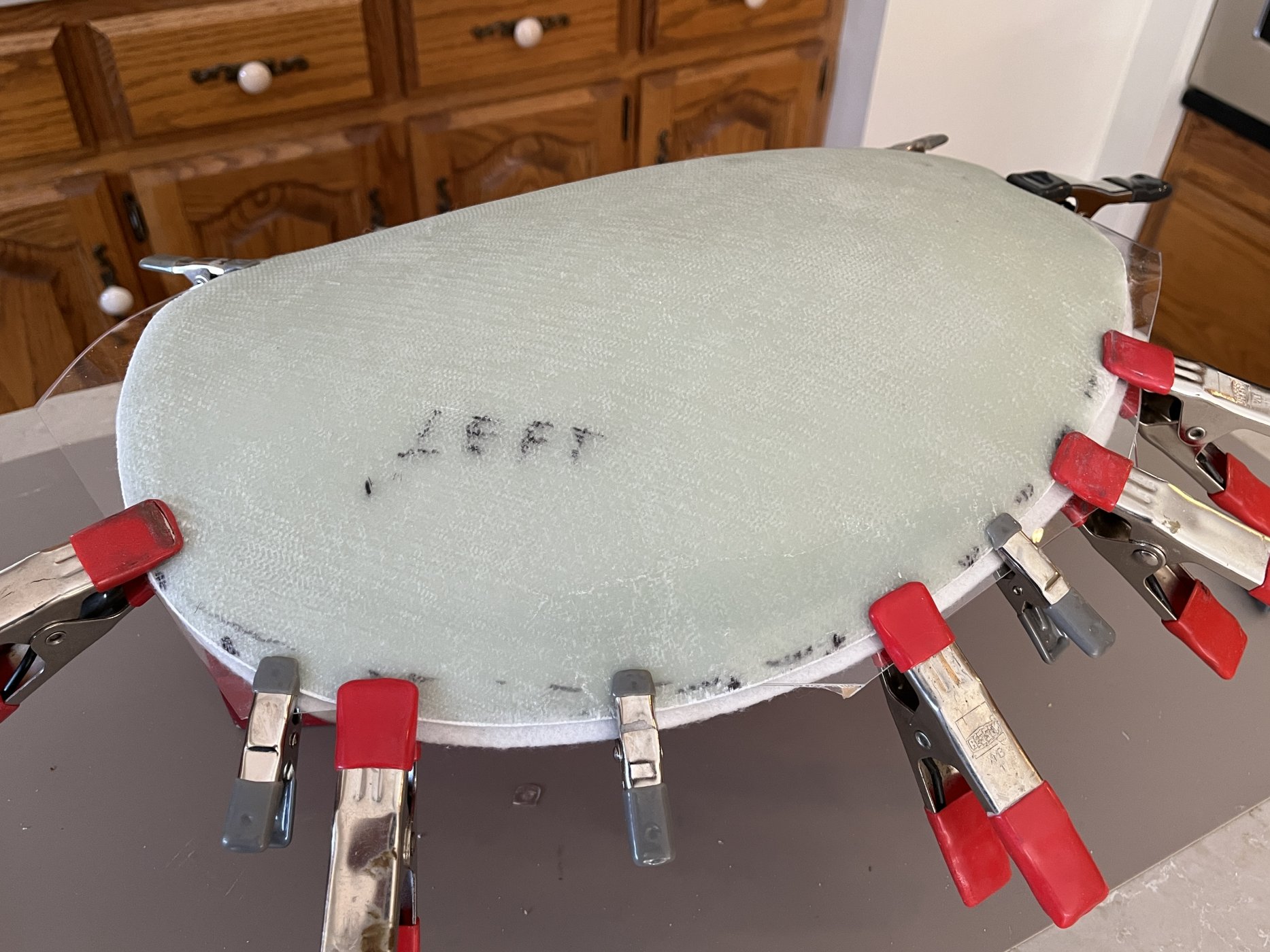
After a lot of designing, experimenting, fabrication, and testing, this worked. The plexi matched the mold's shape well, with no defects or imperfections.
Next is trimming and fitting.
Time to find out whether the felt-lined, reinforced fiberglass forms will work.
Our supply of cheap, undersized Plexiglass exhausted, we ordered more, finding material available in a 16” x 20” size. There are two types of acrylic: cast and extruded. As we now discovered, our initial attempts used extruded material. The cast acrylic is more expensive, softens at a higher temperature, is more UV-stable, more scratch-resistant, and has better optical clarity, so it was ordered for the next attempts. From Amazon, of course!
Once trimmed and ready to install on the D-type, the lenses will measure approximately 15” x 12”. The mold measures approximately 16” x 13 1/2 ”, providing a lip where the clips can be applied without warping the final product.
Before molding the plexi, the panels were trimmed to 16” x 13 1/2” and the corners trimmed using the “scribe and snap” technique so they would more closely approximate the mold's dimensions. (One way to tell cast from extruded acrylic is that the former is typically covered with brown paper, while the latter is covered with plastic film.)
Supplies were set up, the oven preheated to 290 degrees, and the process we had done so many times over the last several weeks was repeated using the male and revised female molds and correctly sized Plexiglass. We quickly discovered that the temperature needed to be increased to 320 degrees because the cast acrylic requires a higher temperature. Instead of 5 minutes, 10 were needed for it to soften sufficiently.
After a lot of designing, experimenting, fabrication, and testing, this worked. The plexi matched the mold's shape well, with no defects or imperfections.
Next is trimming and fitting.


