I always "rough up" the fiberglass with 80-grit sandpaper. West Marine is an epoxy-based system that is compatible with vinyl ester and polyester materials, allowing it to be applied over existing fiberglass. The reverse is not true: we would not put vinyl ester or polyester over existing epoxy-based glass.Great solutions as usual. When adding fiberglass to your existing panels, how are you roughing it up to ensure the best bond possible? Do you feel like you need to match the existing resin? I'm assuming original resin is vinylester, but could be polyester I suppose.

You are using an out of date browser. It may not display this or other websites correctly.
You should upgrade or use an alternative browser.
You should upgrade or use an alternative browser.
Chuck's Jaguar D Type Build
- Thread starter CESLAW
- Start date
Good question. This is above my pay grade, but my understanding is that there are chemical characteristics that affect the compatibility of the materials. Here is a discussion regarding the issue found at this site: https://support.totalboat.com/hc/en...et-Layup-What-are-Primary-and-Secondary-BondsWhy would you not apply poly/vinyl ester resin over properly prepared epoxy?
A primary bond is a chemical bond that occurs between chemically compatible resins during the initial curing stage. A primary bond, such as in a newly molded boat hull is much stronger than a secondary bond, such as a repair.
A secondary bond is a mechanical bond that forms between a newly applied resin and a properly prepared surface that has already cured. Epoxy resin forms stronger mechanical bonds than polyester/vinyl ester resins.
Polyester/vinyl ester resins are chemically compatible with each other, but are not completely chemically compatible with epoxy resins.
For this reason, epoxy resins can be applied over polyester/vinyl ester resins to achieve a chemical bond, but polyester/vinyl ester resins can not be applied over epoxy resin.
Fuel Filler, Part I
The goal was to come up with a design that would resemble the original, including a drip pan to catch the overflows that never occur. (Yea, sure). Here is a prototype:
On the original, the fuel bladder filler cap would come off with the rear clip when it was removed. On our version, the fuel tank stays with the car when the clip is removed. That created a challenge.
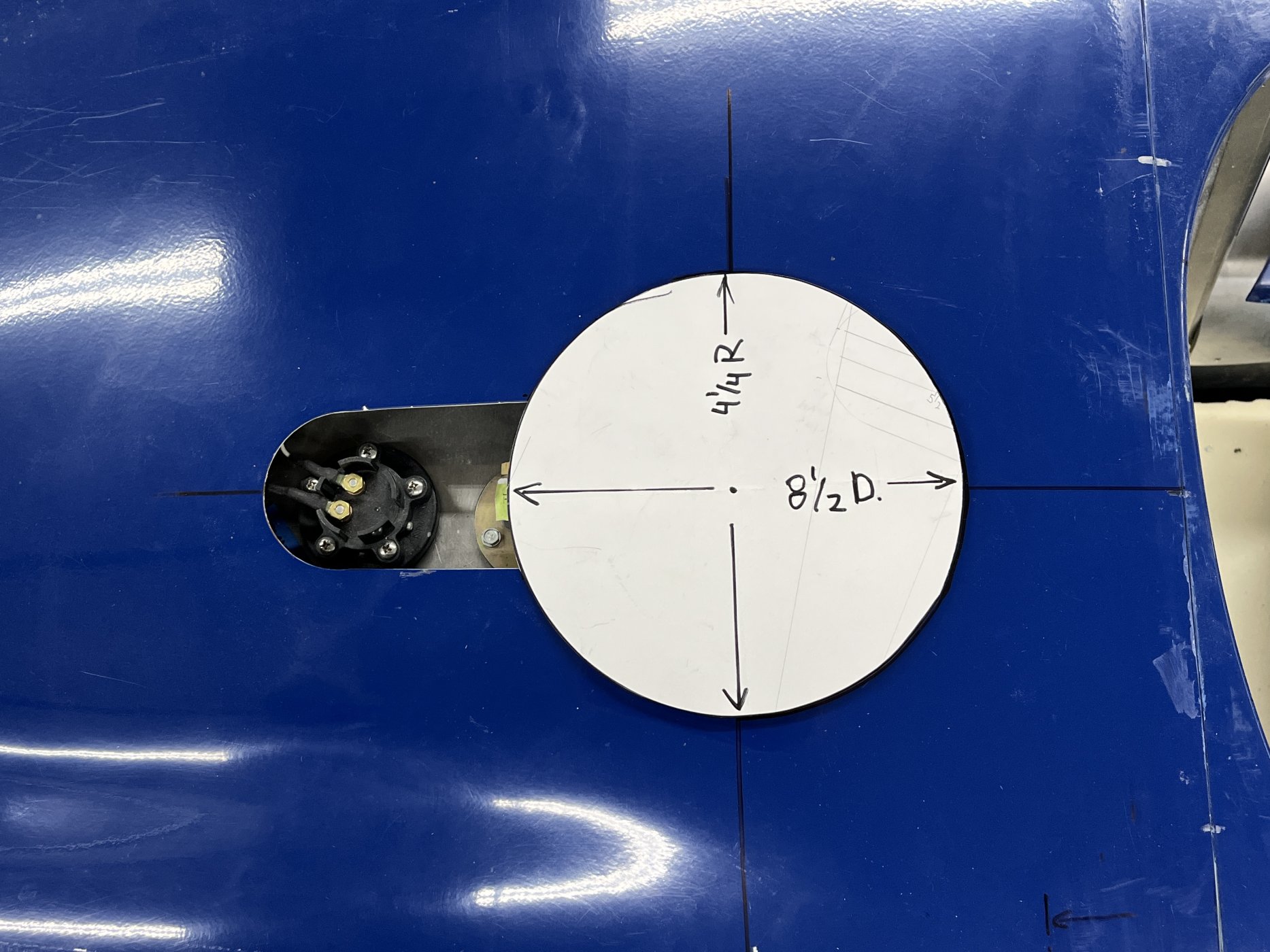
After a bit of head scratching, the design arrived upon keeps the drip pan attached to the filler tube, with removable screws on the underside of the body. The starting point was making a fiberglass ring that matched the contour of the body, which was accomplished by forming it on the top side based on the assumption that the top and bottom would have the same contour.
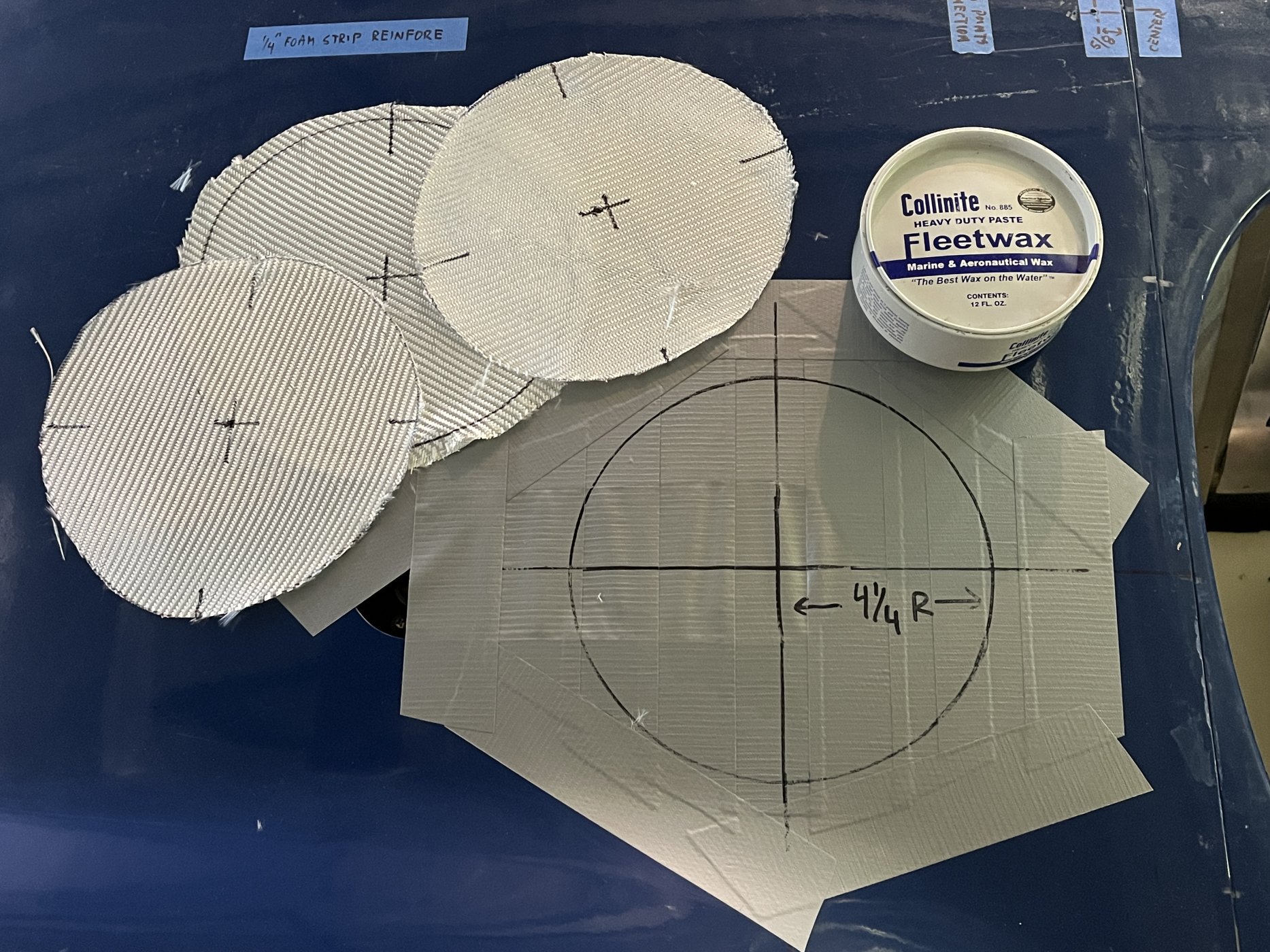
Duct tape was applied to the body and wax was used to ensure the fiberglass would not stick. Three layers of fiberglass were then applied to make the drip pan ring.
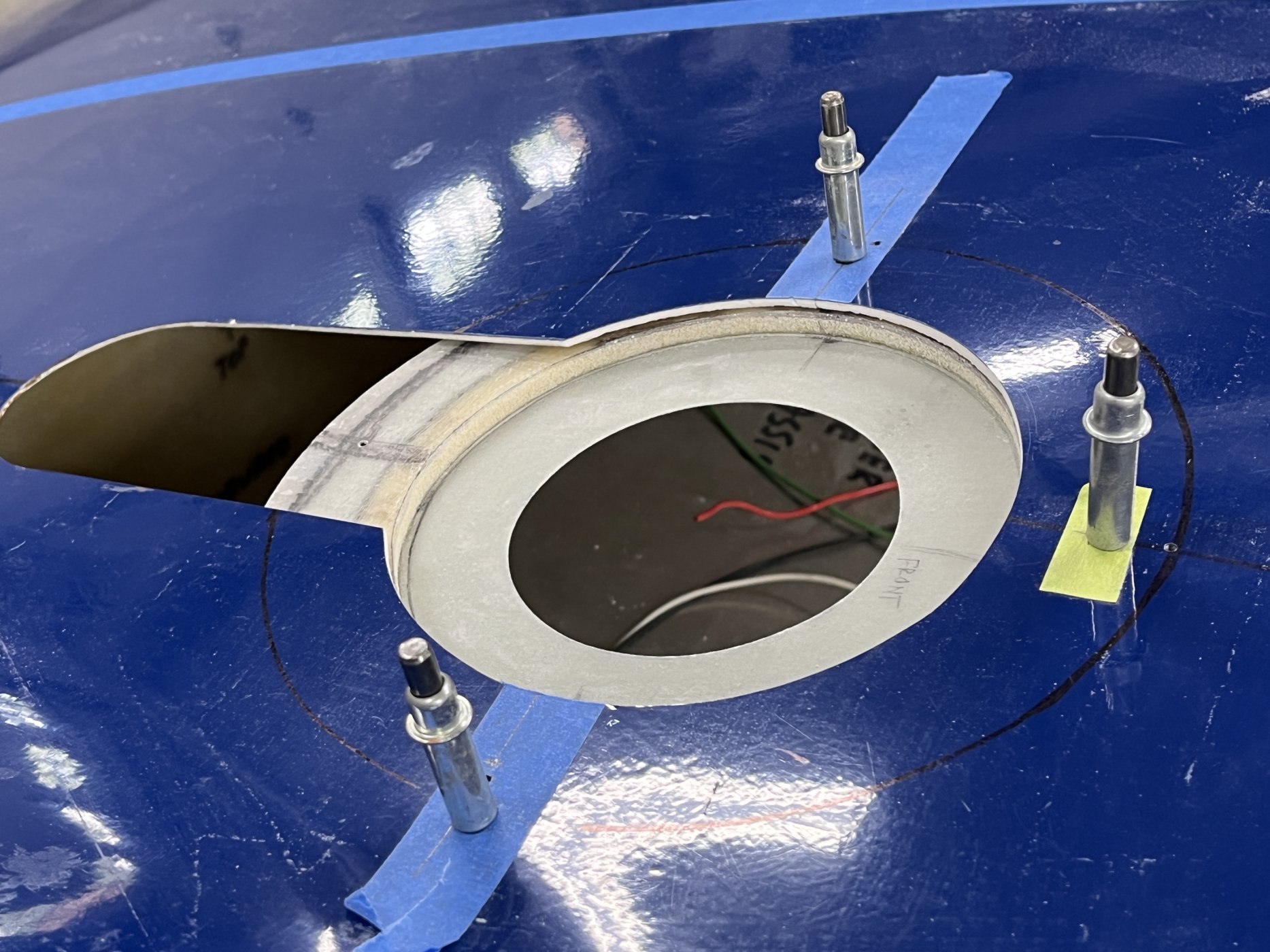
Next, the bottom of the drip pan was fabricated. It is separated from the top ring by a quarter-inch foam spacer. A three-inch hole was cut in the bottom through which the fiberglass tube will pass. The drip pan was temporarily held in place with clecos.
The filler cap will rest on a fiberglass tube that is the same diameter as the base of the filler cap. A form was made from a packing tube, wrapped with packing tape, and several layers of fiberglass applied to create the tube.
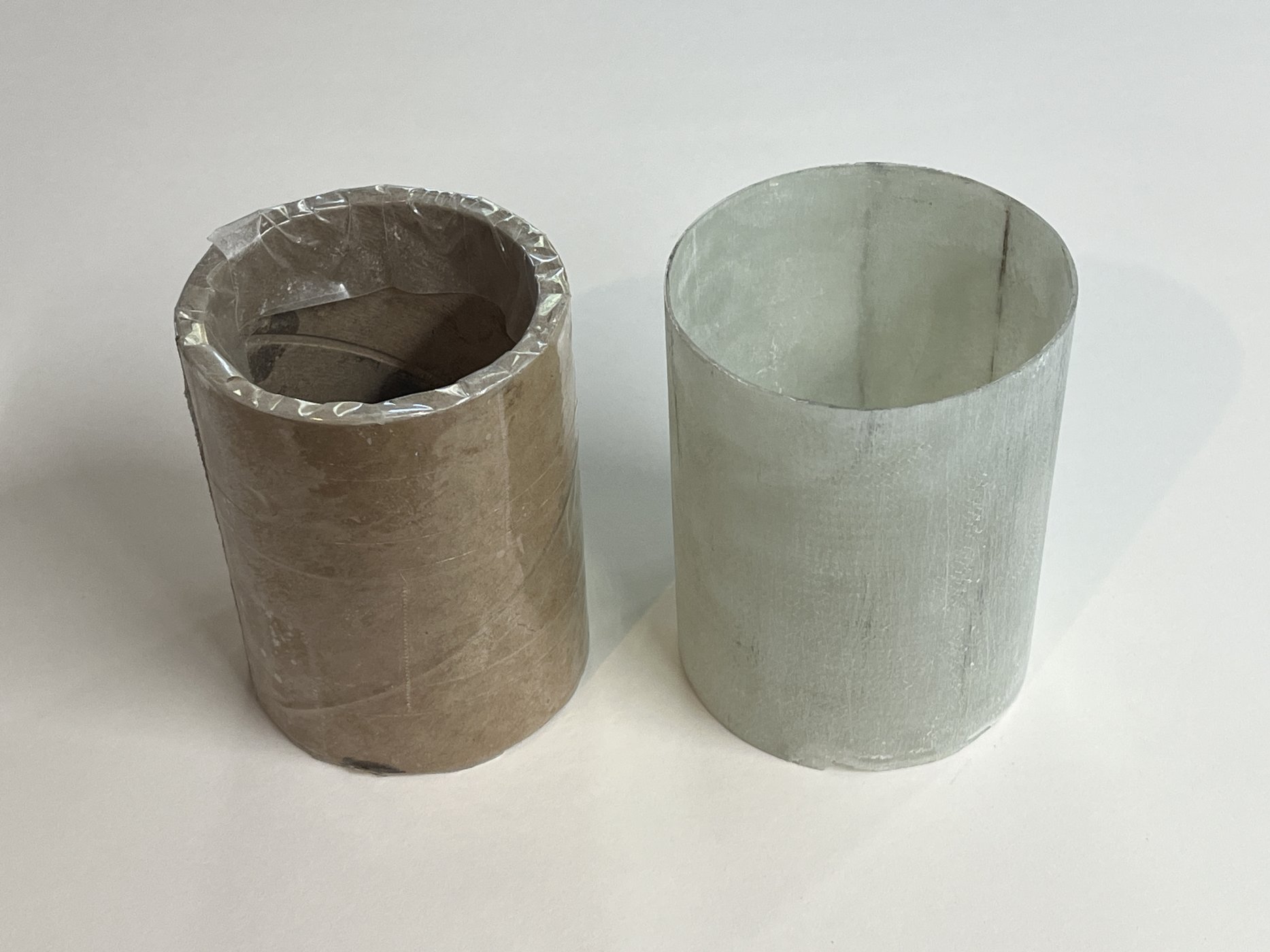
Hopefully, the collection of fiberglass parts will come together soon, at which point this might start to make sense.
The goal was to come up with a design that would resemble the original, including a drip pan to catch the overflows that never occur. (Yea, sure). Here is a prototype:
On the original, the fuel bladder filler cap would come off with the rear clip when it was removed. On our version, the fuel tank stays with the car when the clip is removed. That created a challenge.
After a bit of head scratching, the design arrived upon keeps the drip pan attached to the filler tube, with removable screws on the underside of the body. The starting point was making a fiberglass ring that matched the contour of the body, which was accomplished by forming it on the top side based on the assumption that the top and bottom would have the same contour.
Duct tape was applied to the body and wax was used to ensure the fiberglass would not stick. Three layers of fiberglass were then applied to make the drip pan ring.
Next, the bottom of the drip pan was fabricated. It is separated from the top ring by a quarter-inch foam spacer. A three-inch hole was cut in the bottom through which the fiberglass tube will pass. The drip pan was temporarily held in place with clecos.
The filler cap will rest on a fiberglass tube that is the same diameter as the base of the filler cap. A form was made from a packing tube, wrapped with packing tape, and several layers of fiberglass applied to create the tube.
Hopefully, the collection of fiberglass parts will come together soon, at which point this might start to make sense.
Are you suggesting that less than 100% of the fuel will make it into the tank?I’m assuming that the gasoline won’t eat away at the fiberglass over time?
Well, should that occur, the paint used will be fuel-resistant, and in addition, there may be an aluminum ring/liner on the bottom of the drip pan.
There will be a 2" I.D. hose connecting the filler cap with the fuel tank that runs inside the 3" diameter tube we fabbed from glass. So there will (hopefully) be no contact with fuel and the fiberglass parts.
Good point, and hopefully it won't be an issue.

Doug M
Supporter
Some reason I thought the inner fuel filler was going to be fiberglass. I guess I read it too fast. Makes sense you’d use a rubber hose for fuel.Are you suggesting that less than 100% of the fuel will make it into the tank?
Well, should that occur, the paint used will be fuel-resistant, and in addition, there may be an aluminum ring/liner on the bottom of the drip pan.
There will be a 2" I.D. hose connecting the filler cap with the fuel tank that runs inside the 3" diameter tube we fabbed from glass. So there will (hopefully) be no contact with fuel and the fiberglass parts.
Good point, and hopefully it won't be an issue.
Fuel Filler, Part II
With the drip pan that sets below the body fabricated, we turned our attention to the ring that will sit on top of the body. The original plan was to make this from aluminum, so a form was made and the .030 aluminum was hammered to create a lip. Although this worked, I was not pleased with the finished product, so we repeated the process using the same form, but with fiberglass. Here is a picture of the fiberglass in the process of being laid up.
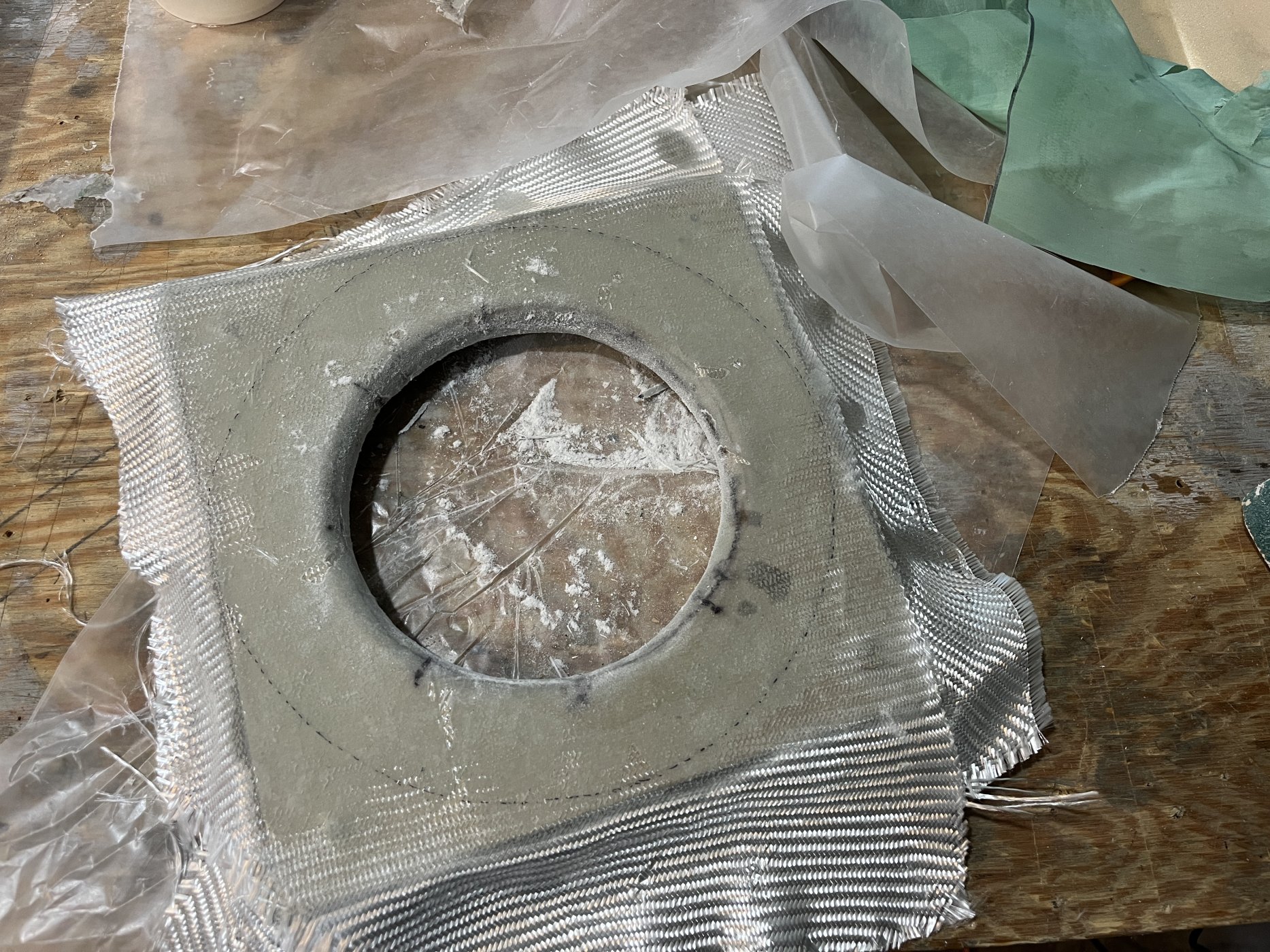
A total of five layers of glass will eventually be applied to the top ring. The basic shape of the top and bottom rings is now complete.
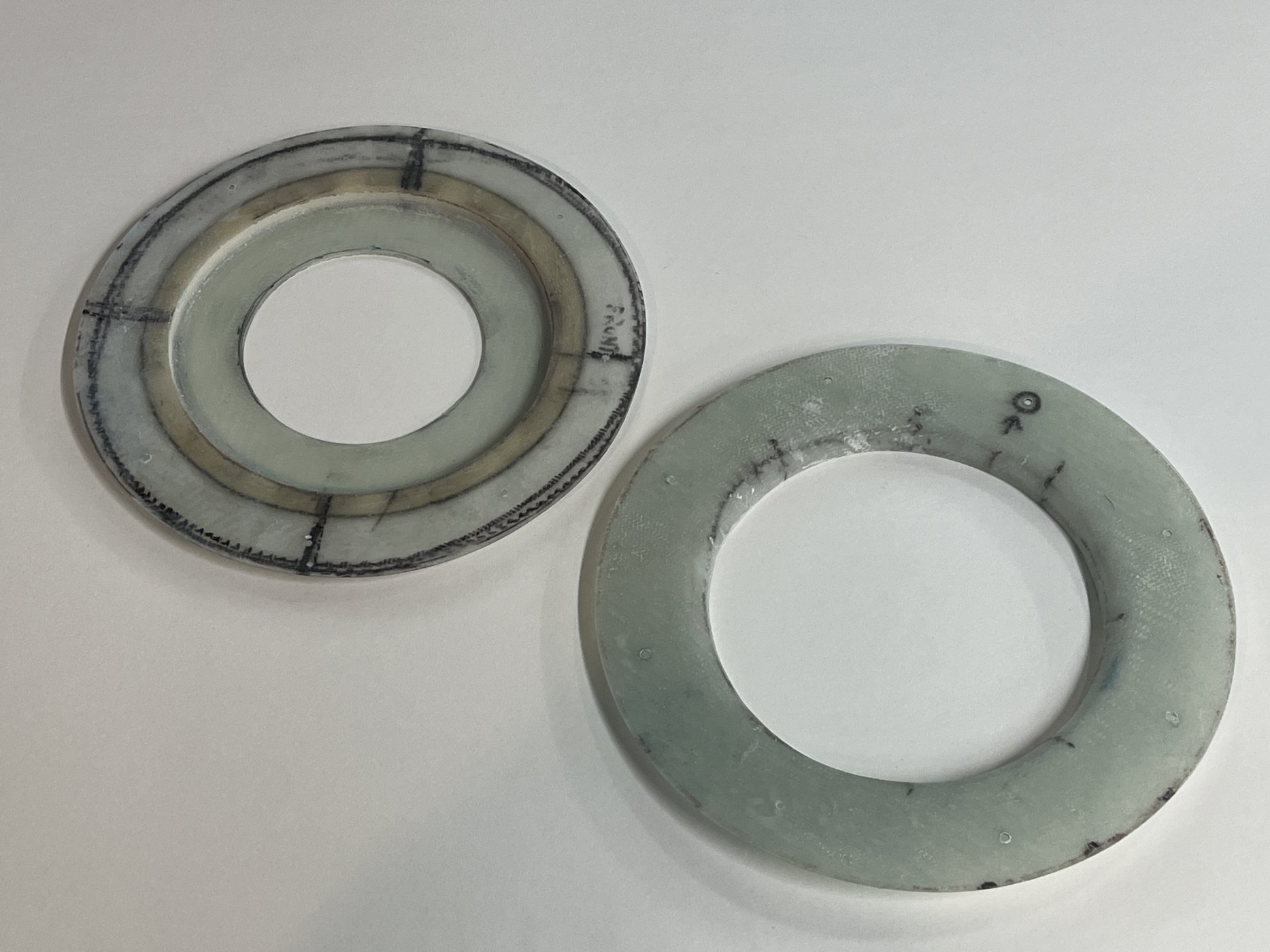
The top ring was set in place temporarily with clecos. Later holes for eight countersunk screws will be drilled.
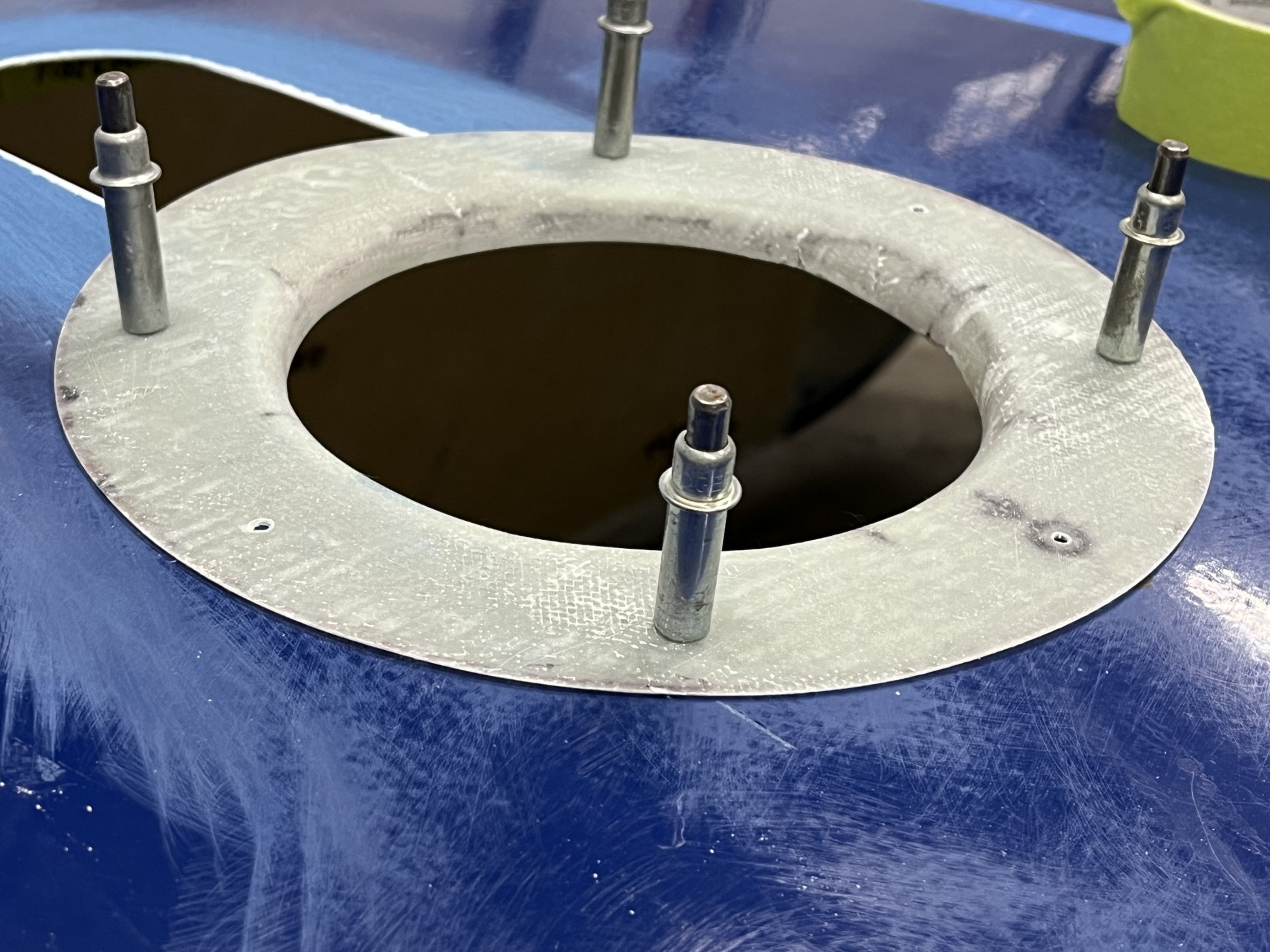
Next is fabricating the aluminum trim ring that goes around the tube in the drip pan.
With the drip pan that sets below the body fabricated, we turned our attention to the ring that will sit on top of the body. The original plan was to make this from aluminum, so a form was made and the .030 aluminum was hammered to create a lip. Although this worked, I was not pleased with the finished product, so we repeated the process using the same form, but with fiberglass. Here is a picture of the fiberglass in the process of being laid up.
A total of five layers of glass will eventually be applied to the top ring. The basic shape of the top and bottom rings is now complete.
The top ring was set in place temporarily with clecos. Later holes for eight countersunk screws will be drilled.
Next is fabricating the aluminum trim ring that goes around the tube in the drip pan.
Last edited:
Fuel Filler, Part III
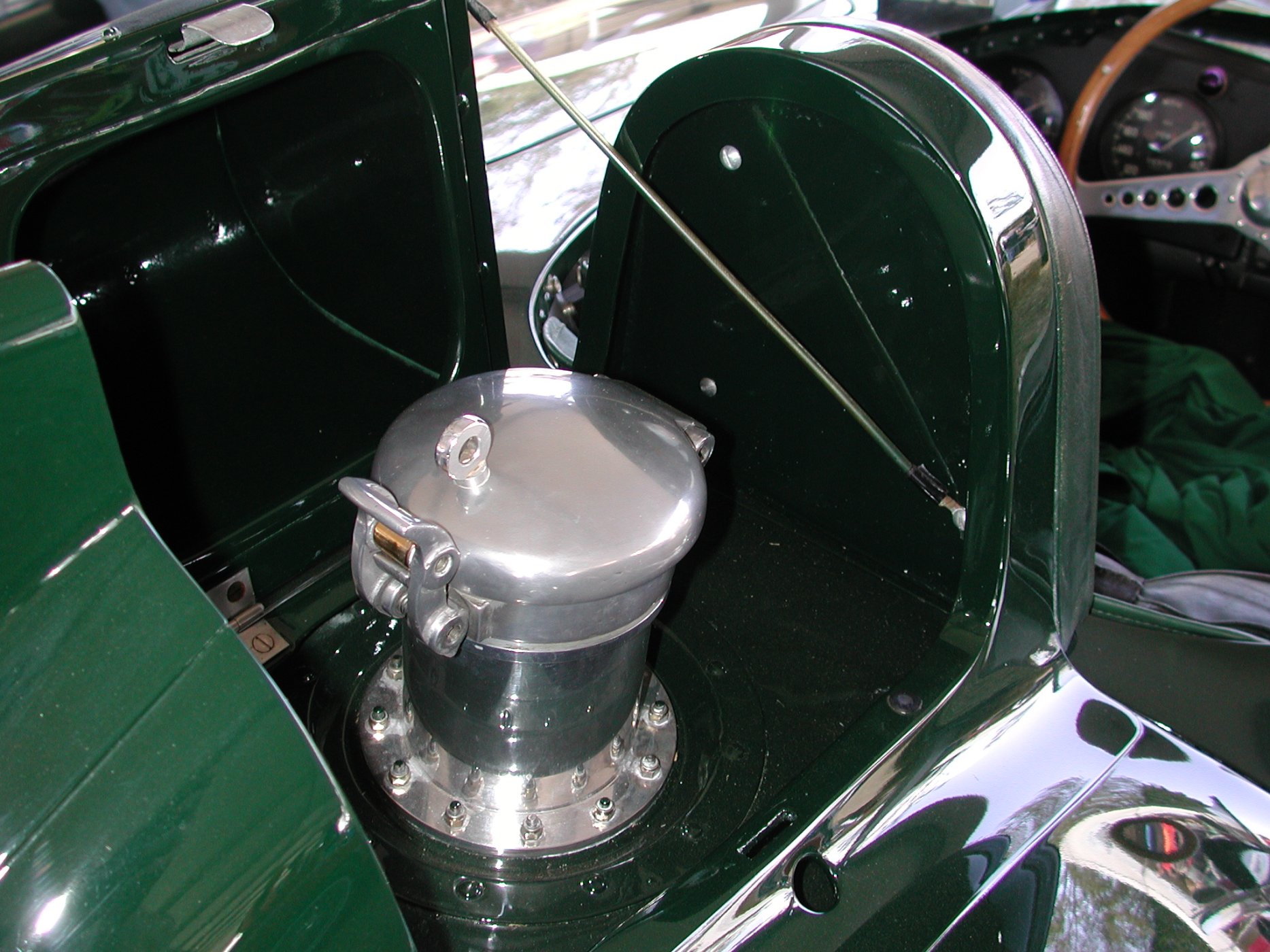
Another detail to capture the look of the original is the aluminum trim ring with bolts protruding upward around the base of the filler tube, visible in the previously posted picture of the original. On the original, this would have secured the fuel bladder. On our D Type, the bolts will connect the ring to the drip pan. It is purely for looks.
Cutting a perfect round trim ring was a full-day project. The ring was laid out on a discarded RCR fuel tank support. An undersized hole was cut to clear the three-inch filler tube. Since it was undersized, hours were spent sanding it to exactly match the diameter of the fiberglass tube. An exact fit was necessary, as it would help align the fiberglass filler tube with only a friction fit.
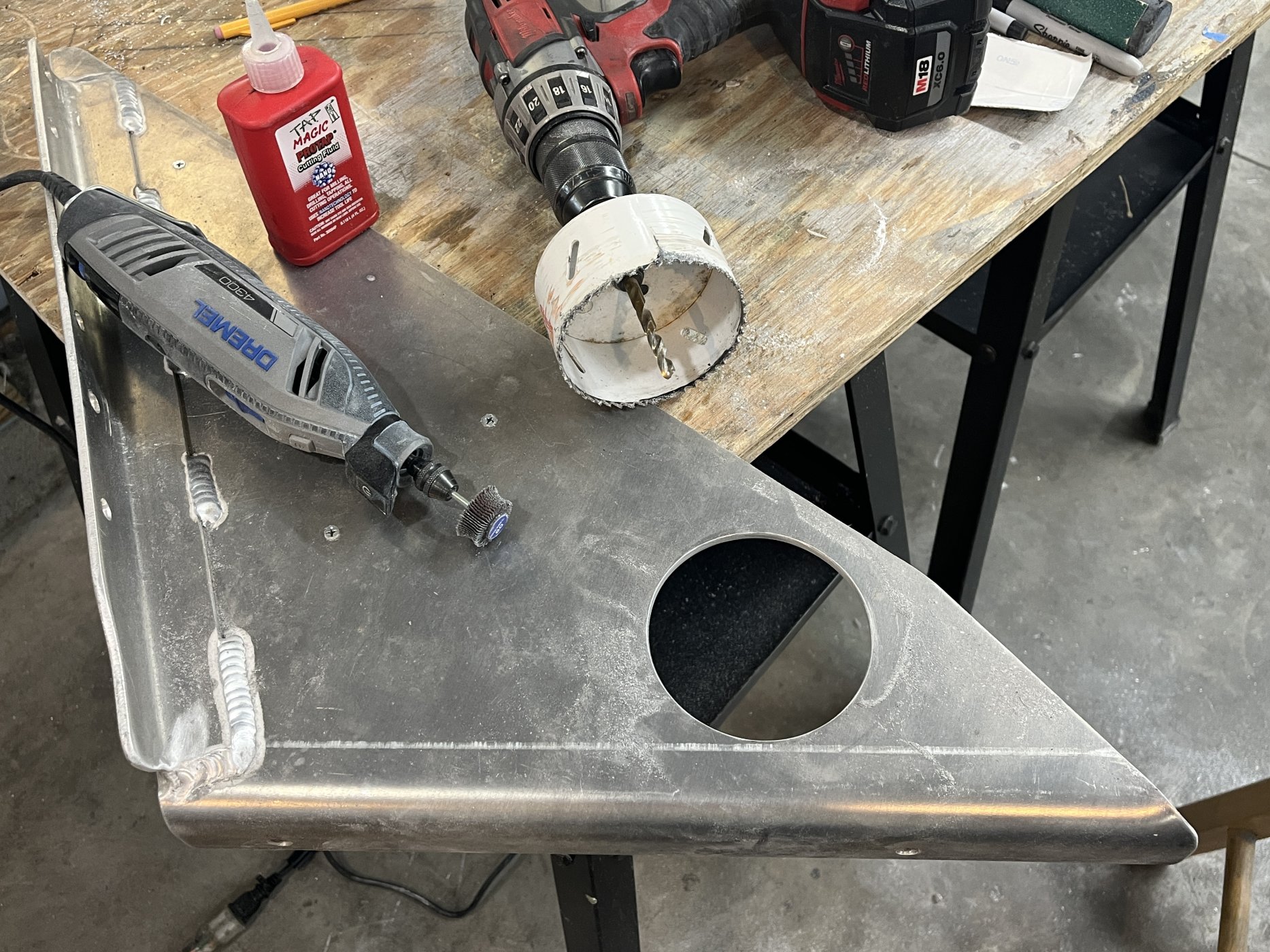
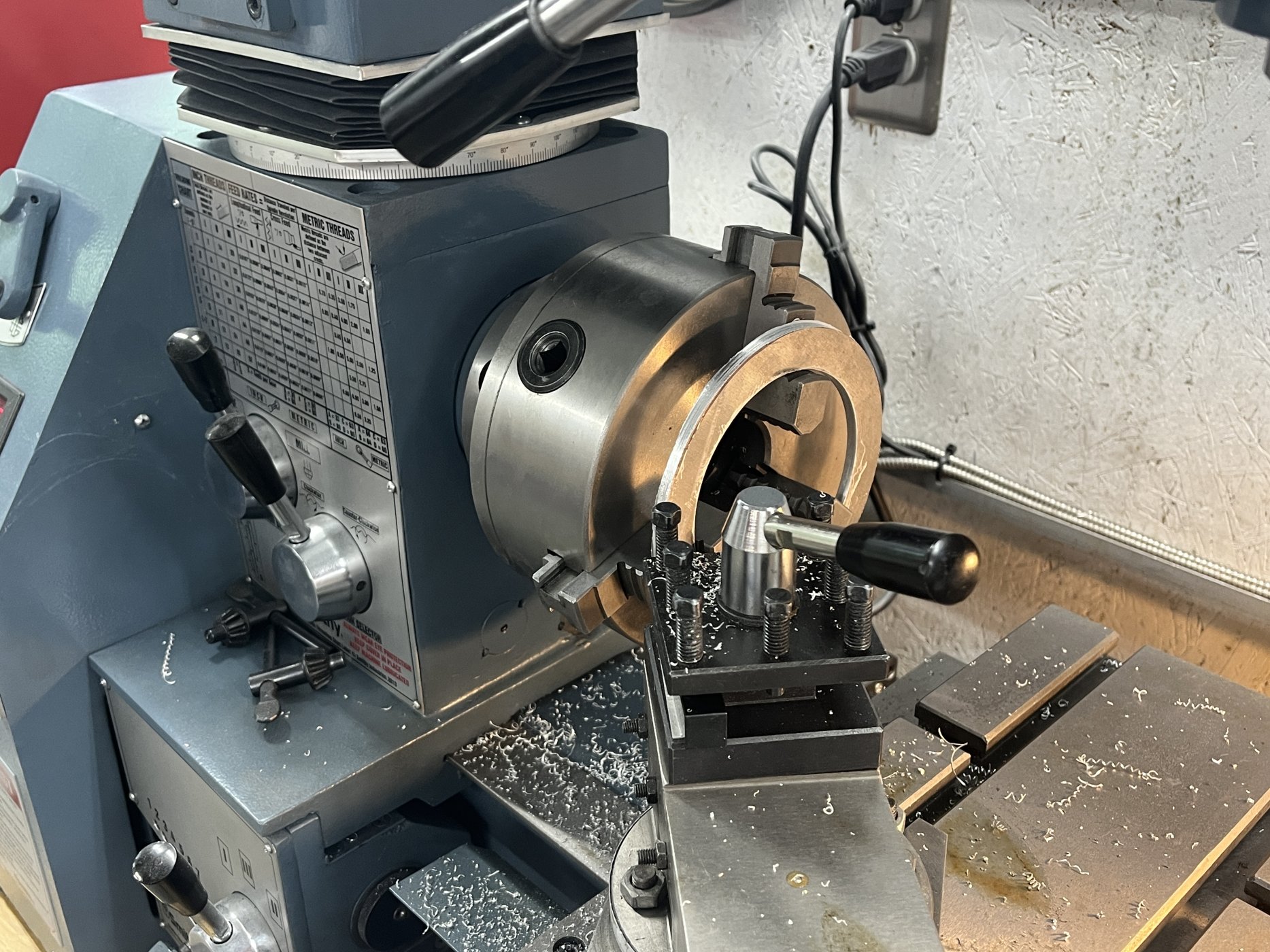
Once the three-inch hole was cut and sanded to the exact diameter, the outside of the ring was rough cut with a jigsaw about an eight-inch oversize. Using the lathe, it was trimmed to a perfect circle. It was then sanded with increasing grit sandpaper for a nice finish.
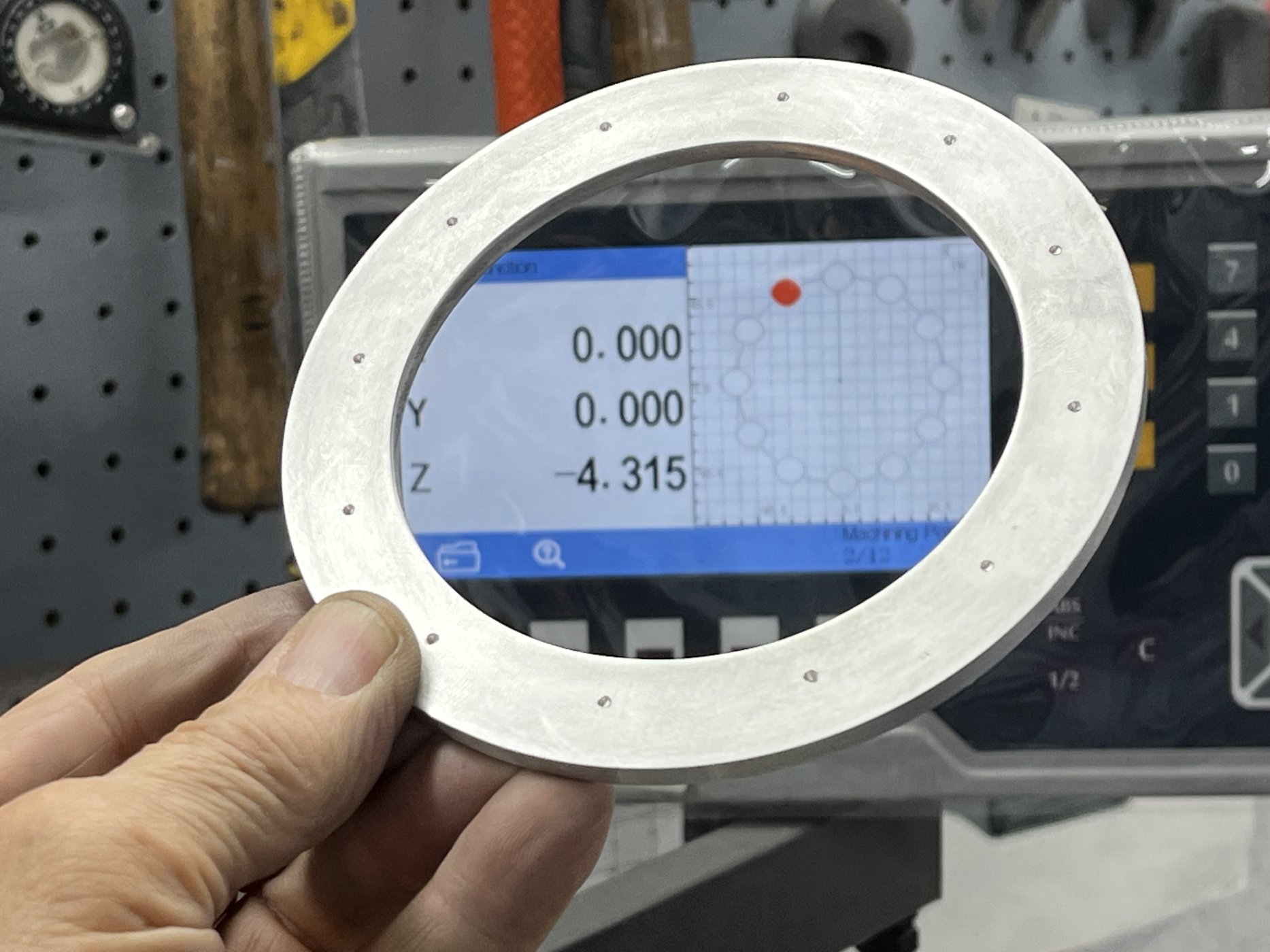
Using the mill's circular hole cutting function, twelve perfectly spaced holes were drilled for the 3/16” screws and Nyloc nuts.
The opening that had been cut to provide access to the fuel tank connections was glassed closed since the rear clip is now removable, and that opening is no longer needed. The completed parts were temporarily set in place.
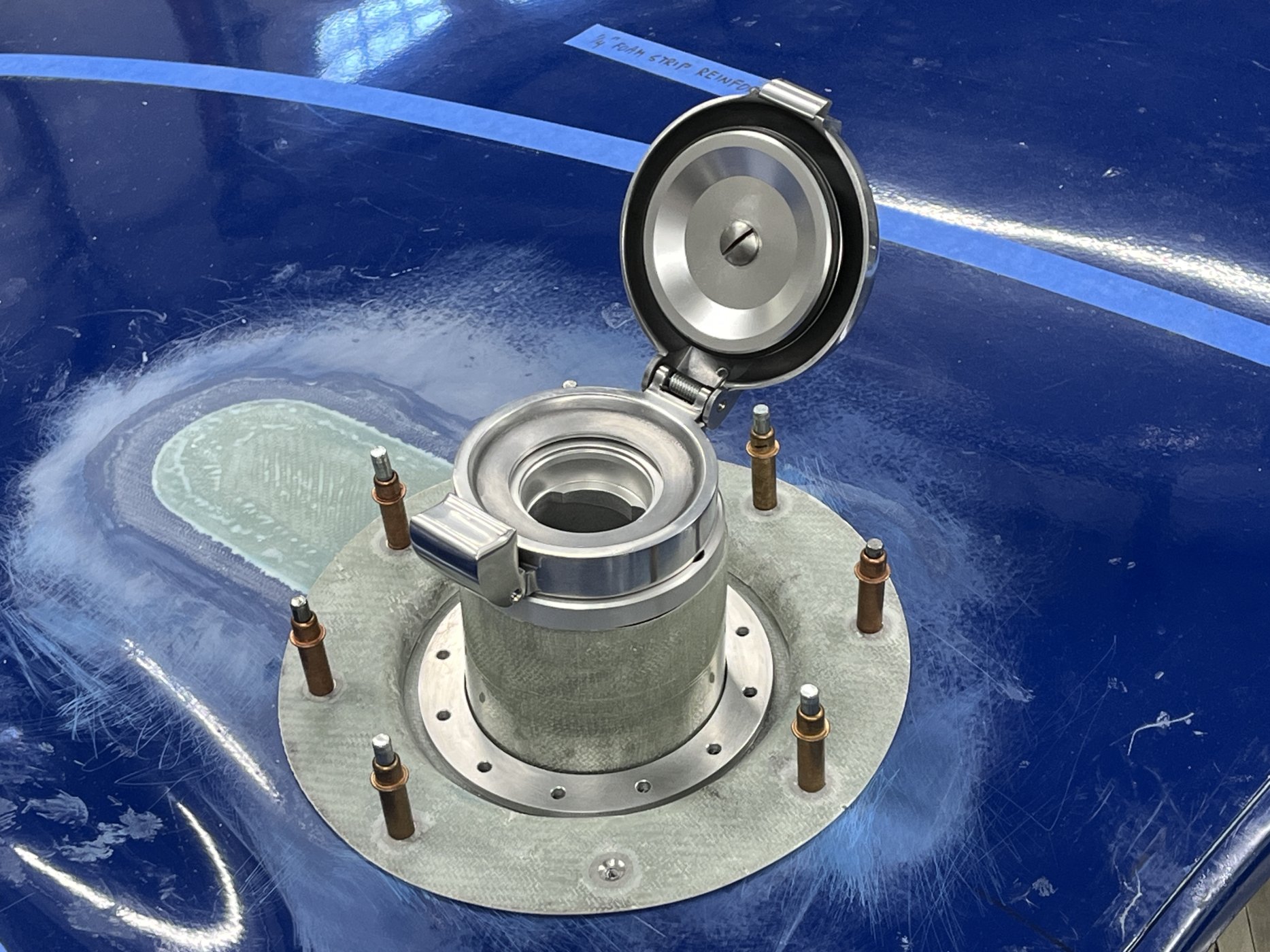
The filler cap is a high-quality item manufactured by Newton Equipment in England, closely resembling the original. It arrived from England less than a week after we ordered it online. https://shop.newton-equipment.com/p...ete-assembly-ol-za-002?variant=41191287718076
Remaining to be done is attaching the nutplates to the lower ring and a few more details. Hopefully, this project is starting to come into focus.
Another detail to capture the look of the original is the aluminum trim ring with bolts protruding upward around the base of the filler tube, visible in the previously posted picture of the original. On the original, this would have secured the fuel bladder. On our D Type, the bolts will connect the ring to the drip pan. It is purely for looks.
Cutting a perfect round trim ring was a full-day project. The ring was laid out on a discarded RCR fuel tank support. An undersized hole was cut to clear the three-inch filler tube. Since it was undersized, hours were spent sanding it to exactly match the diameter of the fiberglass tube. An exact fit was necessary, as it would help align the fiberglass filler tube with only a friction fit.
Once the three-inch hole was cut and sanded to the exact diameter, the outside of the ring was rough cut with a jigsaw about an eight-inch oversize. Using the lathe, it was trimmed to a perfect circle. It was then sanded with increasing grit sandpaper for a nice finish.
Using the mill's circular hole cutting function, twelve perfectly spaced holes were drilled for the 3/16” screws and Nyloc nuts.
The opening that had been cut to provide access to the fuel tank connections was glassed closed since the rear clip is now removable, and that opening is no longer needed. The completed parts were temporarily set in place.
The filler cap is a high-quality item manufactured by Newton Equipment in England, closely resembling the original. It arrived from England less than a week after we ordered it online. https://shop.newton-equipment.com/p...ete-assembly-ol-za-002?variant=41191287718076
Remaining to be done is attaching the nutplates to the lower ring and a few more details. Hopefully, this project is starting to come into focus.
Fuel Filler, Part IV.
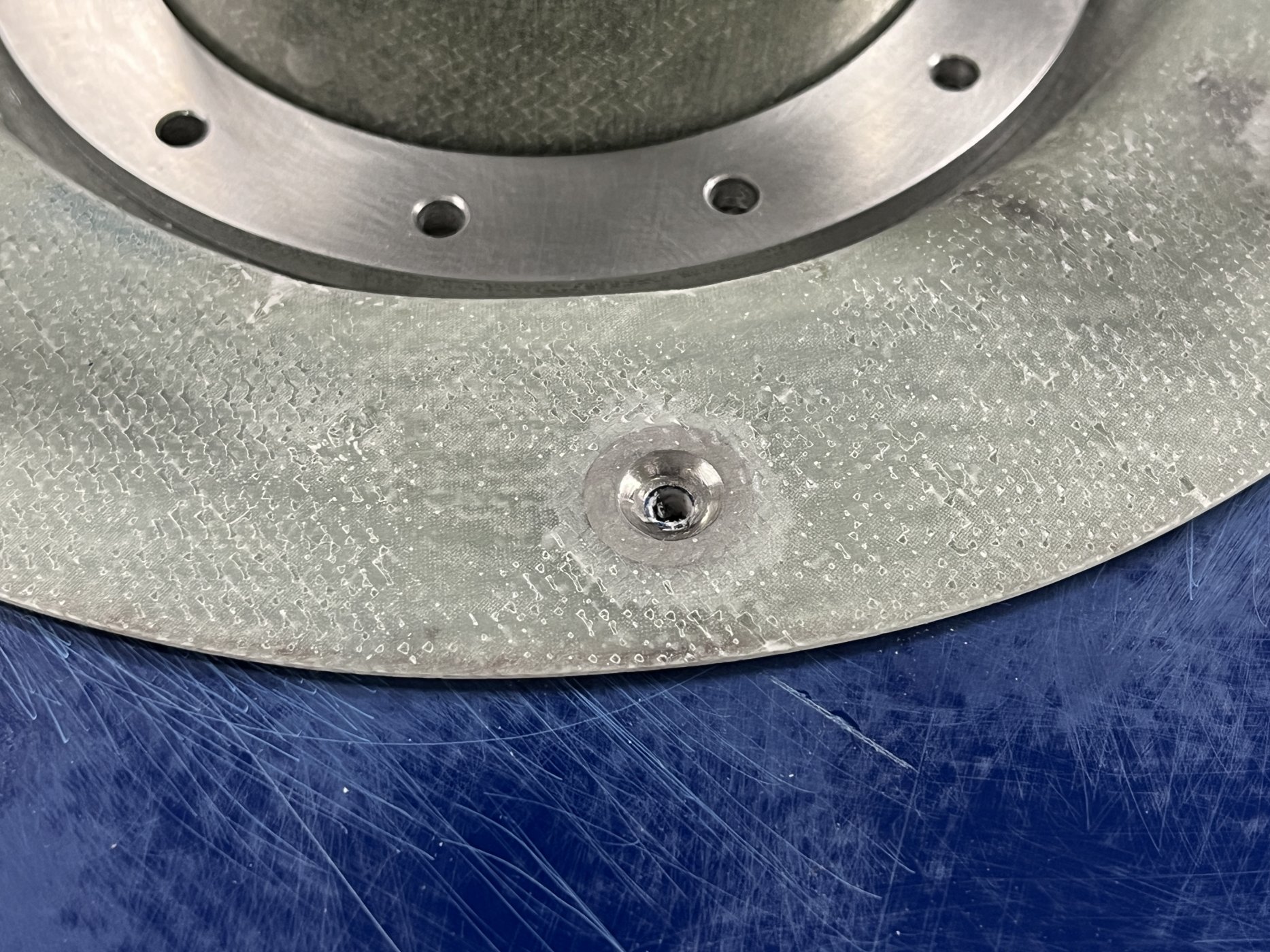
The top and bottom rings sandwich the top of the clip and are held together with #8 countersunk screws and nutplates. The eight screws are removable so that the top ring can be set aside, permitting the rear clip to be lifted upward and off the car. Counter-sunk screws into several layers of fiberglass could damage the fiberglass if no washers are used. Since the original was held in place with rivets, we sought a means of protecting the fiberglass without relying on large washers and round-headed screws.
Timmerman washers are used with countersunk screws, but a means of making them invisible was needed. The holes were tapered to fit the Timmerman washers, which were then held in place with epoxy. Next, a layer of fiberglass was overlaid on the entire ring, covering the washers. Once the glass had cured, it was cut away from the tapered portion of the washers. Only the head of the screw will be visible once the parts are painted.
Nutplates were attached to the back side of the lower ring. Installation of the nutplates first required that the holes on the top ring, the body, and the drip pan be match-drilled with a 1/8-inch bit to confirm alignment.
The nutplates must be centered between the rivet holes. A nutplate with the “nut” removed was used as a drilling jig. The rivet holes were drilled to 3/32”.
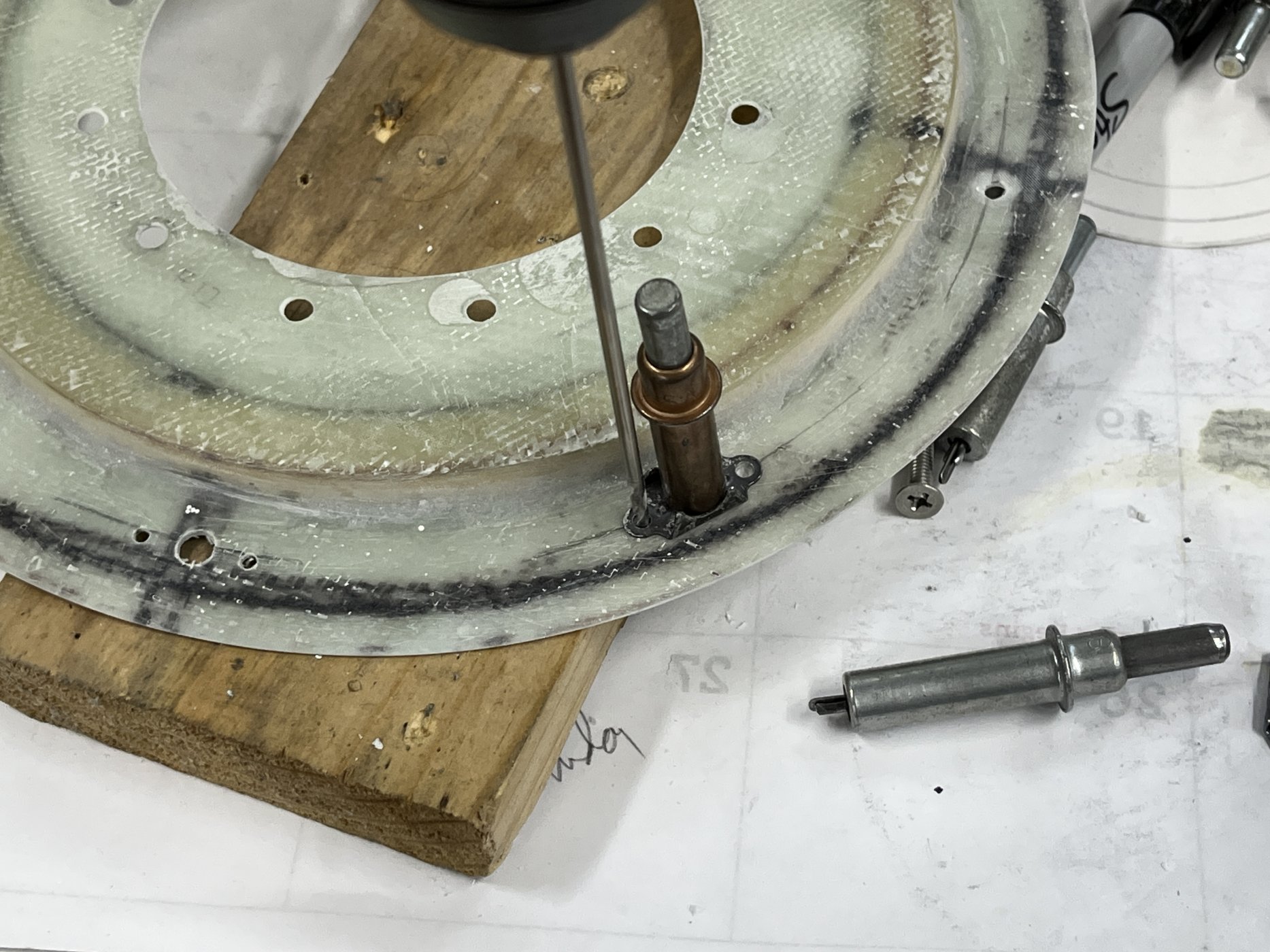
At this point, the rings were sprayed with white sanding primer. Countersunk rivets were placed using a squeeze tool.
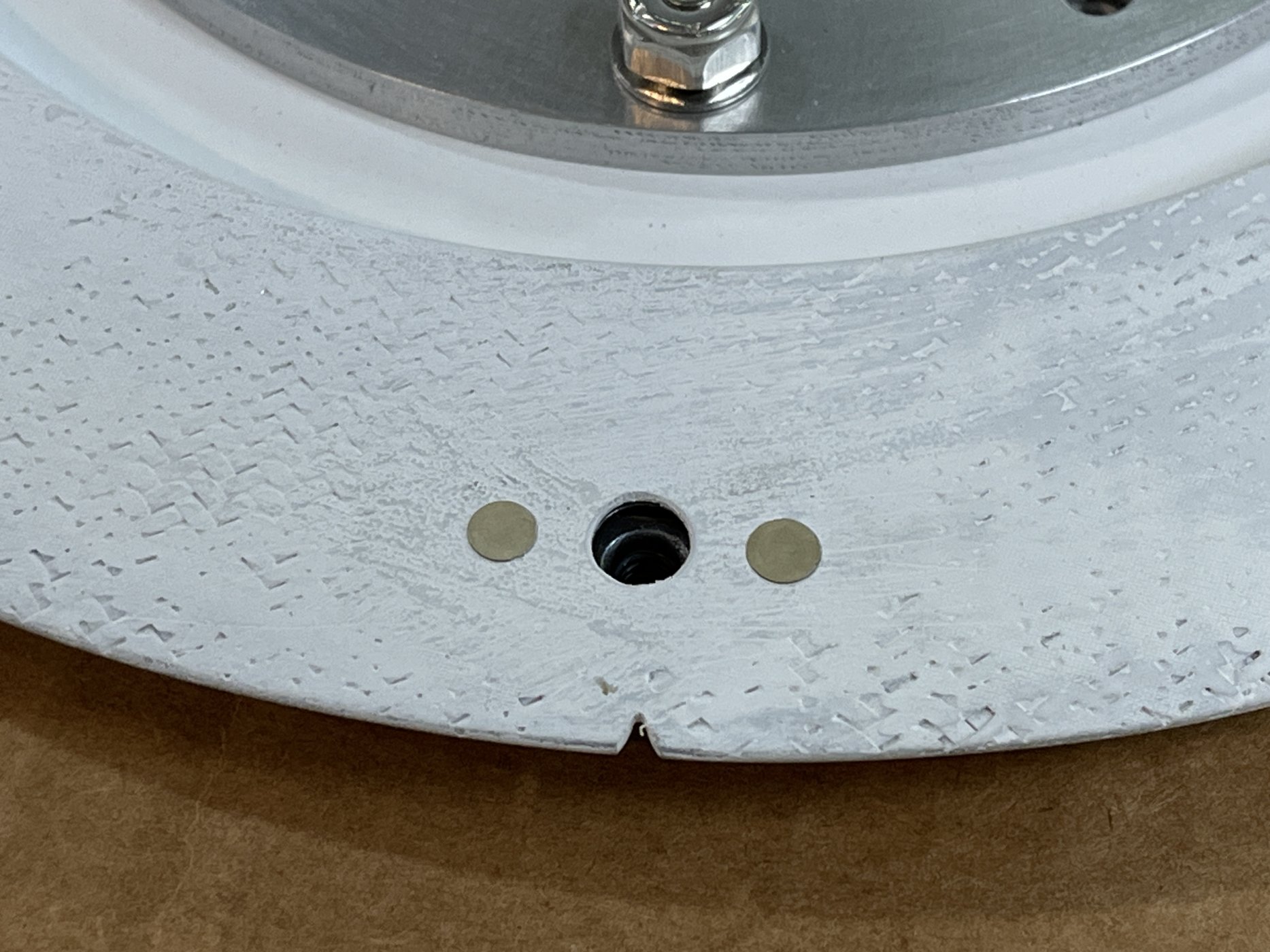
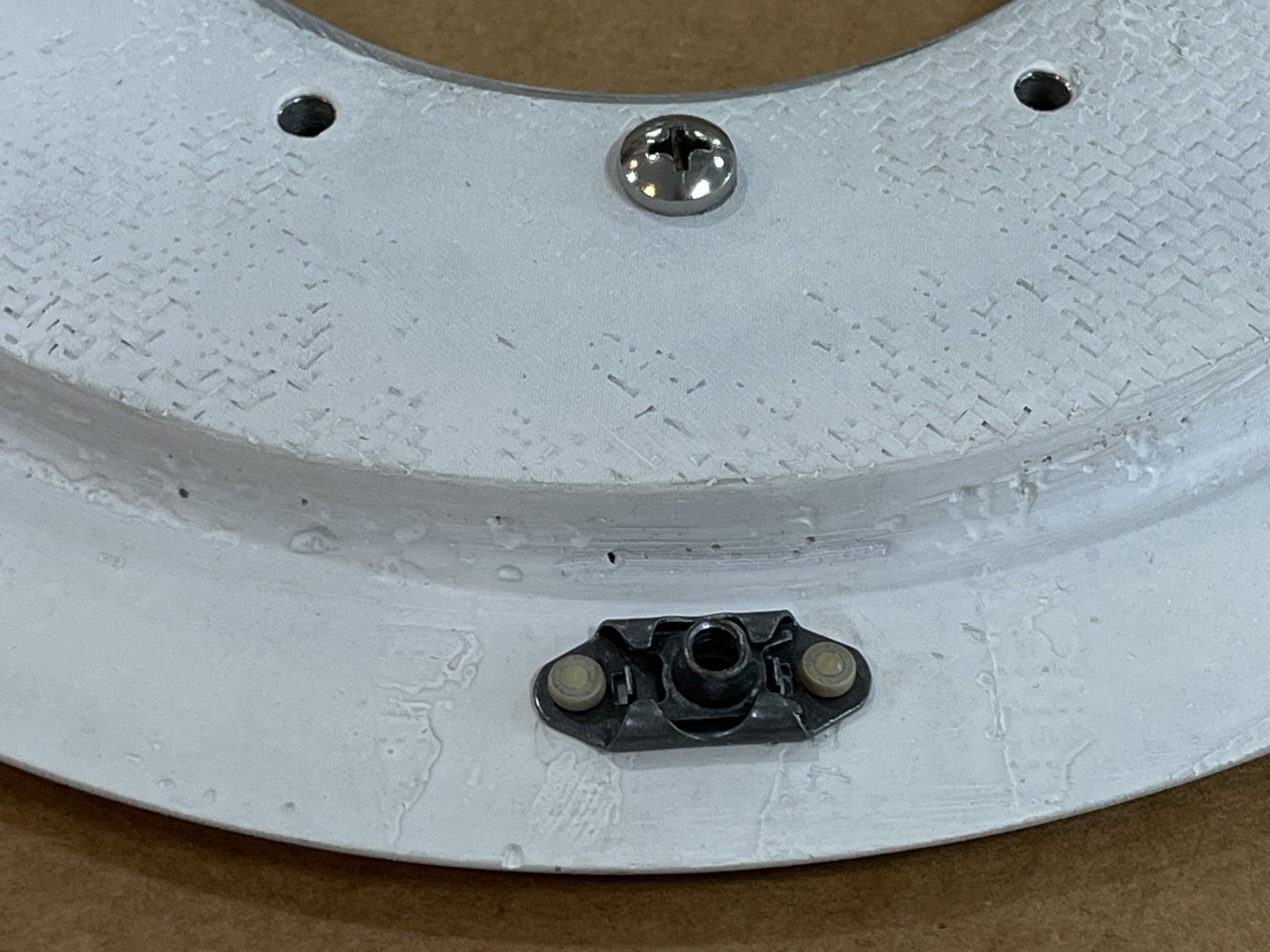
The upper and lower rings are now mostly finished.
The top and bottom rings sandwich the top of the clip and are held together with #8 countersunk screws and nutplates. The eight screws are removable so that the top ring can be set aside, permitting the rear clip to be lifted upward and off the car. Counter-sunk screws into several layers of fiberglass could damage the fiberglass if no washers are used. Since the original was held in place with rivets, we sought a means of protecting the fiberglass without relying on large washers and round-headed screws.
Timmerman washers are used with countersunk screws, but a means of making them invisible was needed. The holes were tapered to fit the Timmerman washers, which were then held in place with epoxy. Next, a layer of fiberglass was overlaid on the entire ring, covering the washers. Once the glass had cured, it was cut away from the tapered portion of the washers. Only the head of the screw will be visible once the parts are painted.
Nutplates were attached to the back side of the lower ring. Installation of the nutplates first required that the holes on the top ring, the body, and the drip pan be match-drilled with a 1/8-inch bit to confirm alignment.
The nutplates must be centered between the rivet holes. A nutplate with the “nut” removed was used as a drilling jig. The rivet holes were drilled to 3/32”.
At this point, the rings were sprayed with white sanding primer. Countersunk rivets were placed using a squeeze tool.
The upper and lower rings are now mostly finished.
Fuel Filler Part V.
A three-inch diameter plate made from two layers of fiberglass was set one-eighth inch below the top of the filler tube, resting on temporary wood supports held in place with dabs of hot glue.
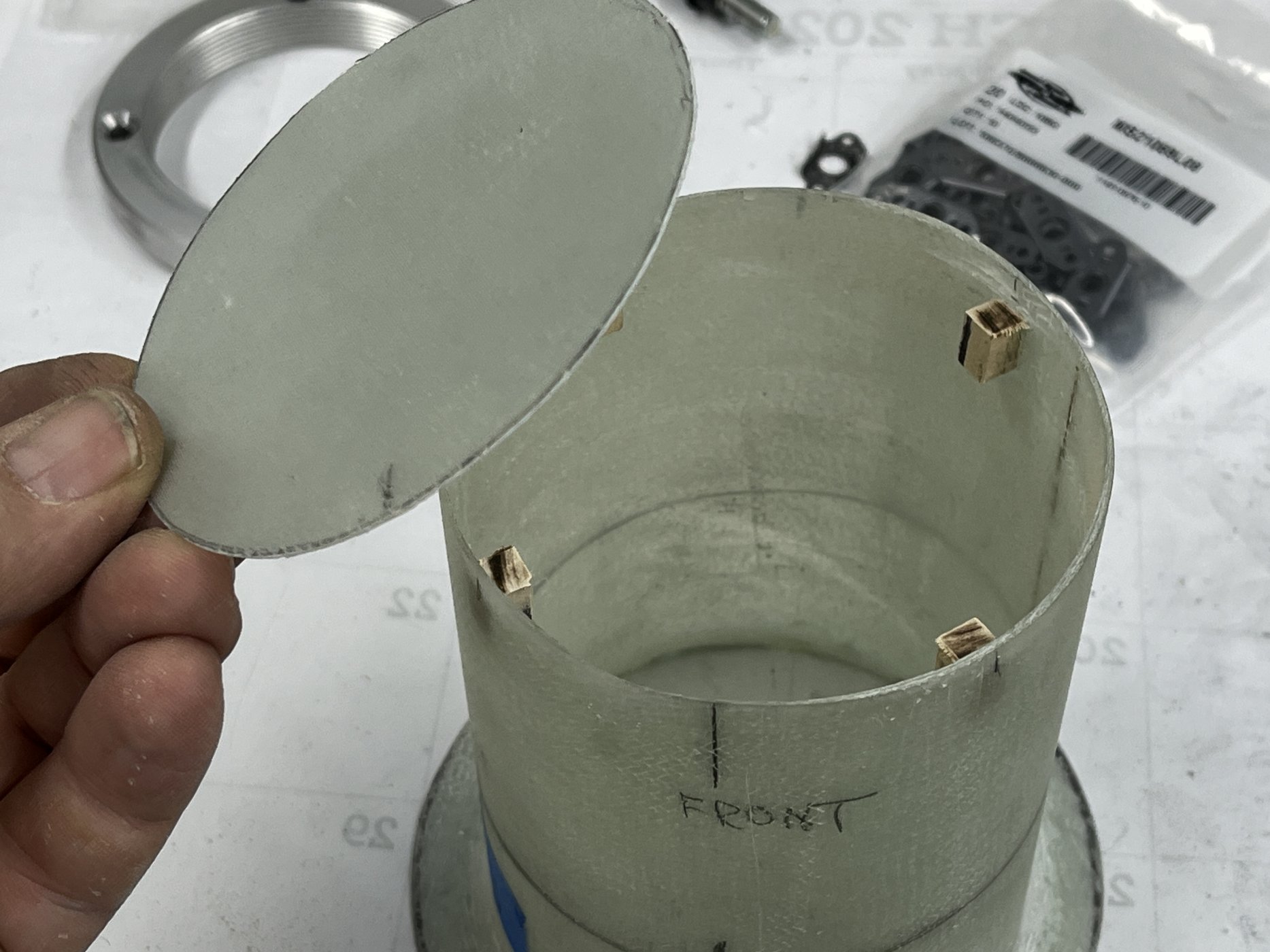
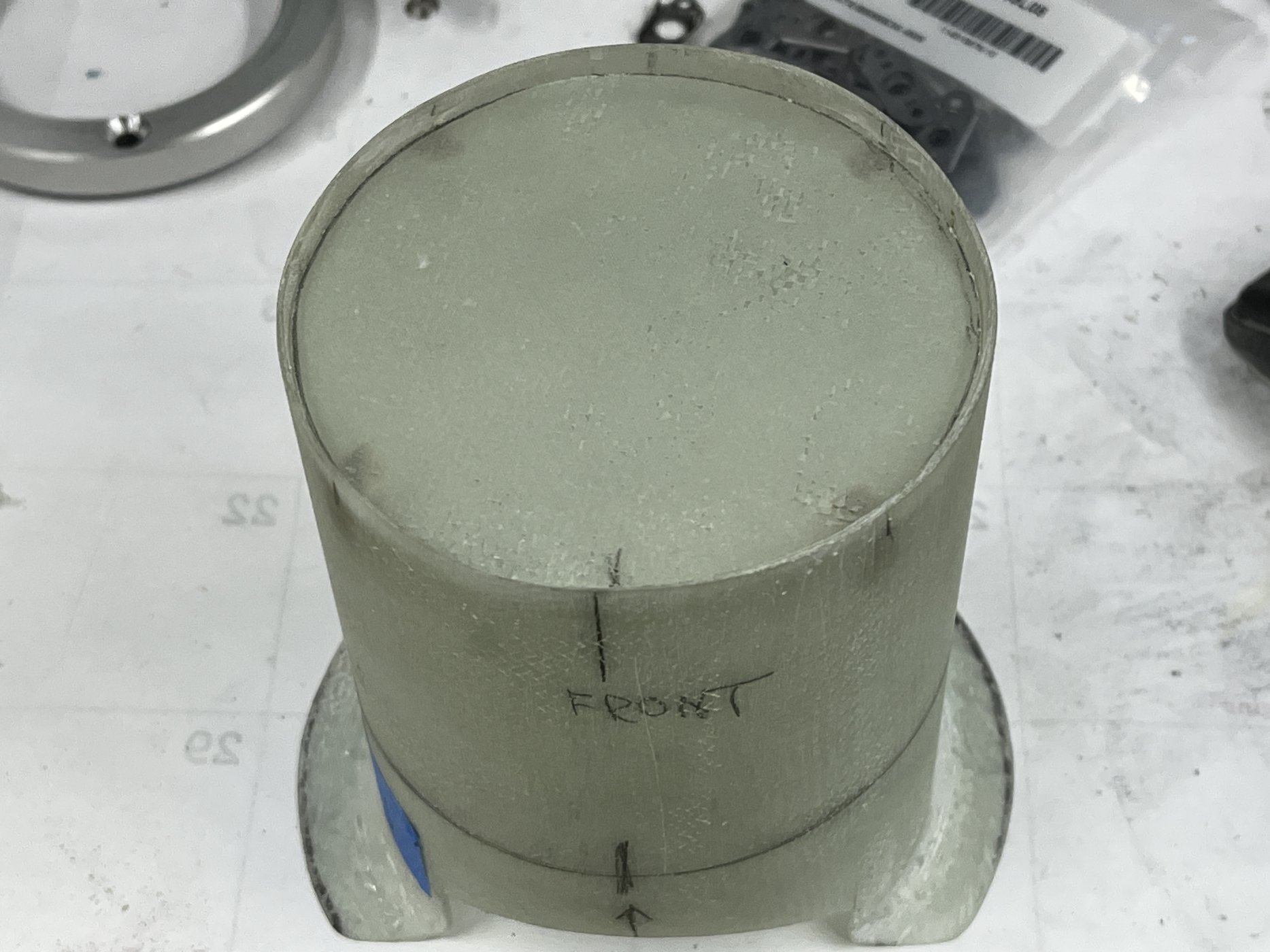
Epoxy mixed with flox was then poured to fill the eighth-inch gap, level with the top of the tube. Once this dried, the epoxy/flox was sanded smooth, and another layer of fiberglass was applied. Once dry, the four holes for screws to secure the cap and the large center hole were drilled.
The fuel filler attachment ring was attached with four screws, and the temporary wood supports were removed.
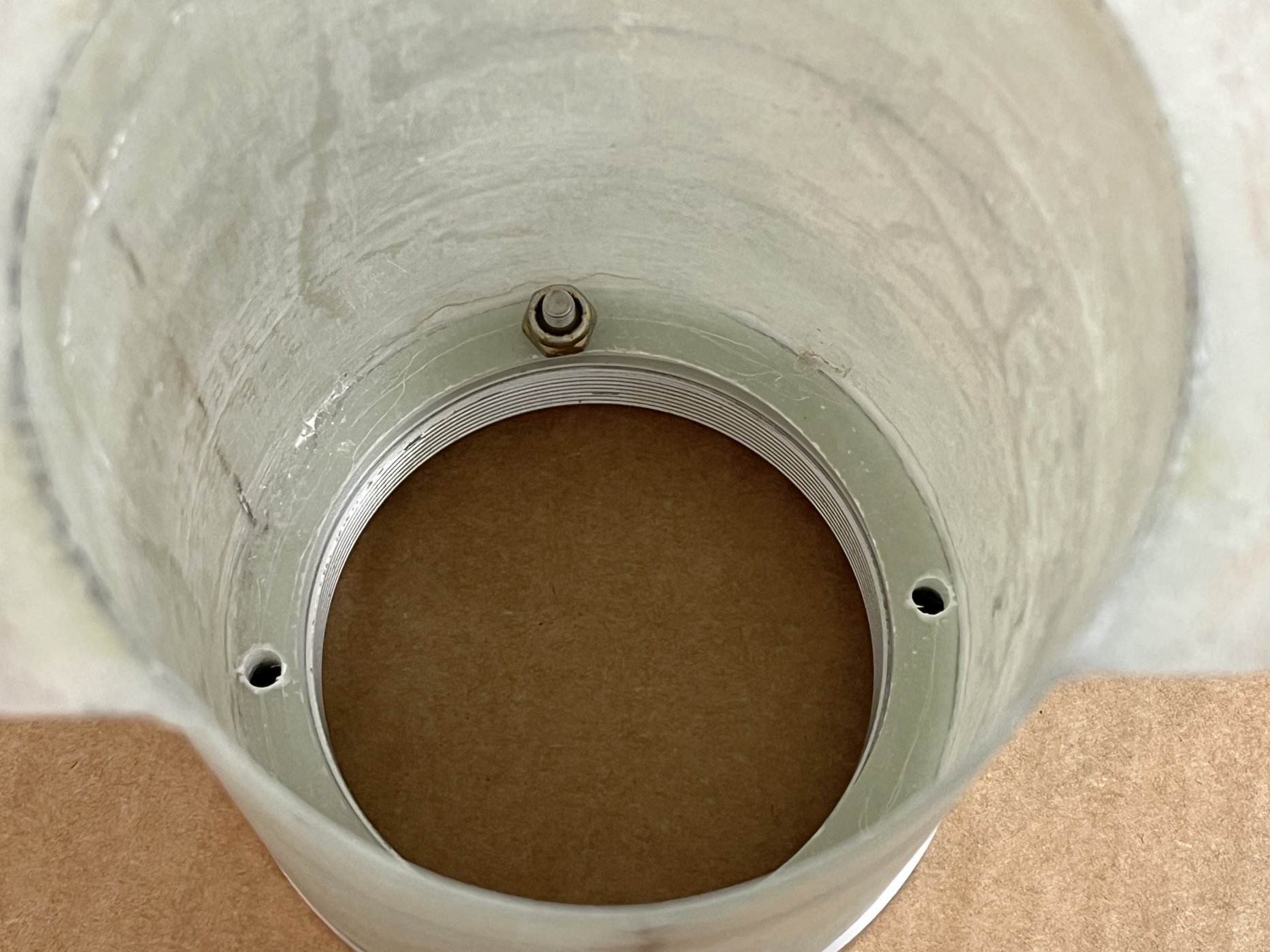
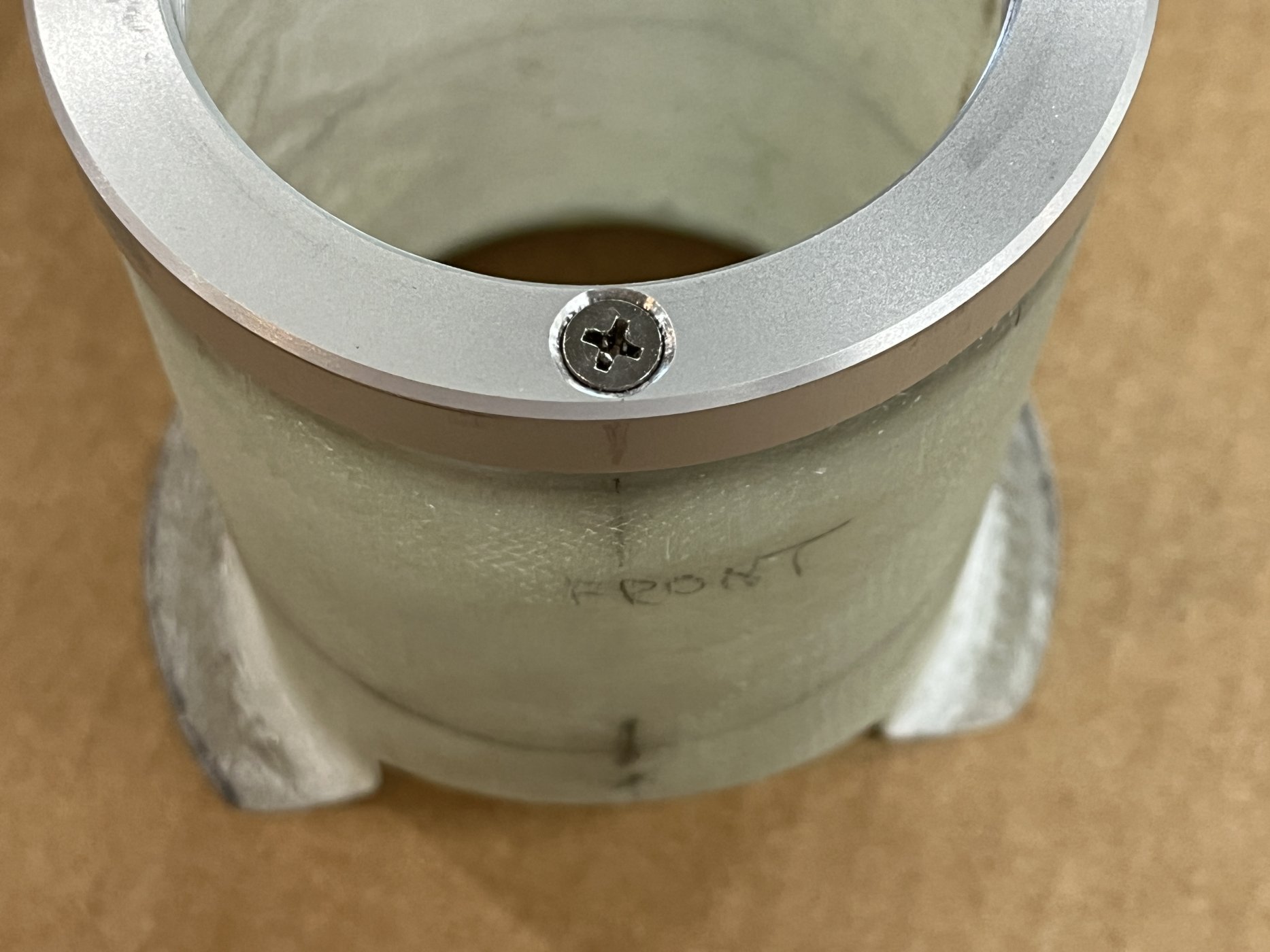
The collection of parts is nearing completion. Next, we will test these parts to see if this crazy project will work.
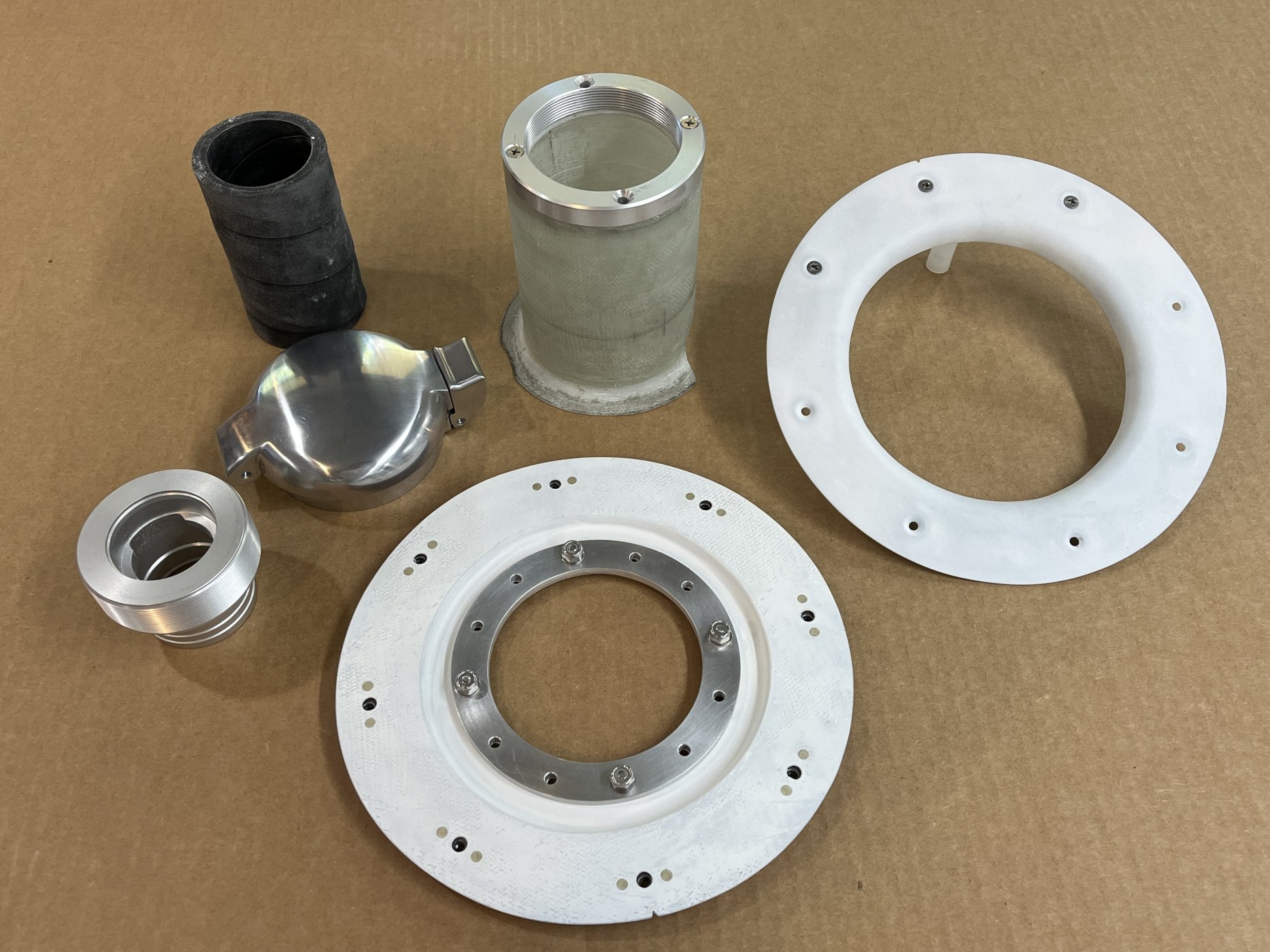
A three-inch diameter plate made from two layers of fiberglass was set one-eighth inch below the top of the filler tube, resting on temporary wood supports held in place with dabs of hot glue.
Epoxy mixed with flox was then poured to fill the eighth-inch gap, level with the top of the tube. Once this dried, the epoxy/flox was sanded smooth, and another layer of fiberglass was applied. Once dry, the four holes for screws to secure the cap and the large center hole were drilled.
The fuel filler attachment ring was attached with four screws, and the temporary wood supports were removed.
The collection of parts is nearing completion. Next, we will test these parts to see if this crazy project will work.
Fuel Filler, Part VI.
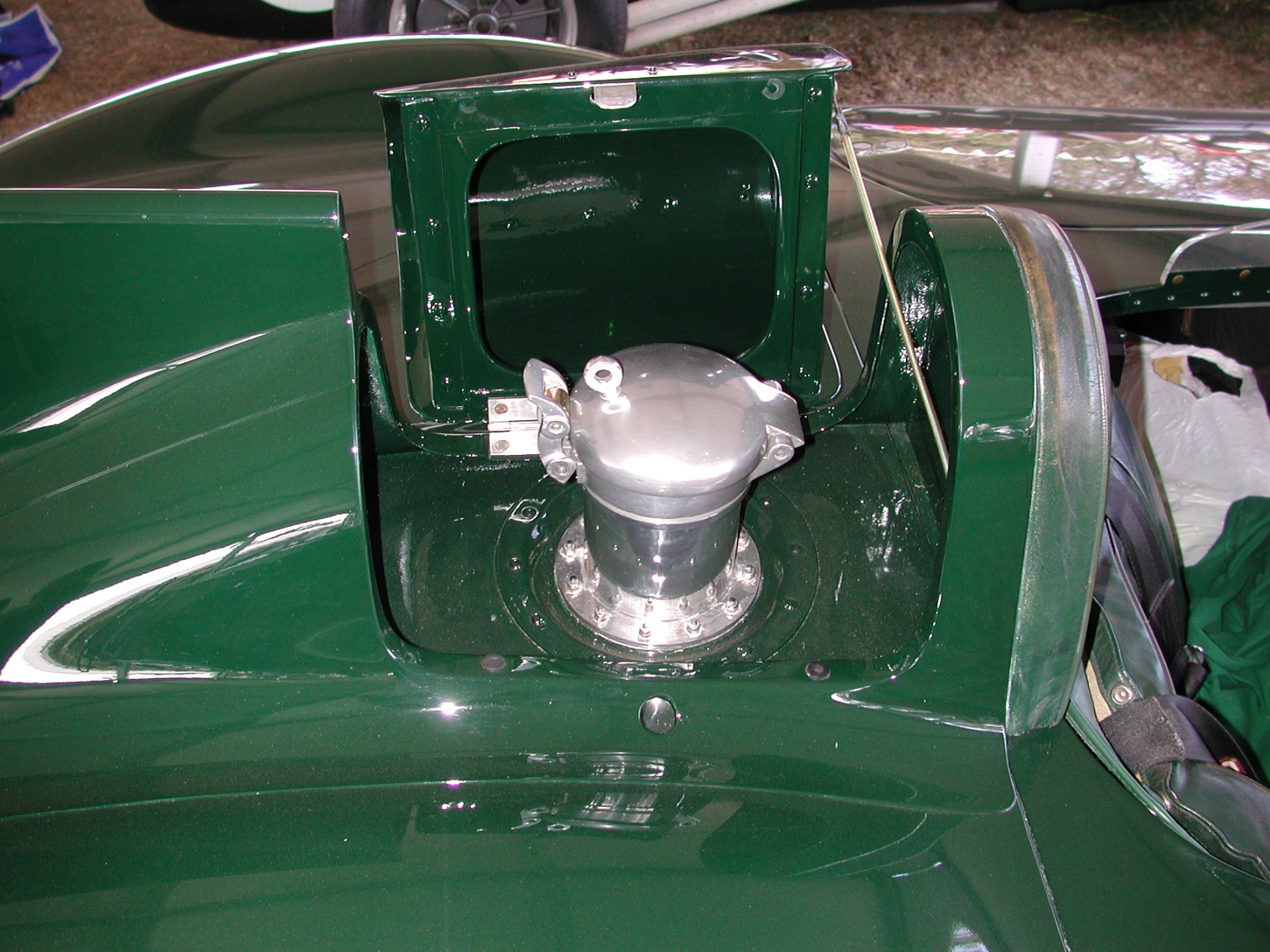
Pictures of originals show the fuel filler tube either bare aluminum or painted. Here is an original with an aluminum tube, although the reflection from the painted surfaces makes it look a bit green.
To add a bit of bling, we decided to wrap the fiberglass filler tube with 26-gauge aluminum. A pattern was made, and the ally cut. It was held in place with Methyl acrylate adhesive.
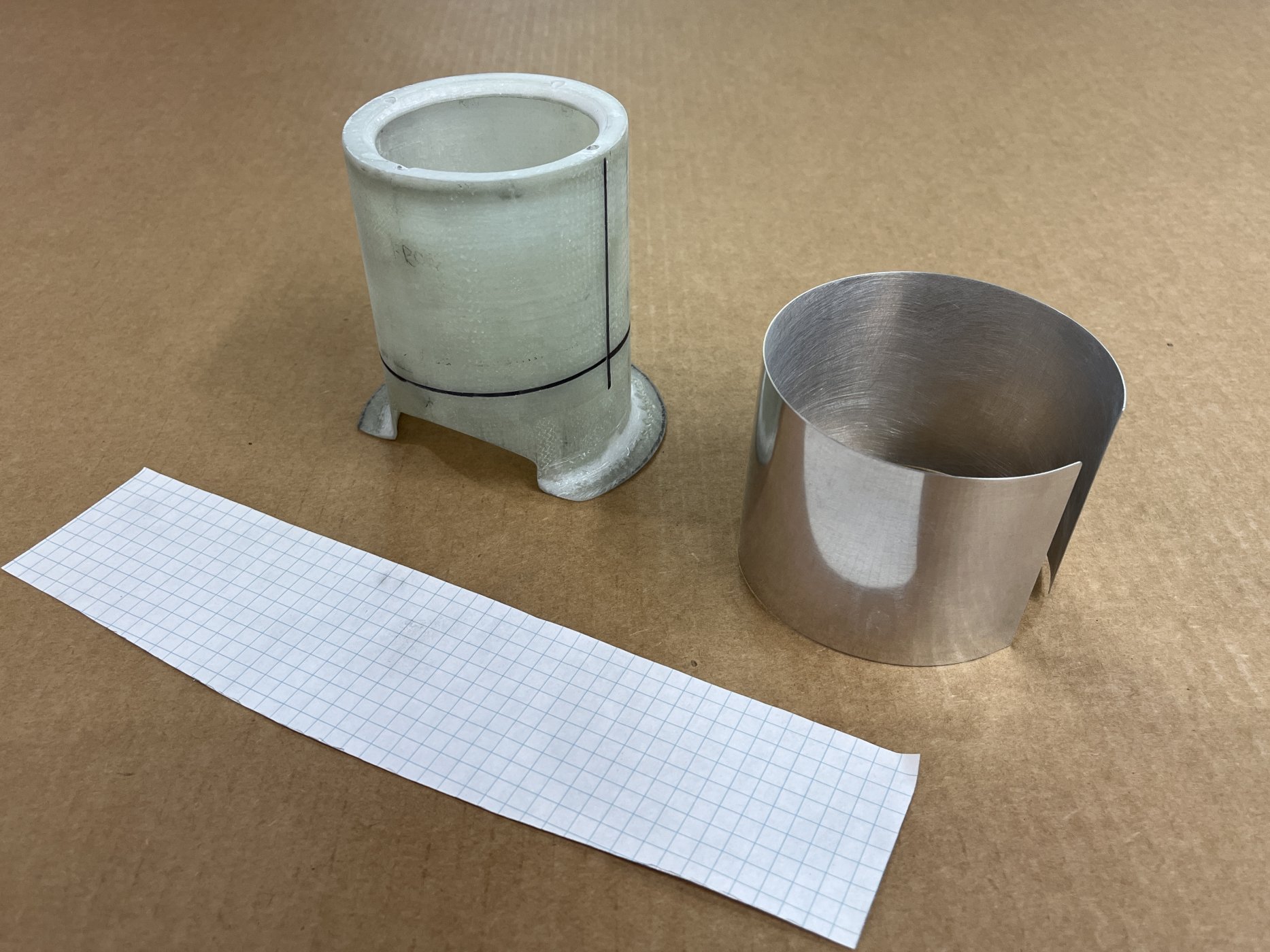
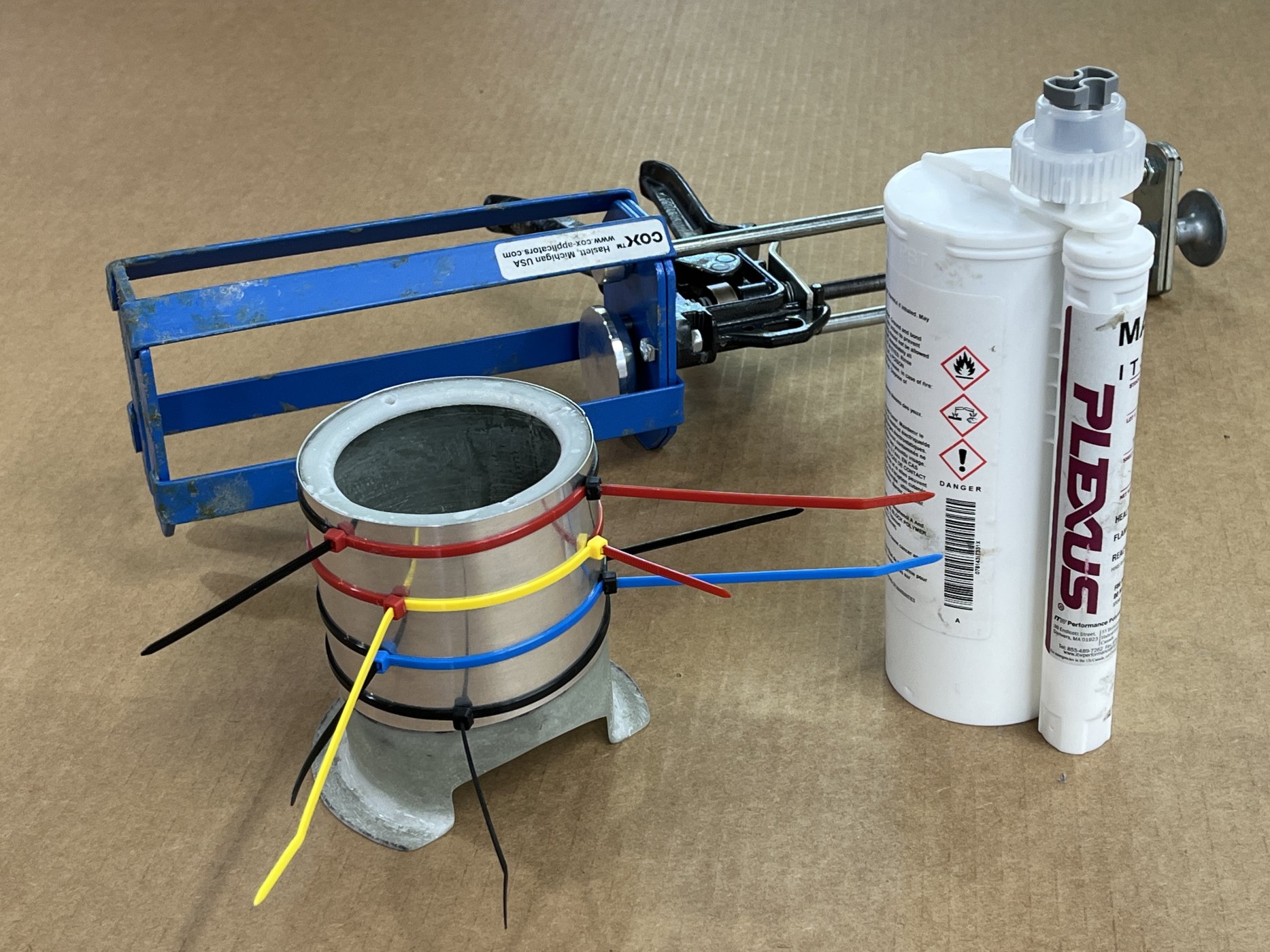
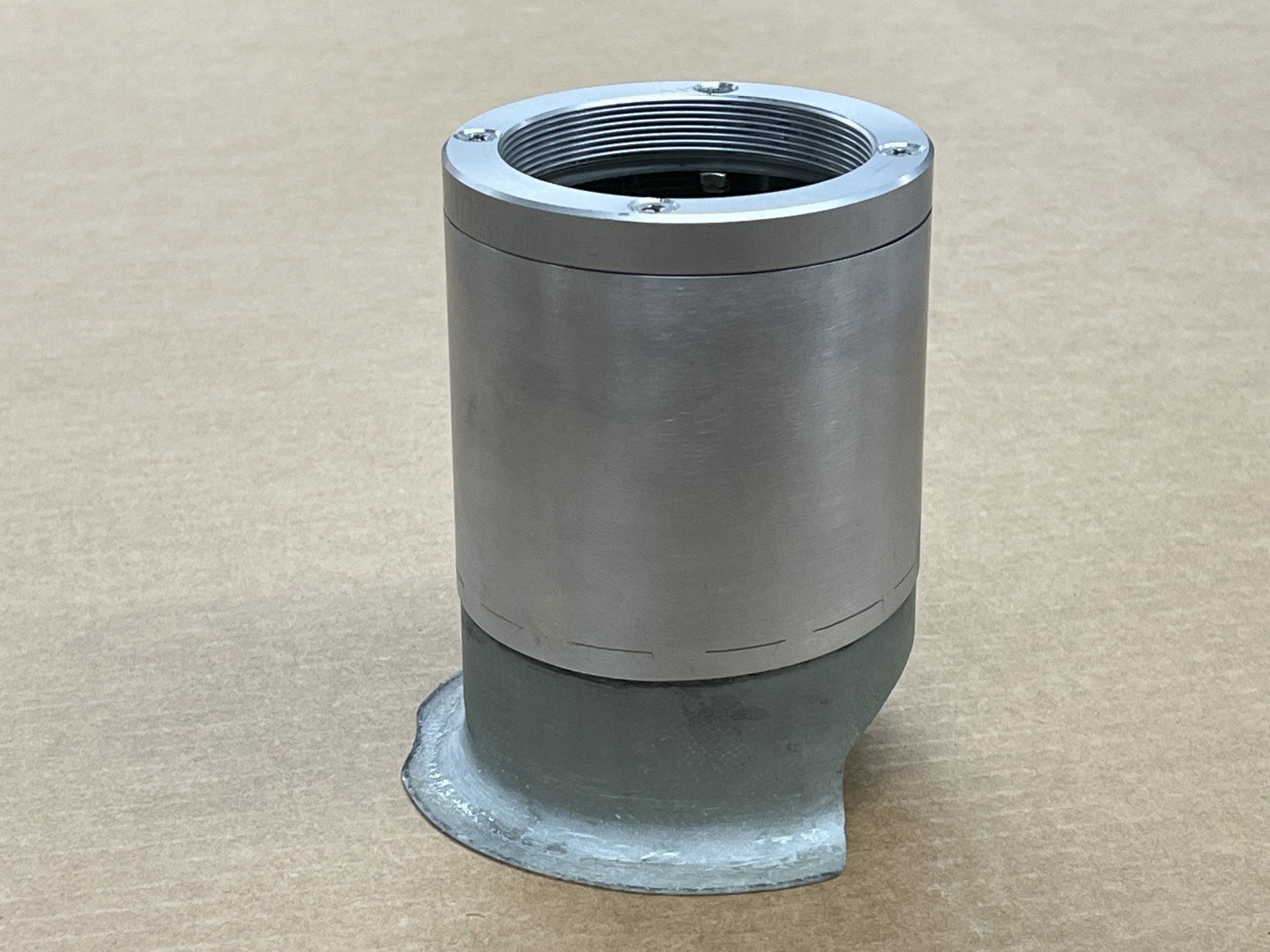
With the pieces mostly complete, the next step will be setting it in place to find out if this project will actually work.
Pictures of originals show the fuel filler tube either bare aluminum or painted. Here is an original with an aluminum tube, although the reflection from the painted surfaces makes it look a bit green.
To add a bit of bling, we decided to wrap the fiberglass filler tube with 26-gauge aluminum. A pattern was made, and the ally cut. It was held in place with Methyl acrylate adhesive.
With the pieces mostly complete, the next step will be setting it in place to find out if this project will actually work.
Fuel Filler, Part VII
With most of the necessary parts completed, it was time to put them together to determine if this would work. The goal is to have a filler tube that functions similarly to the original, resembles it, and allows for the removal of the rear clip.
The holes in the body previously drilled to 3/32” were enlarged to ¼”. This will permit some adjustability in centering the parts.
The parts were assembled, using the 8-32 countersunk screws to connect the lower and upper rings in place. The upper ring mated flush with the body.
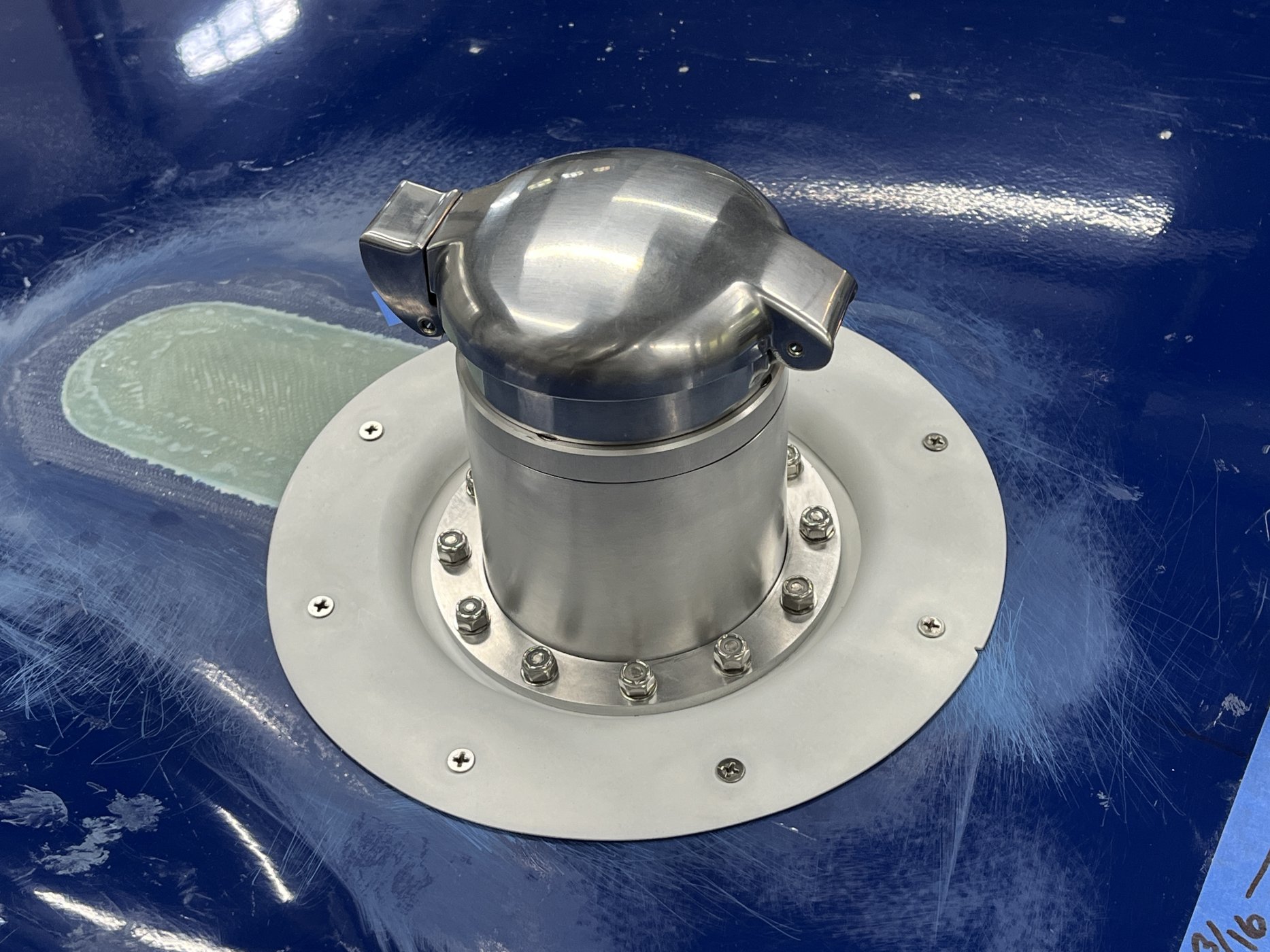
Removing the rear clip will be a rare occurrence, and doing so will require the removal of many screws. Here are views of the filler with the rear clip removed.
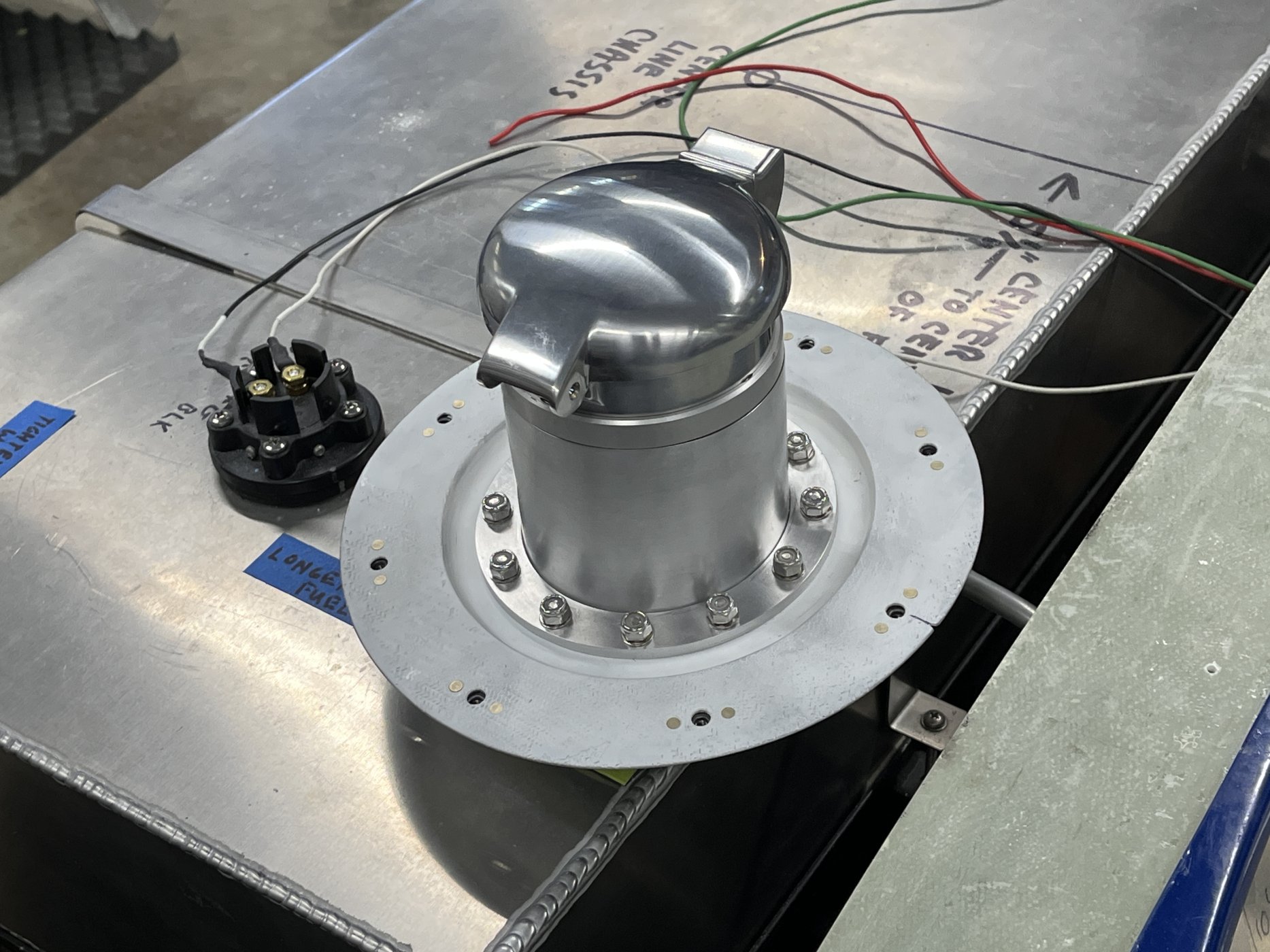
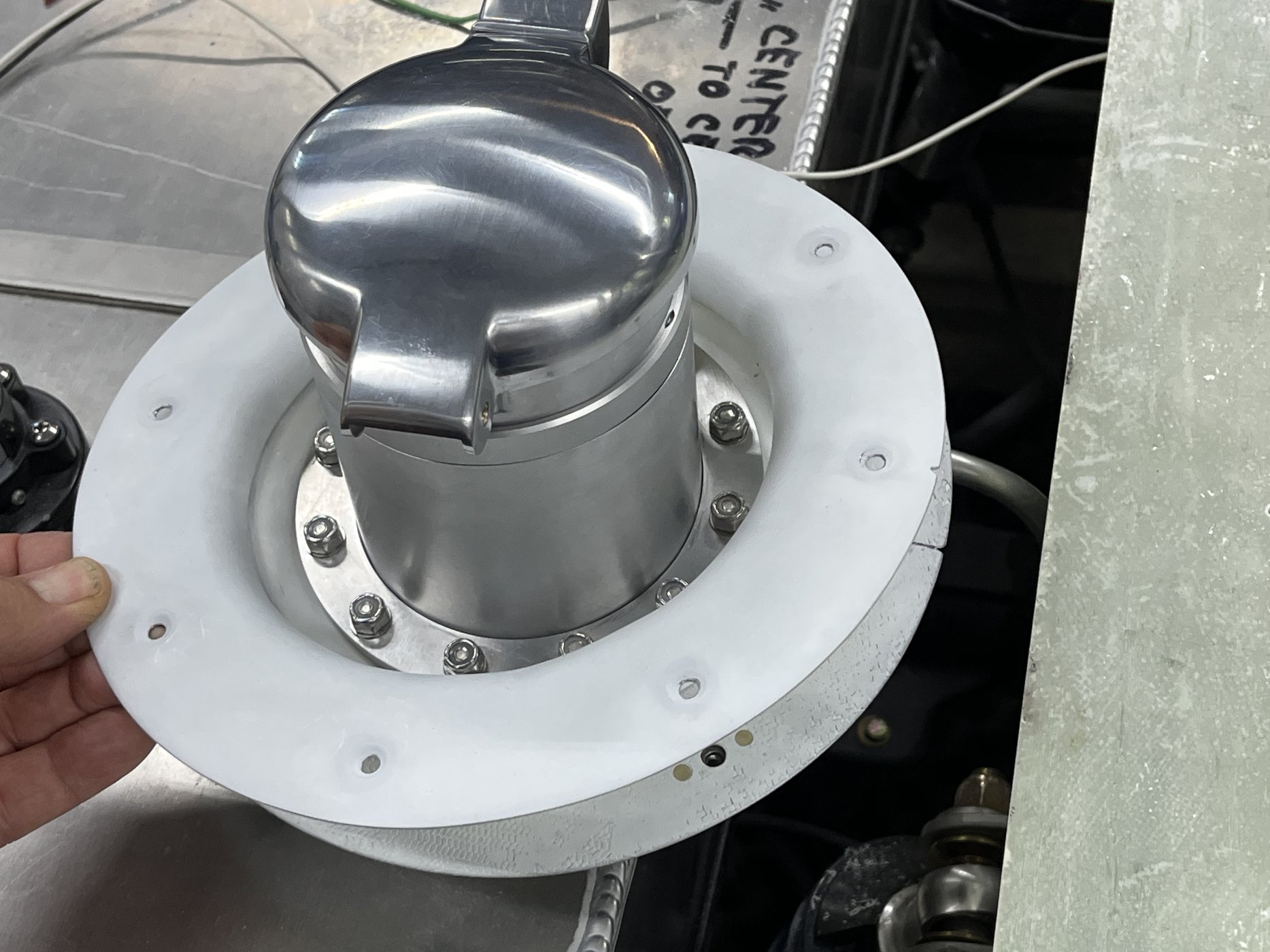
Designing, sorting, testing, and fabricating the filler to work with the removable clip for the last two months has taken an unreasonable amount of time, especially for a detail that will only be visible when the D is refueled. However, I am ready to declare this part of the project DONE!
With most of the necessary parts completed, it was time to put them together to determine if this would work. The goal is to have a filler tube that functions similarly to the original, resembles it, and allows for the removal of the rear clip.
The holes in the body previously drilled to 3/32” were enlarged to ¼”. This will permit some adjustability in centering the parts.
The parts were assembled, using the 8-32 countersunk screws to connect the lower and upper rings in place. The upper ring mated flush with the body.
Removing the rear clip will be a rare occurrence, and doing so will require the removal of many screws. Here are views of the filler with the rear clip removed.
Designing, sorting, testing, and fabricating the filler to work with the removable clip for the last two months has taken an unreasonable amount of time, especially for a detail that will only be visible when the D is refueled. However, I am ready to declare this part of the project DONE!

Davidmgbv8
Supporter
Yes but it is these small details that really finish the project and truly make it a homage to the original.
The Great Separation, Part V
Separating the rear from the center likely weakens the structure despite the rear supports and the forward lip being secured with truss screws. The rear supports provide excellent vertical support, but no lateral support. To remedy this, we decided to add cross-bracing to the lower rear supports.
The goal was to keep this as minimal and straightforward as possible. One-half-inch square tubing was used, welded to 3/32” angle brackets, which were bolted to existing fastening points. The angled brackets were carefully bent to the same angle so that the braces would not bind when installed.
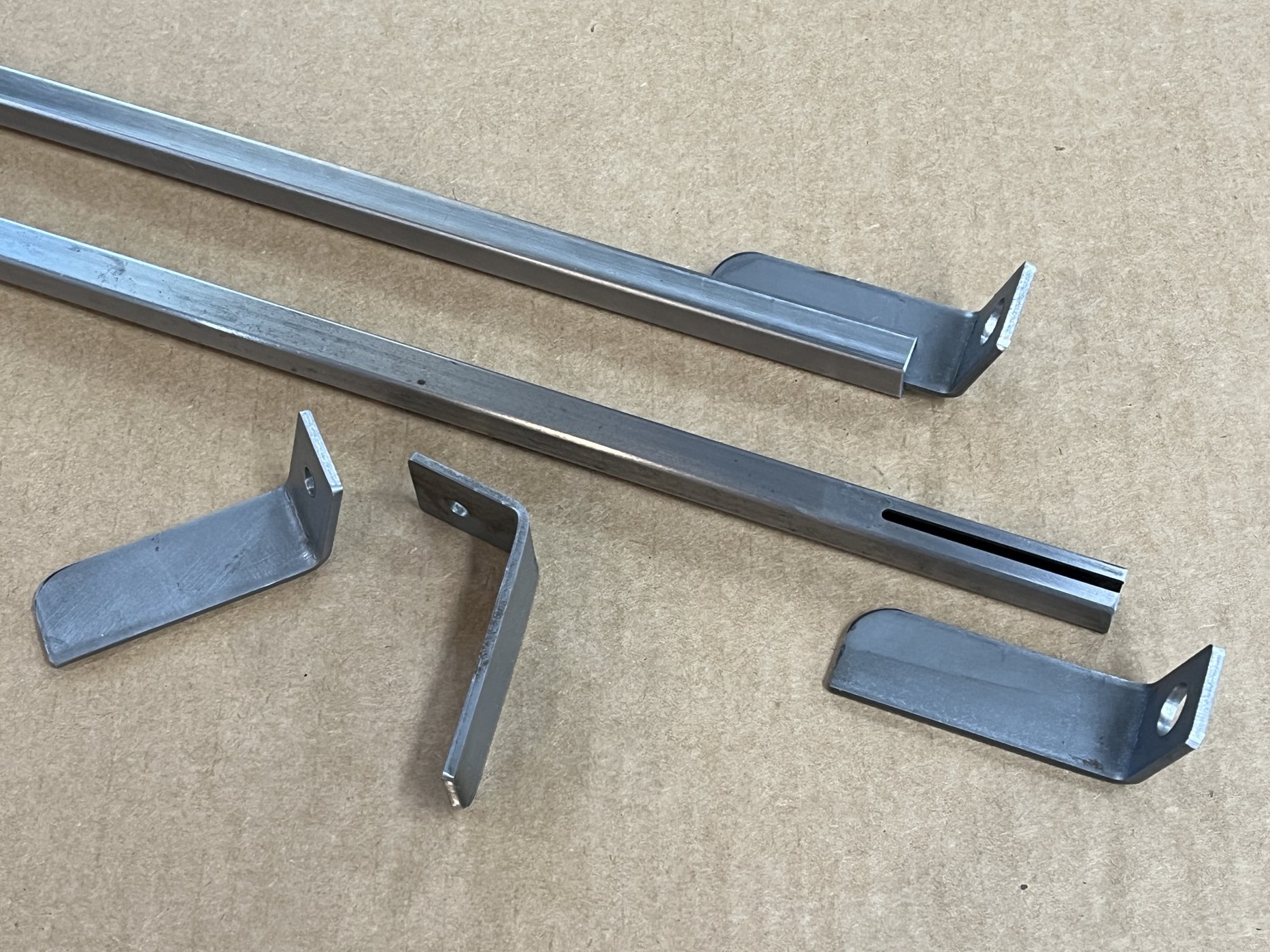
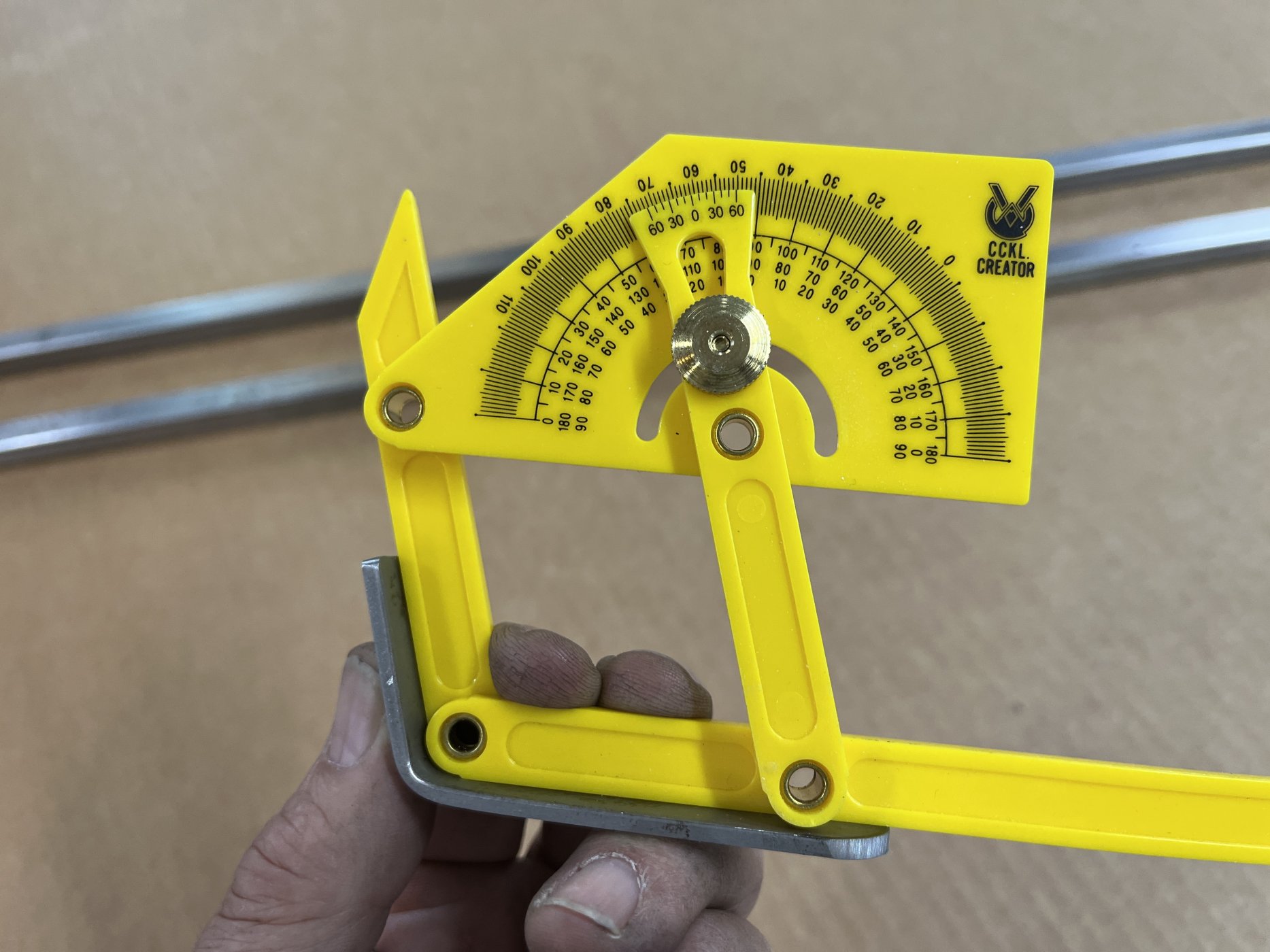
The cross braces were made to identical lengths and about a quarter inch short of the connecting points. Washers are used to make up the difference, providing a degree of adjustability.
When we first tested this setup, we made an interesting discovery. The measurement of the planned cross braces had a one-inch difference in length due to the lower frame twisting to one side. When the cross braces were adjusted to equal lengths, a good thing happened. The alignment of the lower frame between the wheels was within a quarter inch of being equal on both sides, indicating the rear axle is slightly biased to one side. We had not noticed the discrepancy before. Correcting that issue will be a project for another day.
The braces were welded, painted, and installed. The cross braces made the lower frame markedly more rigid.
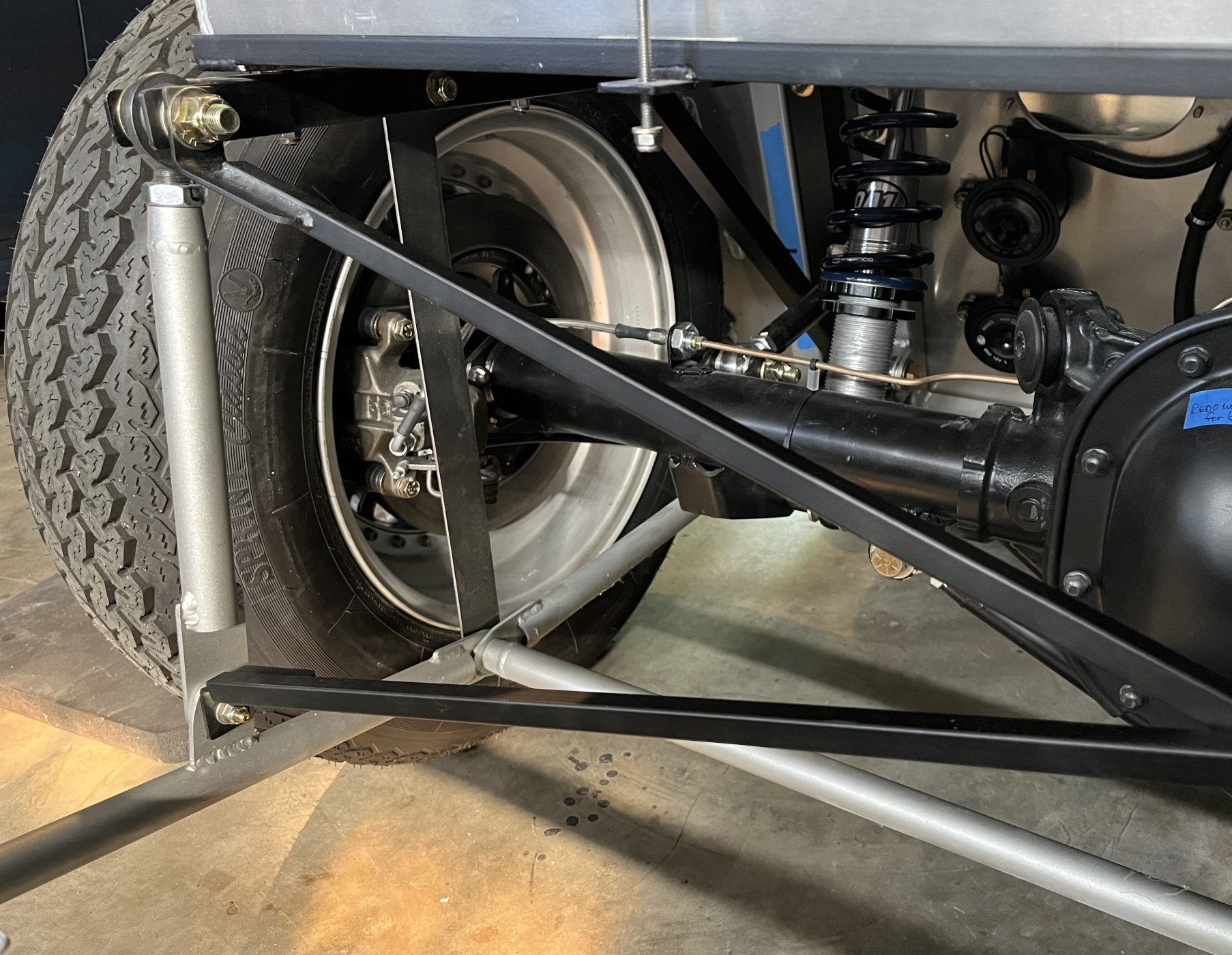
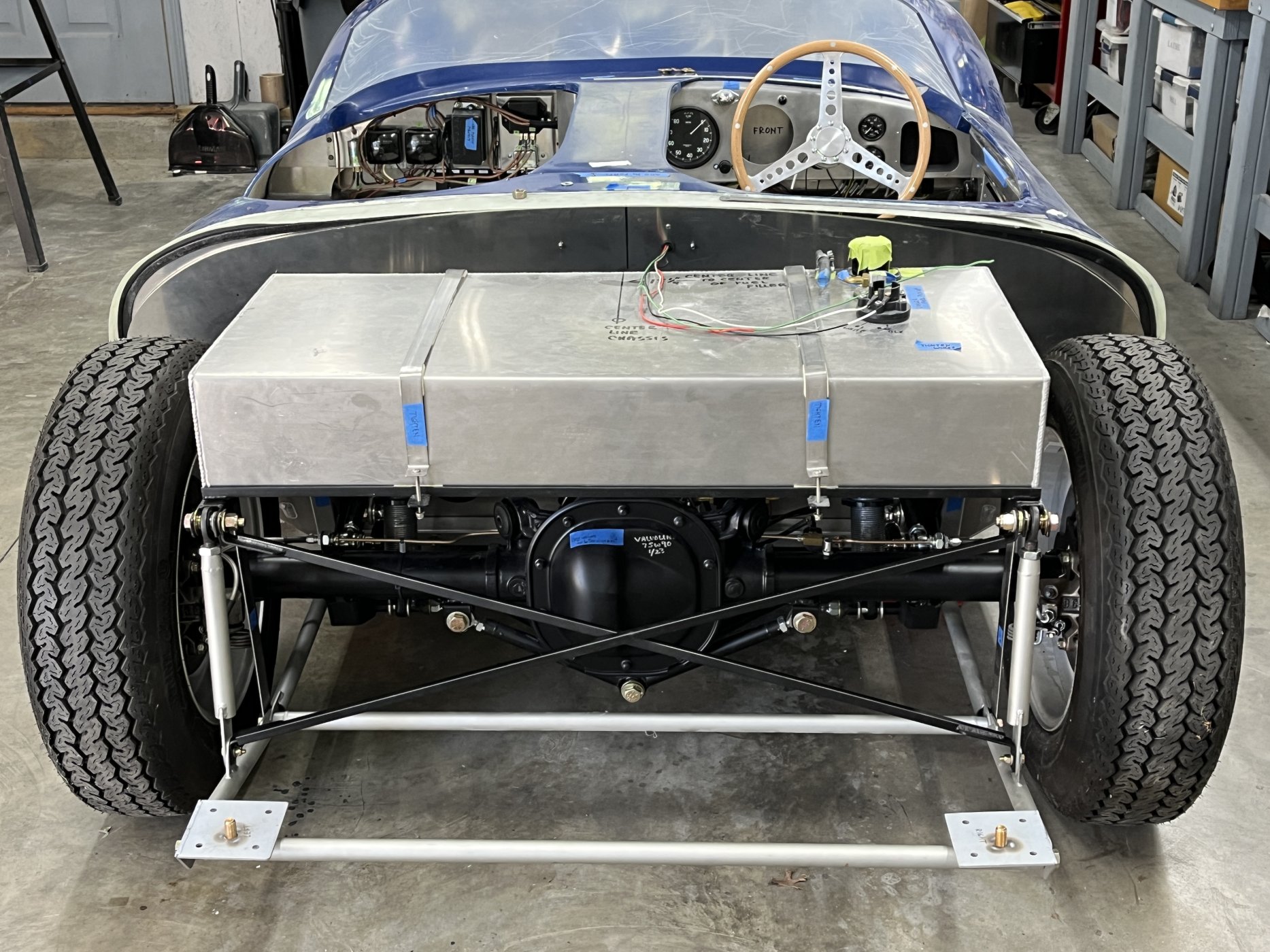
The rear structural support is now finished. The placement of nut plates for the truss screws securing the leading edge of the clip remains to be done.
Separating the rear from the center likely weakens the structure despite the rear supports and the forward lip being secured with truss screws. The rear supports provide excellent vertical support, but no lateral support. To remedy this, we decided to add cross-bracing to the lower rear supports.
The goal was to keep this as minimal and straightforward as possible. One-half-inch square tubing was used, welded to 3/32” angle brackets, which were bolted to existing fastening points. The angled brackets were carefully bent to the same angle so that the braces would not bind when installed.
The cross braces were made to identical lengths and about a quarter inch short of the connecting points. Washers are used to make up the difference, providing a degree of adjustability.
When we first tested this setup, we made an interesting discovery. The measurement of the planned cross braces had a one-inch difference in length due to the lower frame twisting to one side. When the cross braces were adjusted to equal lengths, a good thing happened. The alignment of the lower frame between the wheels was within a quarter inch of being equal on both sides, indicating the rear axle is slightly biased to one side. We had not noticed the discrepancy before. Correcting that issue will be a project for another day.
The braces were welded, painted, and installed. The cross braces made the lower frame markedly more rigid.
The rear structural support is now finished. The placement of nut plates for the truss screws securing the leading edge of the clip remains to be done.
The Great Separation, Part VI.
A glazing compound was used to minimize any defects in the fiberglass lip. Before the nutplates could be installed, the gap between the rear clip and the center section needed to be widened to 1/16” and evened out.
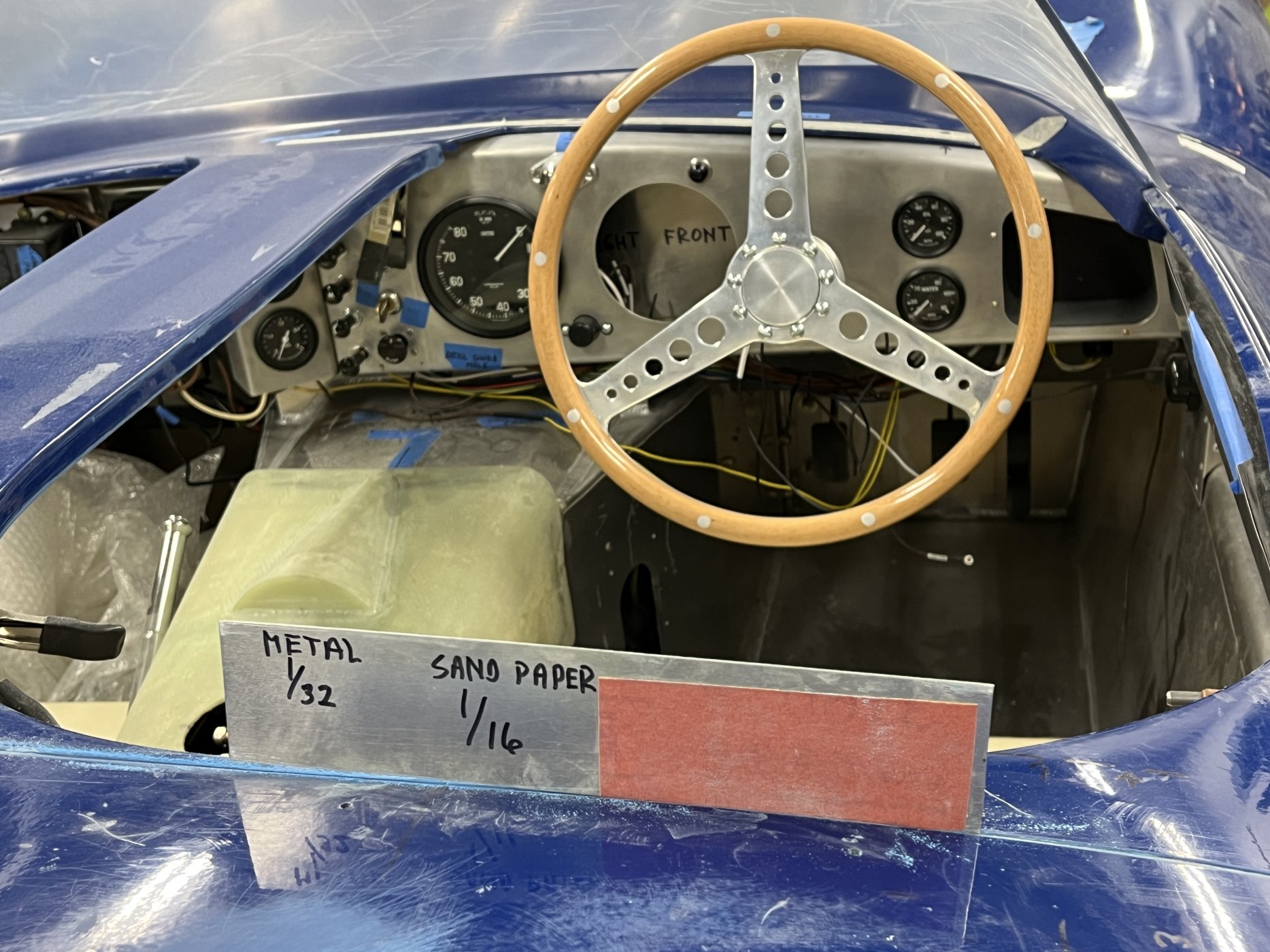
The initial trimming of the forward edge of the clip was accomplished with 80-grit sandpaper. Once the opening was roughly correct, 180-grit sandpaper was wrapped around a thin piece of aluminum and then used to make a gap exactly 1/16” wide. The goal was a symmetrical gap that can be easily widened later, should that be necessary.
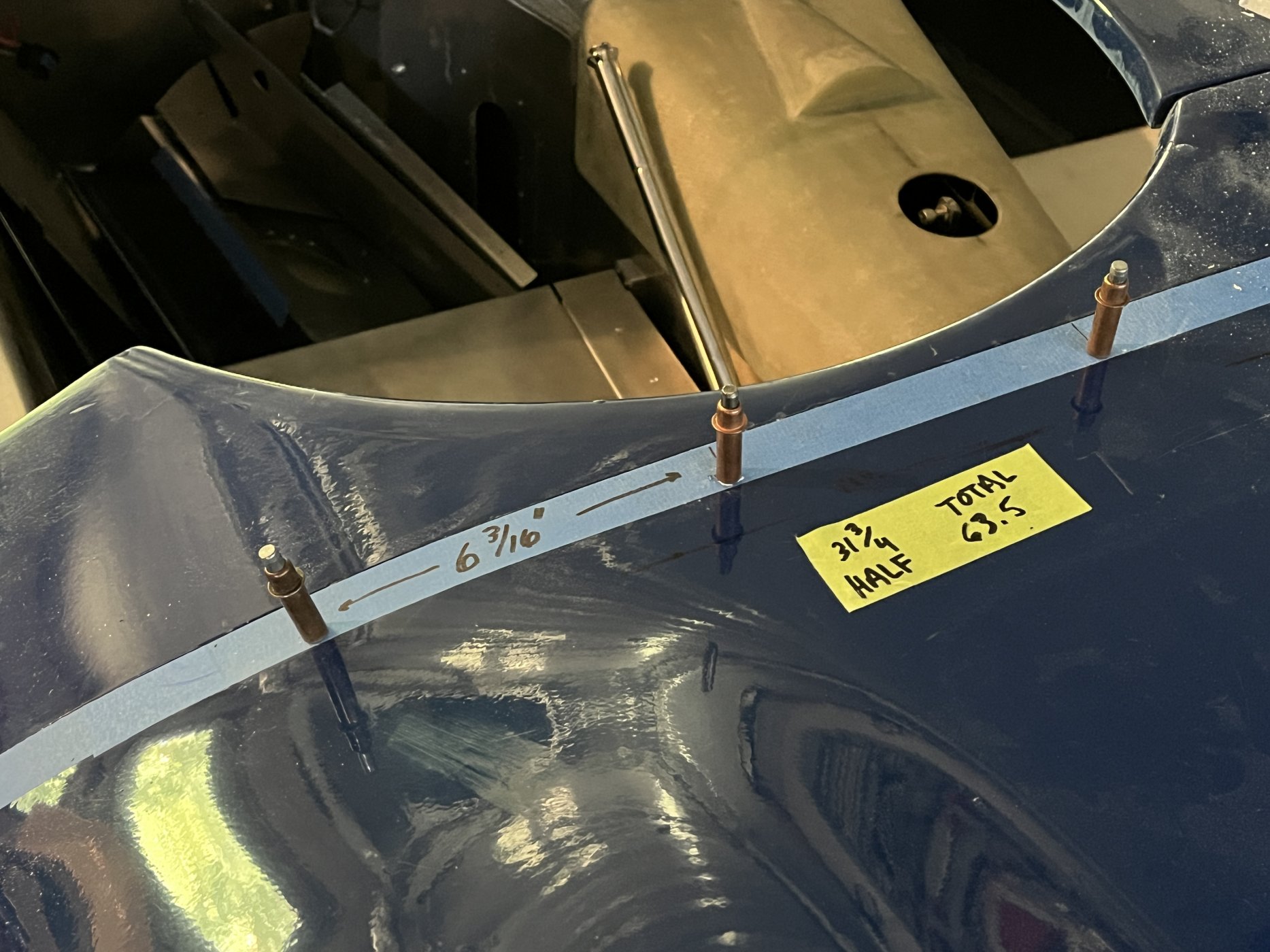
The location of the screw holes was determined by looking at photos of the original. Spacing the holes 6 3/16” apart appeared correct. As the one-eighth-inch holes were being drilled, starting with the center and working outwards, clecos were placed to ensure that the holes lined up.
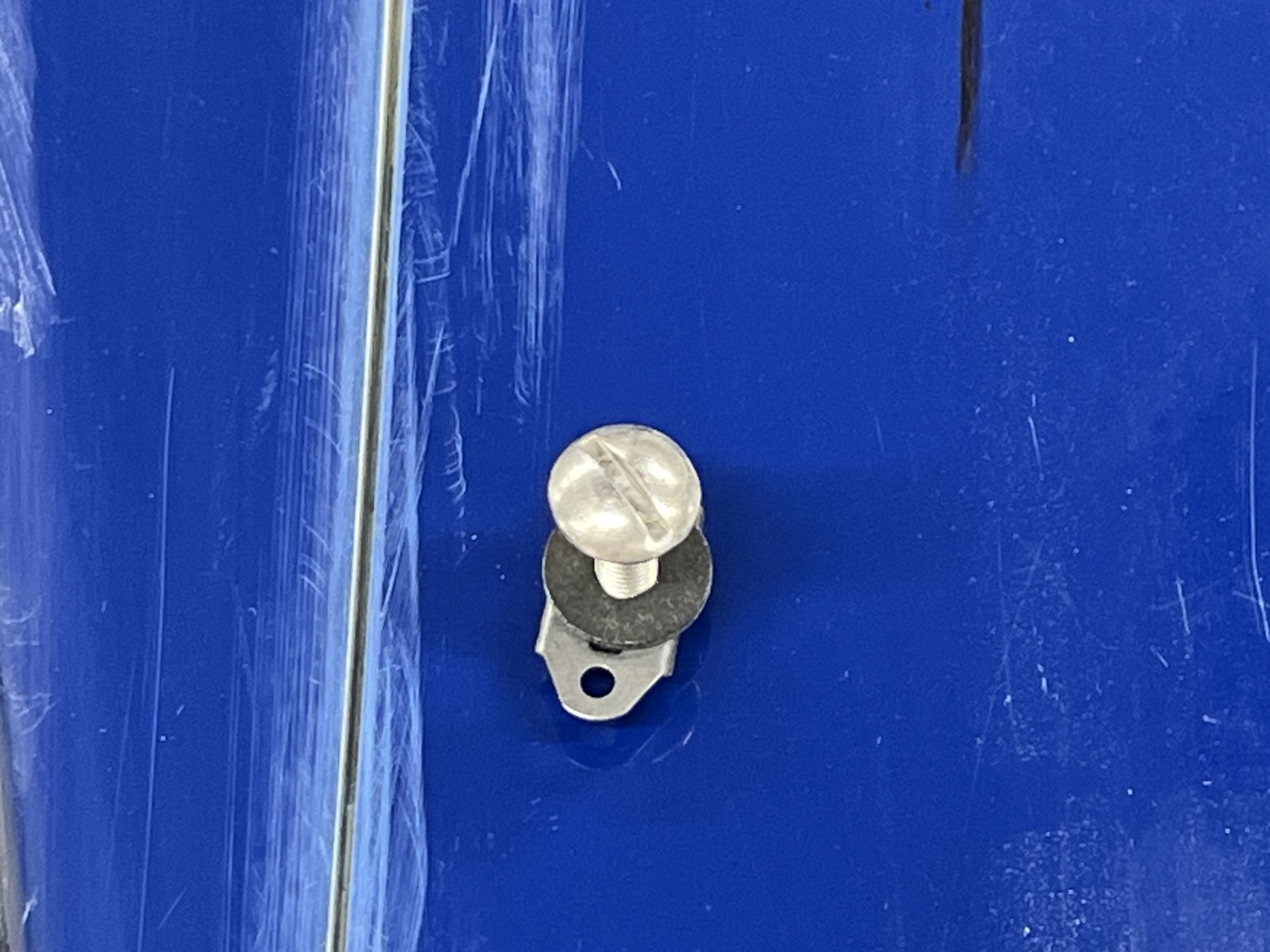
Nutplates for #10 truss head screws were used. McMaster-Carr #90857A109. The truss head screws have a 7/16” head and capture the look of the original well. McMaster-Carr #91785A830. A black fiber washer sits between the screw head and the fiberglass. McMaster-Carr #90132A140. These same truss head screws will be used to hold the headlight covers and windscreen in place.
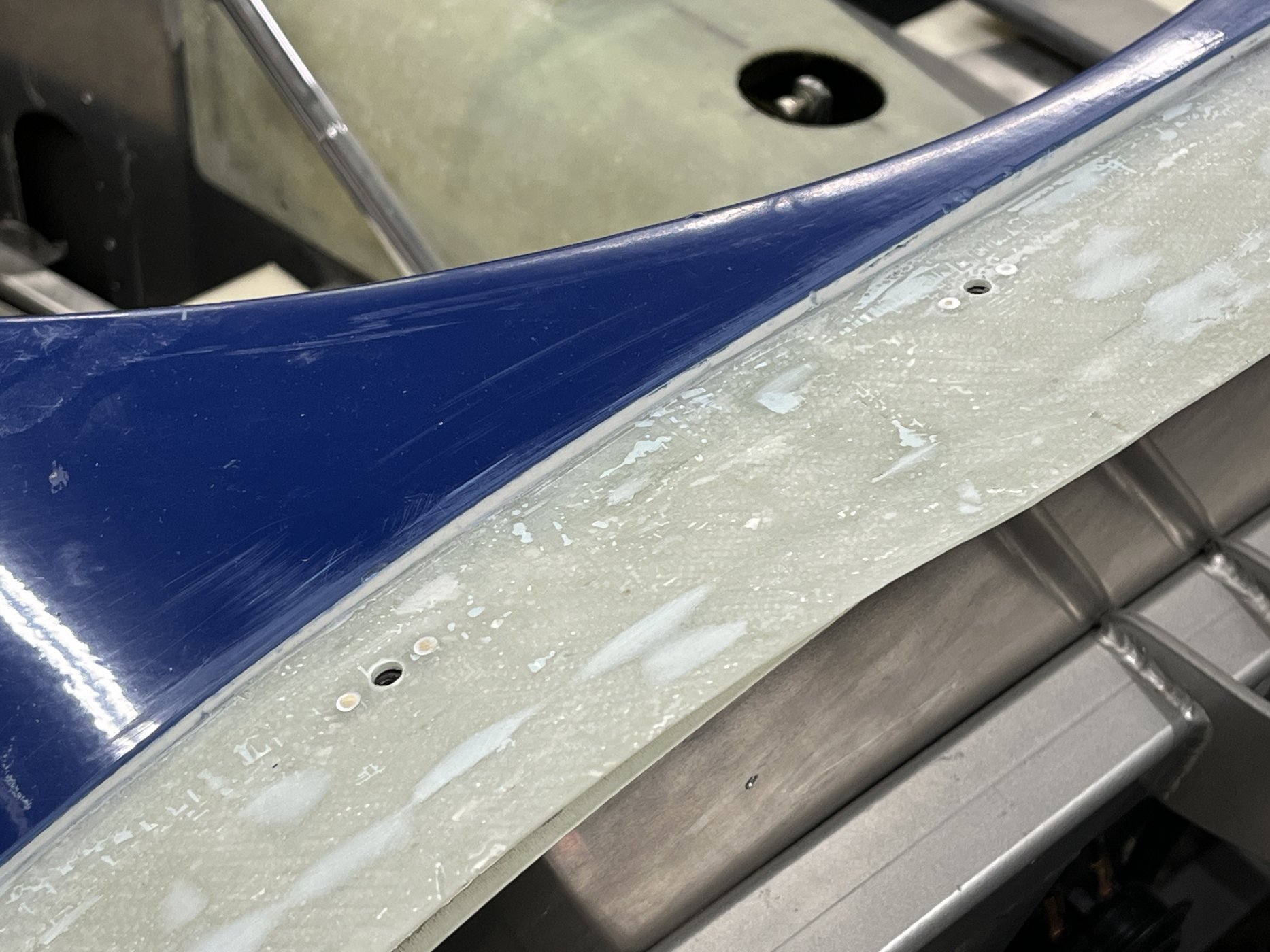
With the screws in place, the rear clip feels as rigid as it was before this part of the project began.
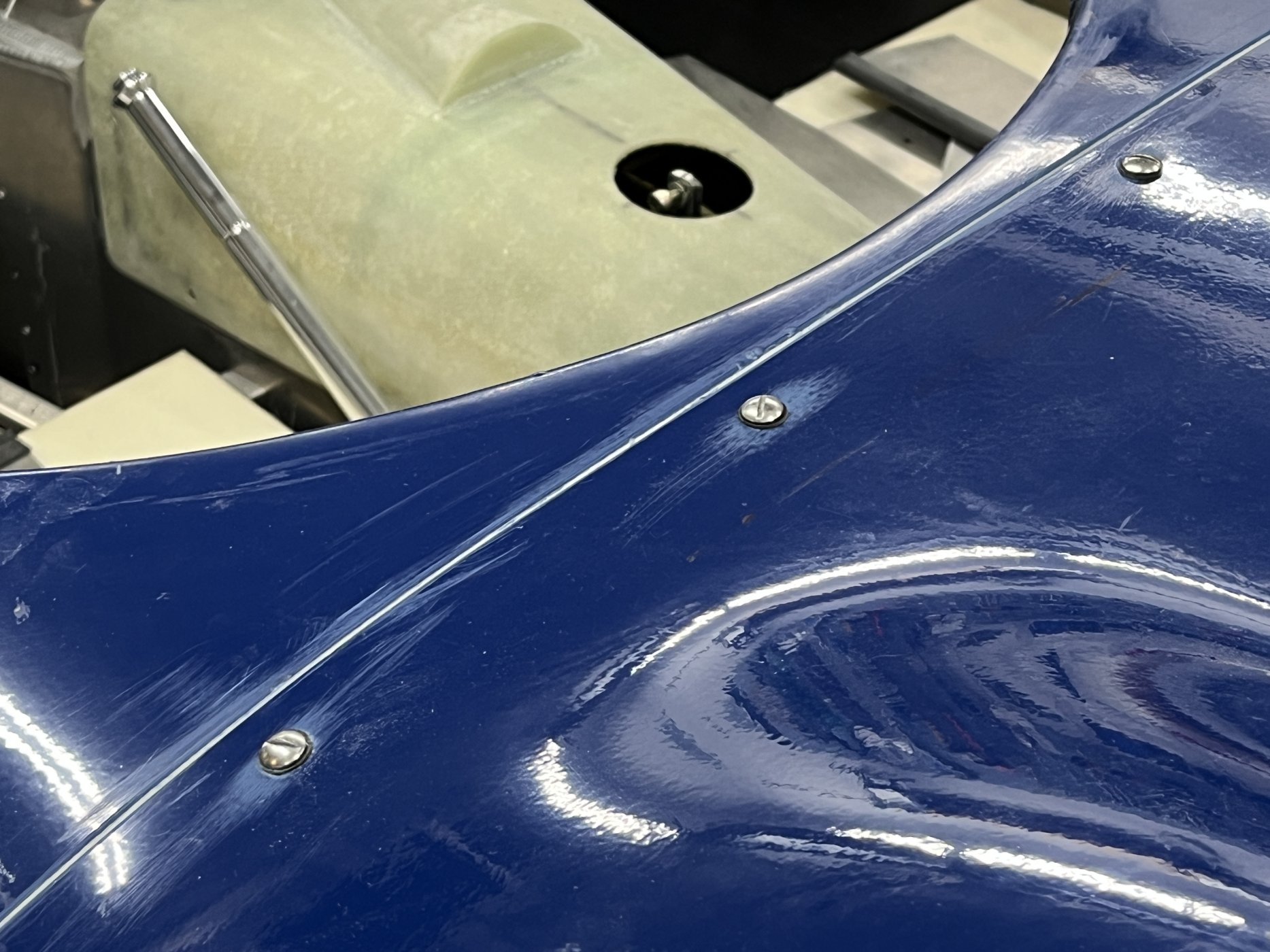
The Great Separation is now complete!
A glazing compound was used to minimize any defects in the fiberglass lip. Before the nutplates could be installed, the gap between the rear clip and the center section needed to be widened to 1/16” and evened out.
The initial trimming of the forward edge of the clip was accomplished with 80-grit sandpaper. Once the opening was roughly correct, 180-grit sandpaper was wrapped around a thin piece of aluminum and then used to make a gap exactly 1/16” wide. The goal was a symmetrical gap that can be easily widened later, should that be necessary.
The location of the screw holes was determined by looking at photos of the original. Spacing the holes 6 3/16” apart appeared correct. As the one-eighth-inch holes were being drilled, starting with the center and working outwards, clecos were placed to ensure that the holes lined up.
Nutplates for #10 truss head screws were used. McMaster-Carr #90857A109. The truss head screws have a 7/16” head and capture the look of the original well. McMaster-Carr #91785A830. A black fiber washer sits between the screw head and the fiberglass. McMaster-Carr #90132A140. These same truss head screws will be used to hold the headlight covers and windscreen in place.
With the screws in place, the rear clip feels as rigid as it was before this part of the project began.
The Great Separation is now complete!
Headrest and Tailfin, Part I.
Making the rear clip removable requires modifying the headrest, as it is designed to extend forward of the separation line between the rear clip and the center section. We decided to cut off the headrest at the cut line and then taper the extension on the right side behind the door to blend in.
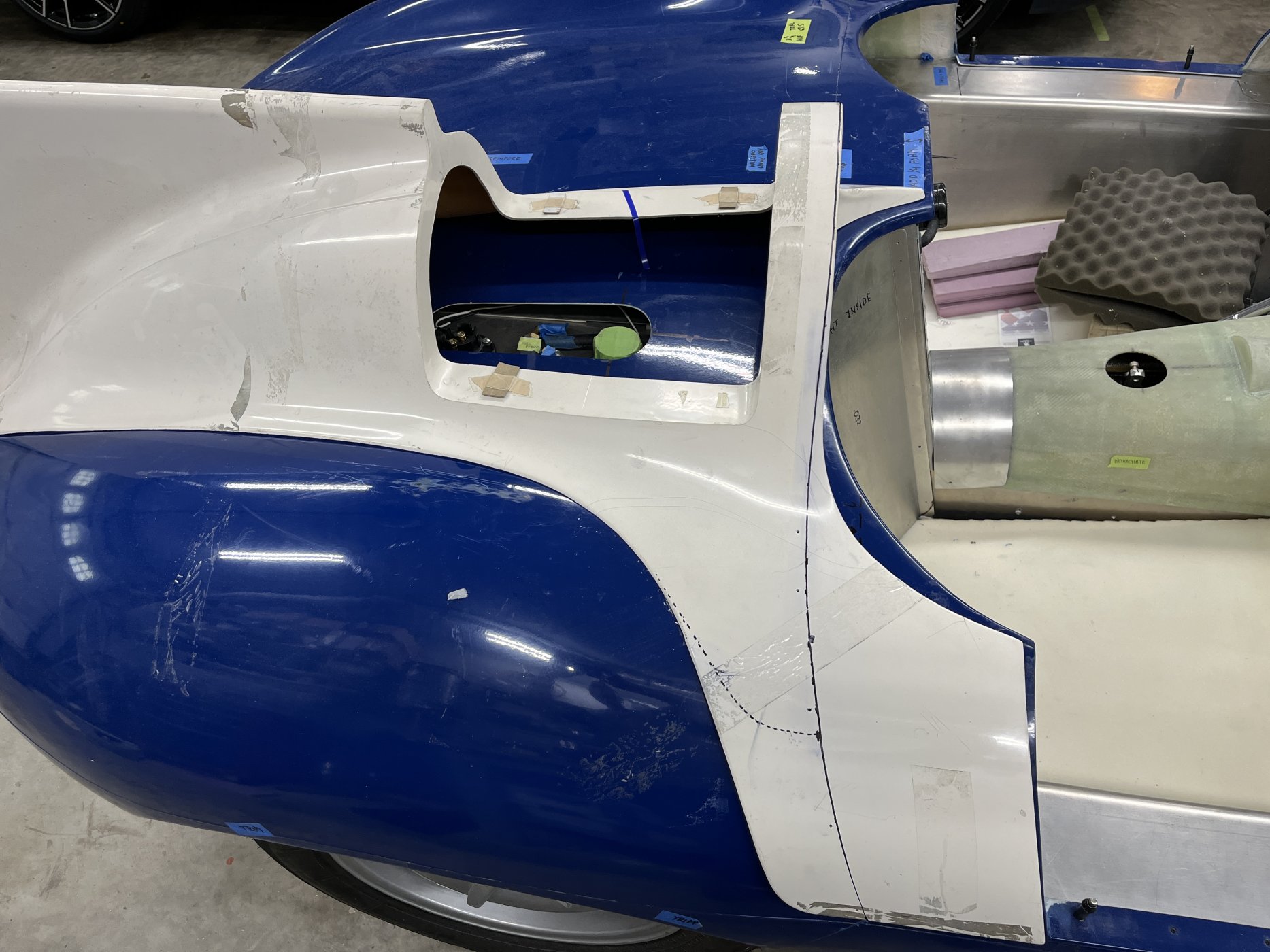
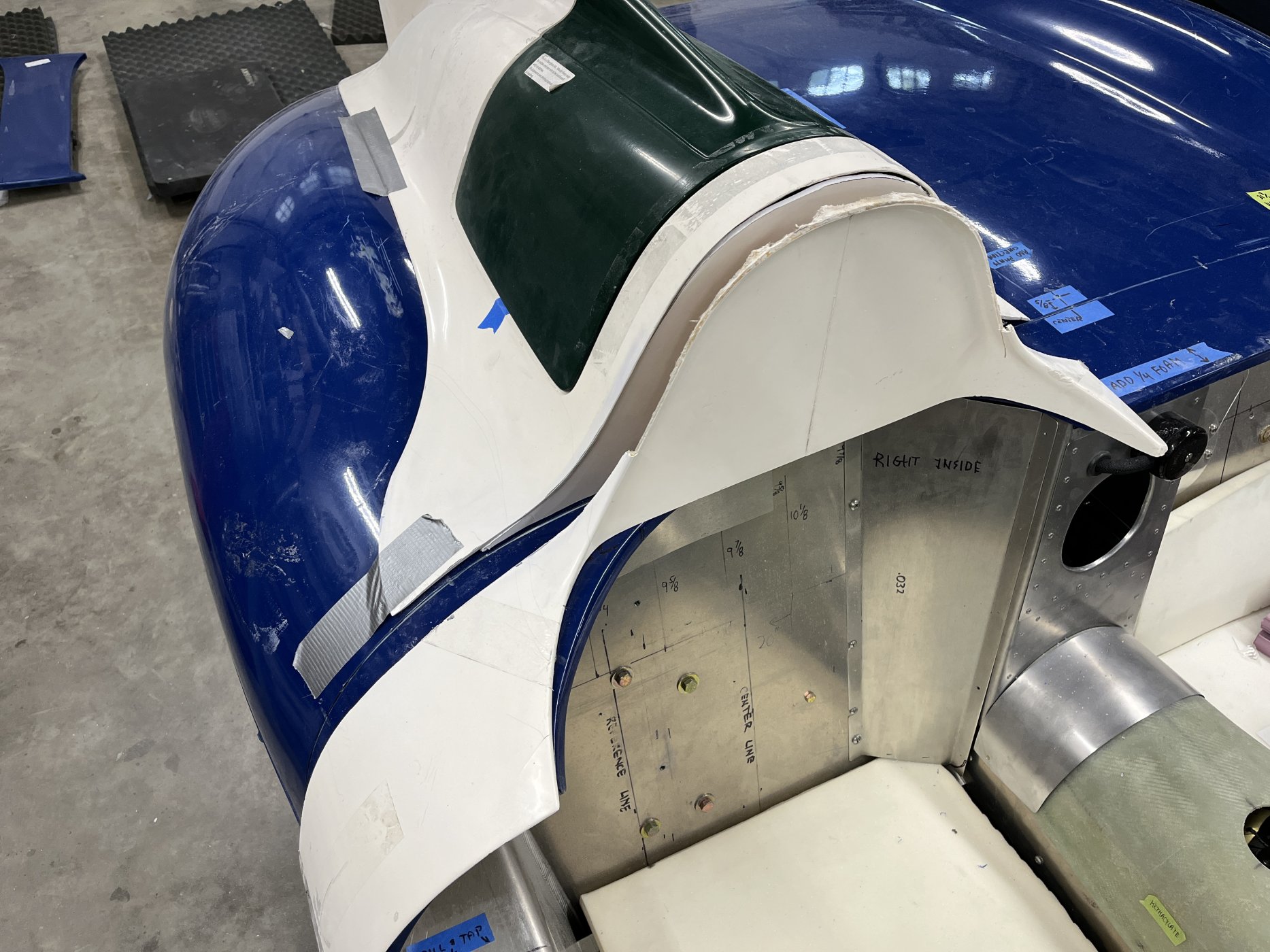
Once the front portion was cut away, a composite panel was fabricated and epoxied in place to provide a solid support for the headrest.
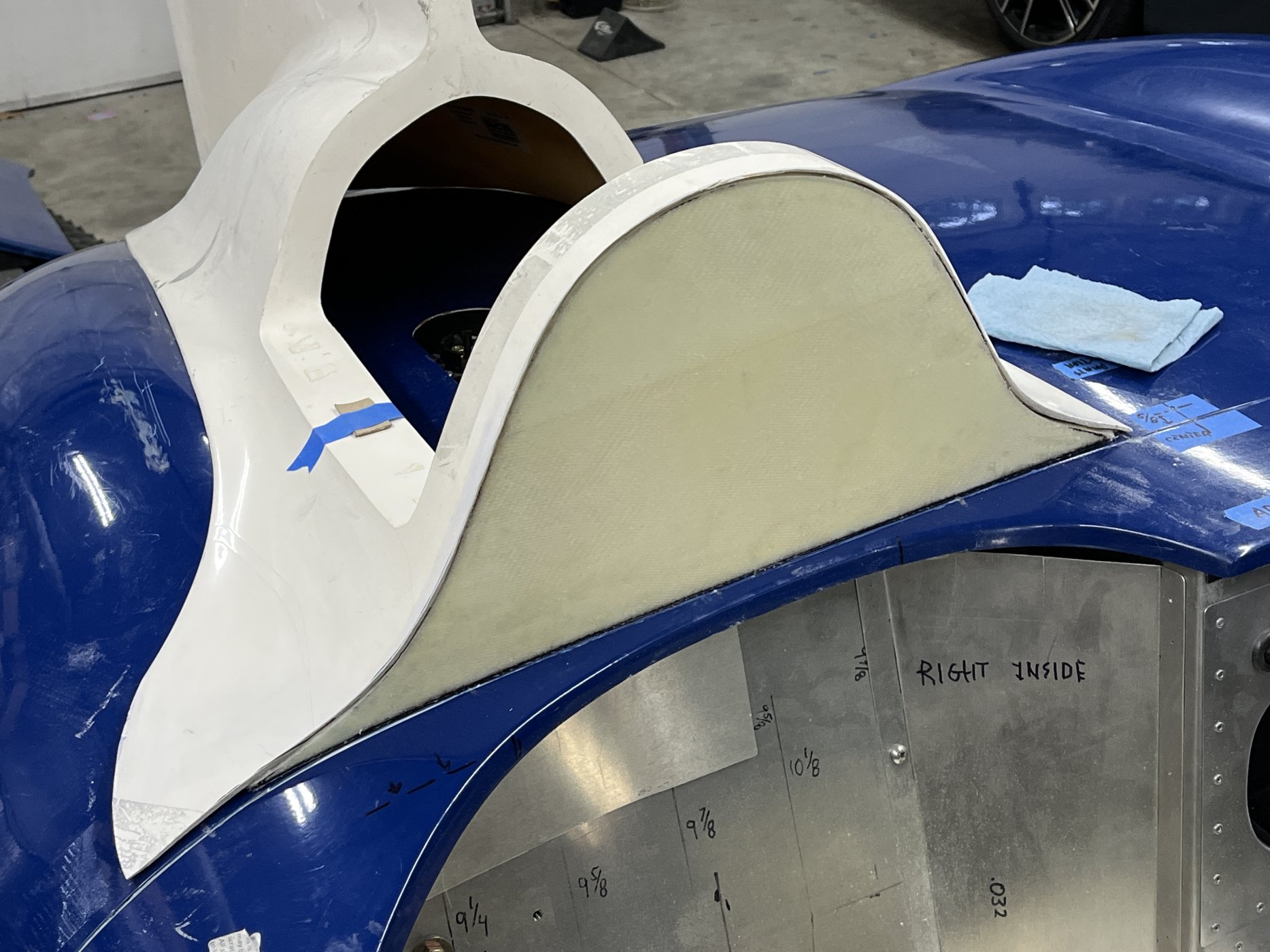
The inner lips for the fuel filler openings, both on the headrest/fin and the fuel door, were trimmed back to an even one inch all the way around using the Dremel with a plastic cutting blade.
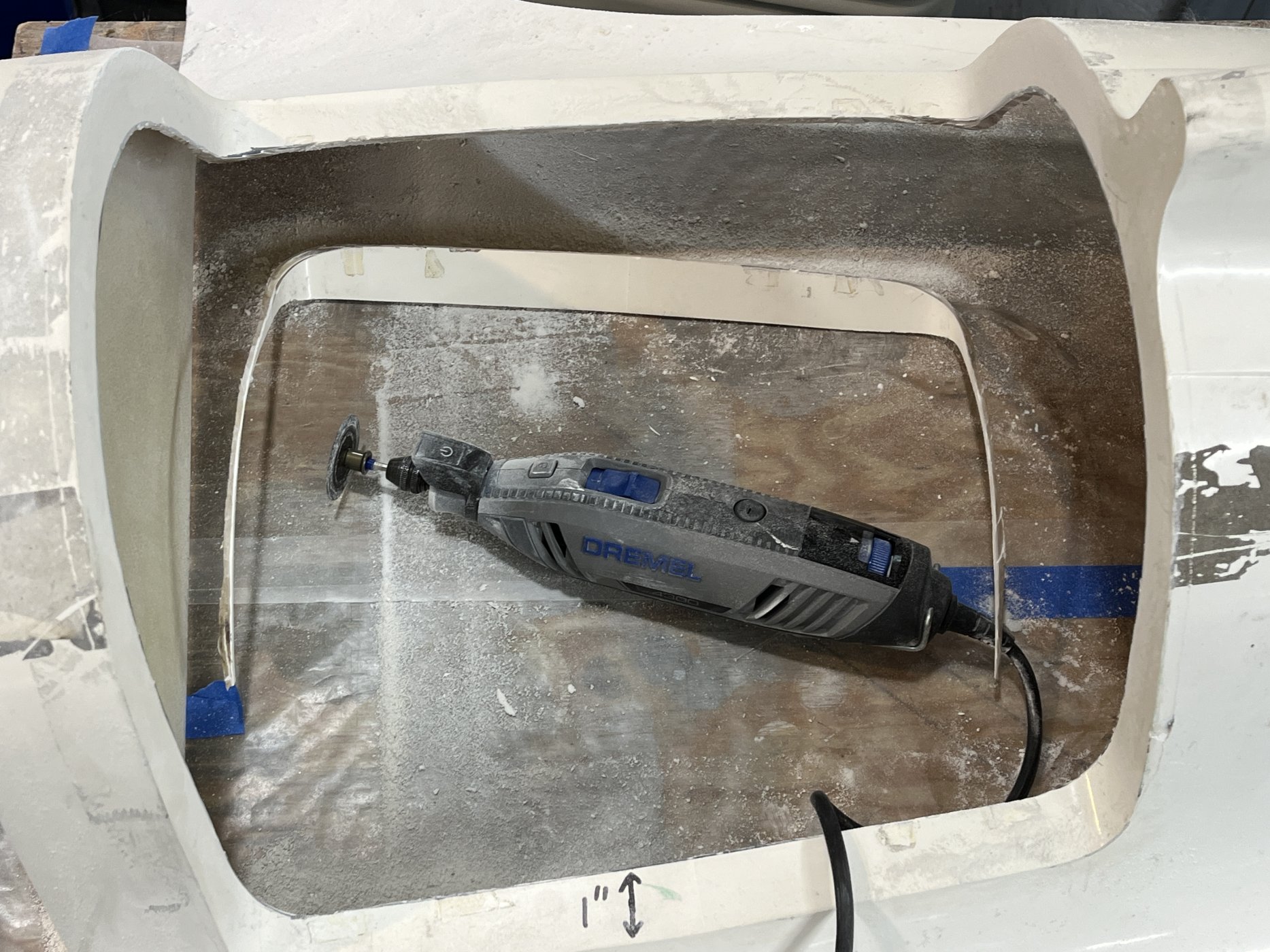
Making the rear clip removable requires modifying the headrest, as it is designed to extend forward of the separation line between the rear clip and the center section. We decided to cut off the headrest at the cut line and then taper the extension on the right side behind the door to blend in.
Once the front portion was cut away, a composite panel was fabricated and epoxied in place to provide a solid support for the headrest.
The inner lips for the fuel filler openings, both on the headrest/fin and the fuel door, were trimmed back to an even one inch all the way around using the Dremel with a plastic cutting blade.
Headrest and Tailfin, Part II
How should the head rest and tail fin be secured to the rear clip? It appears that the original was typically flush riveted, so it blended in without any obvious attachments. By using #6 button head countersunk screws, they will resemble flush rivets, but being able to remove the headrest will simplify painting and final assembly.
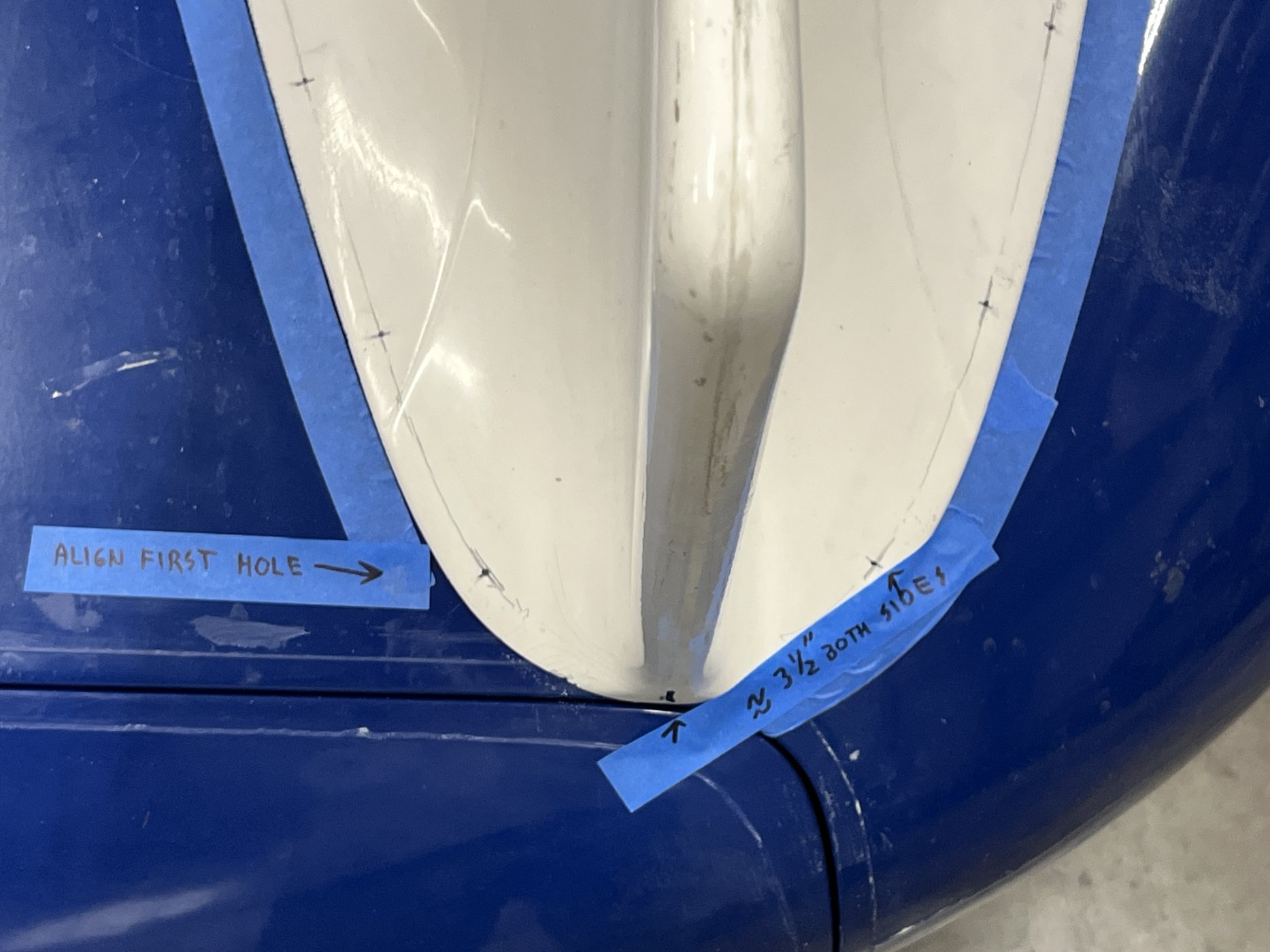
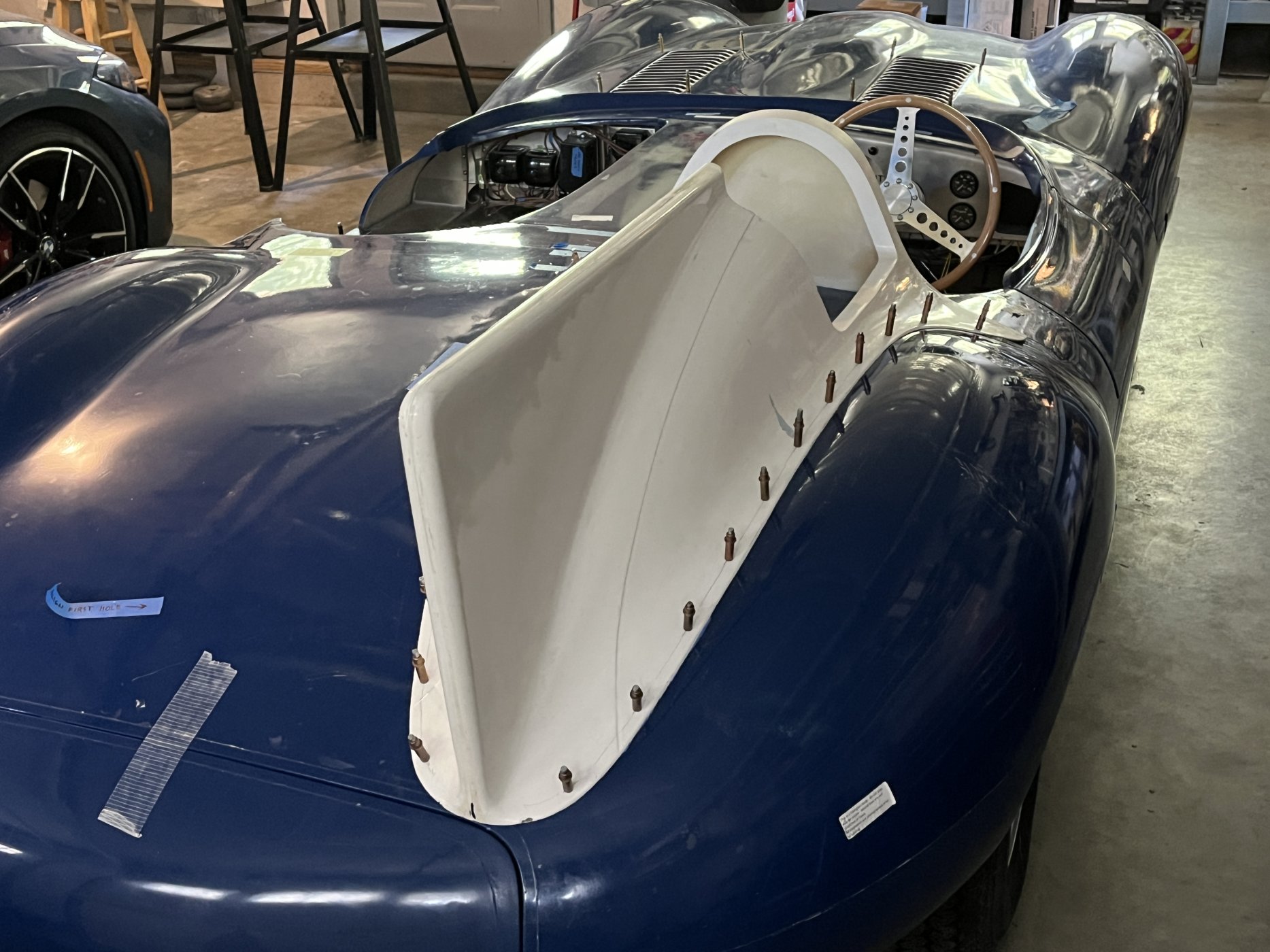
First, the fin/headrest was set in the correct location. Technically, it should be angled three degrees to the left, but we put it where it fit best. Hopefully, the only ones who will notice this deviation are the readers of this post. Second, the location of the holes was plotted. Spacing is approximately four inches with a slight variation from one side to the other, so that the furthest aft and furthest forward holes would align evenly. Third one-eighth holes were drilled, and clecos were placed.
Next, the fun starts.
How should the head rest and tail fin be secured to the rear clip? It appears that the original was typically flush riveted, so it blended in without any obvious attachments. By using #6 button head countersunk screws, they will resemble flush rivets, but being able to remove the headrest will simplify painting and final assembly.
First, the fin/headrest was set in the correct location. Technically, it should be angled three degrees to the left, but we put it where it fit best. Hopefully, the only ones who will notice this deviation are the readers of this post. Second, the location of the holes was plotted. Spacing is approximately four inches with a slight variation from one side to the other, so that the furthest aft and furthest forward holes would align evenly. Third one-eighth holes were drilled, and clecos were placed.
Next, the fun starts.
Headrest and Tailfin, Part III
Countersunk screws in fiberglass will inevitably cause cracks to develop unless measures are taken to distribute the force of the screw’s head. We used countersunk Timmerman washers to address this concern.
First, a half-inch Forstner bit was used to remove the gel coat and drill just deep enough so that the Timmerman washers set fractionally below the surface.
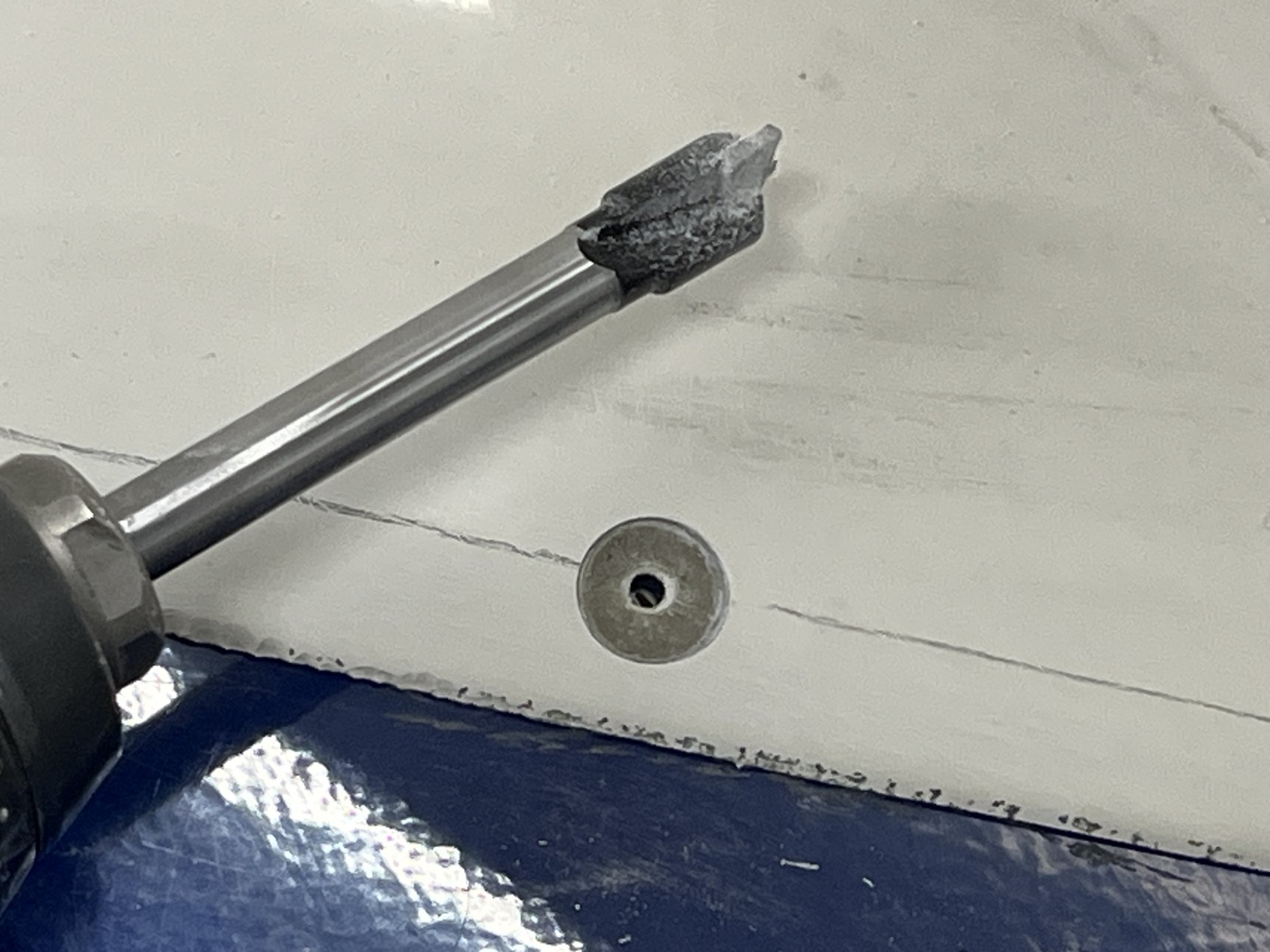
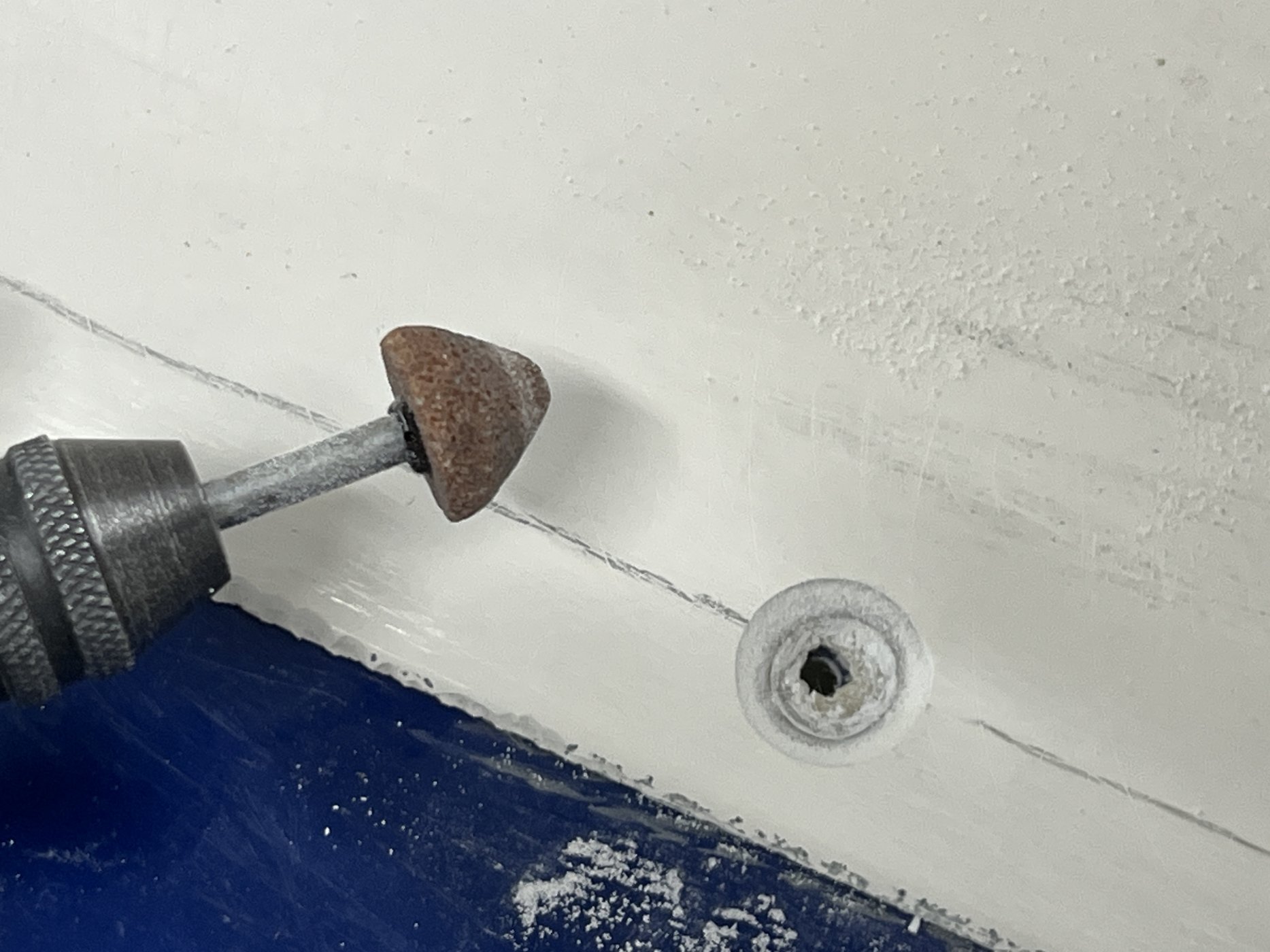
Second, a Dremel tool with a tapered grinder was used to open the hole so that the washer could be set in place.
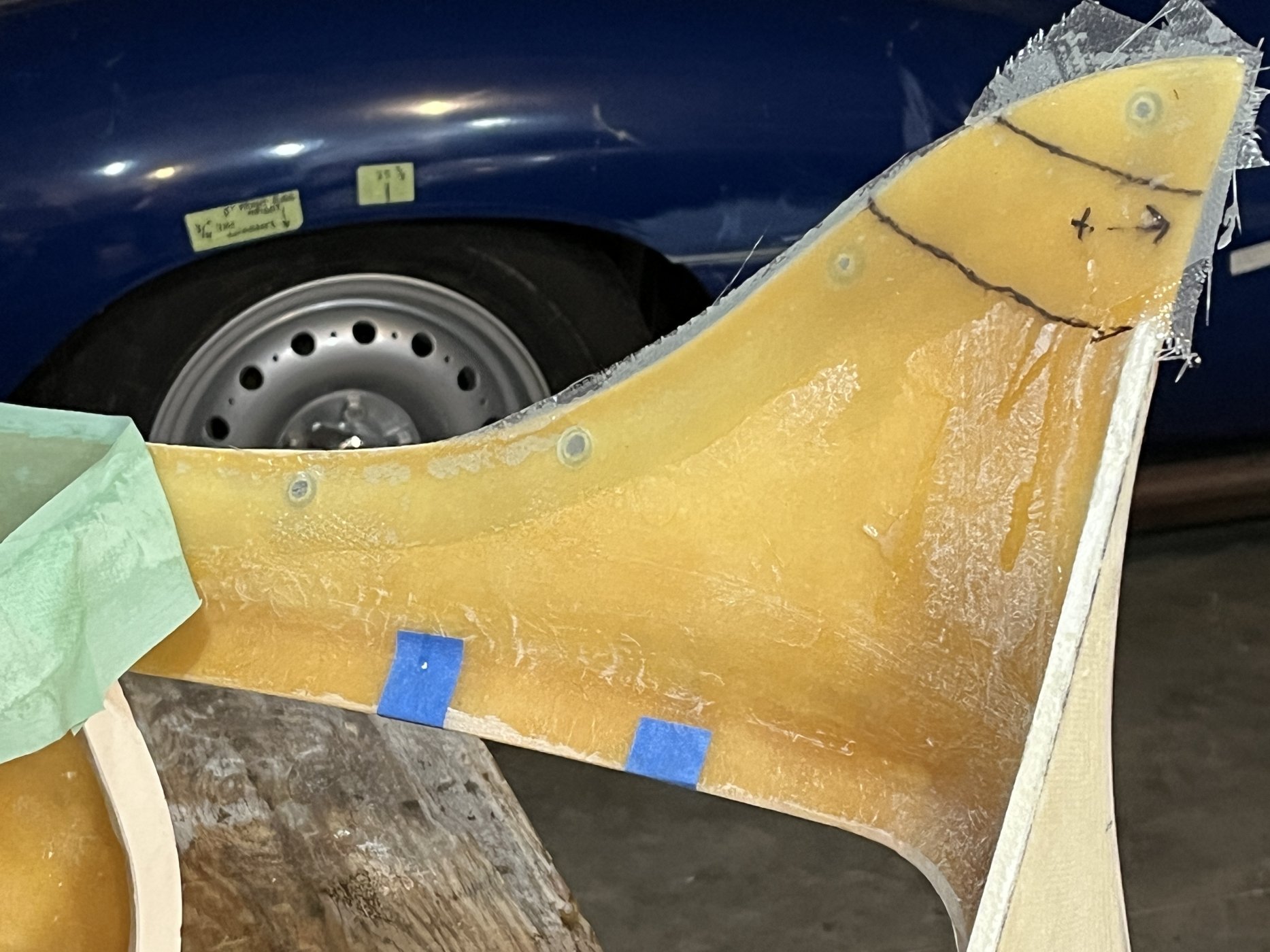
Third, a layer of fiberglass about an inch and a half wide was laid on the bottom side to reinforce the holes.
Next, the area around the openings was sanded to blend the fiberglass/flox rather than leaving a sharp line. The washers were epoxied in place. Once dry, the surface was sanded smooth, and the tapered openings on the washers were cleared of material.
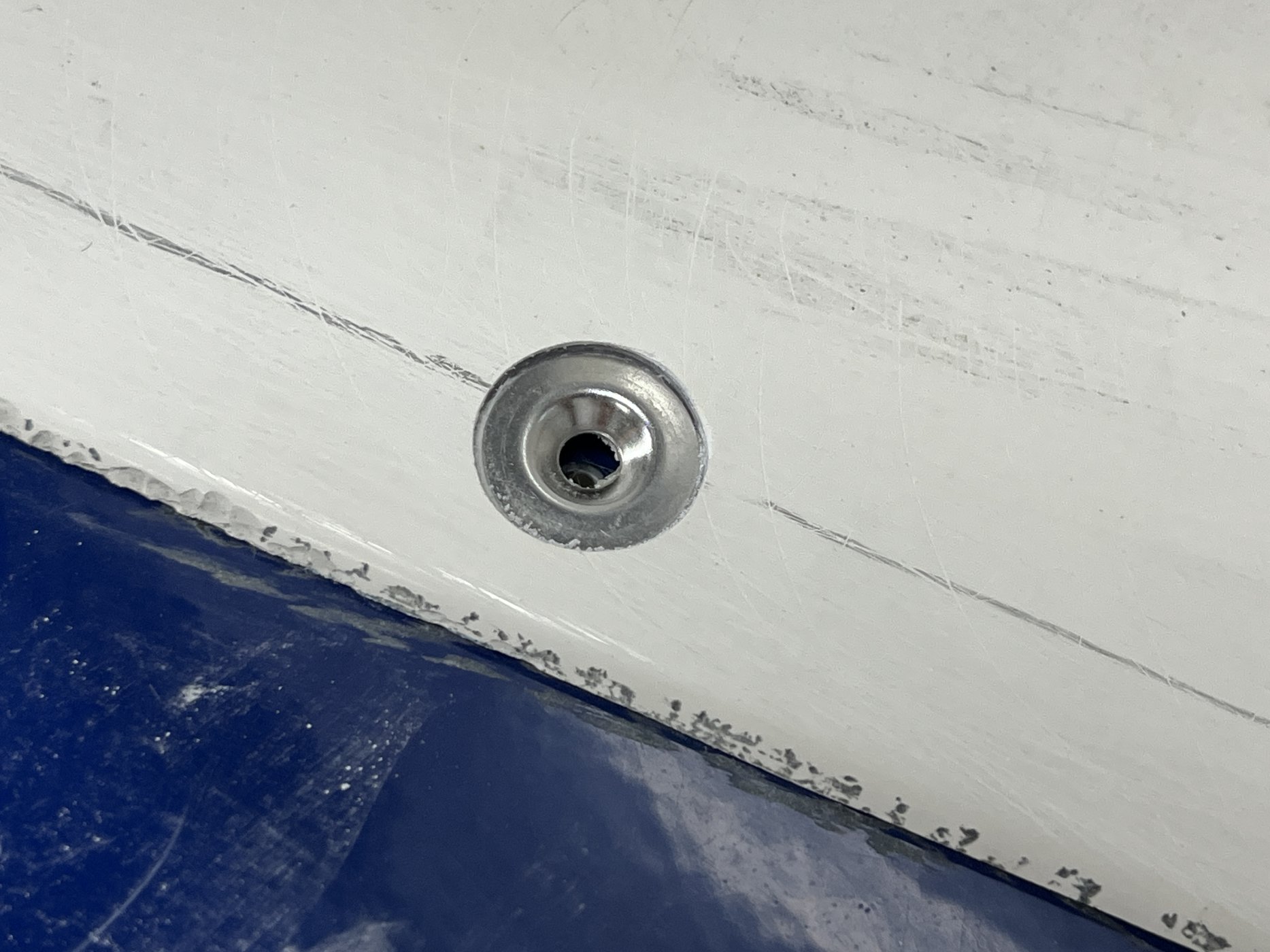
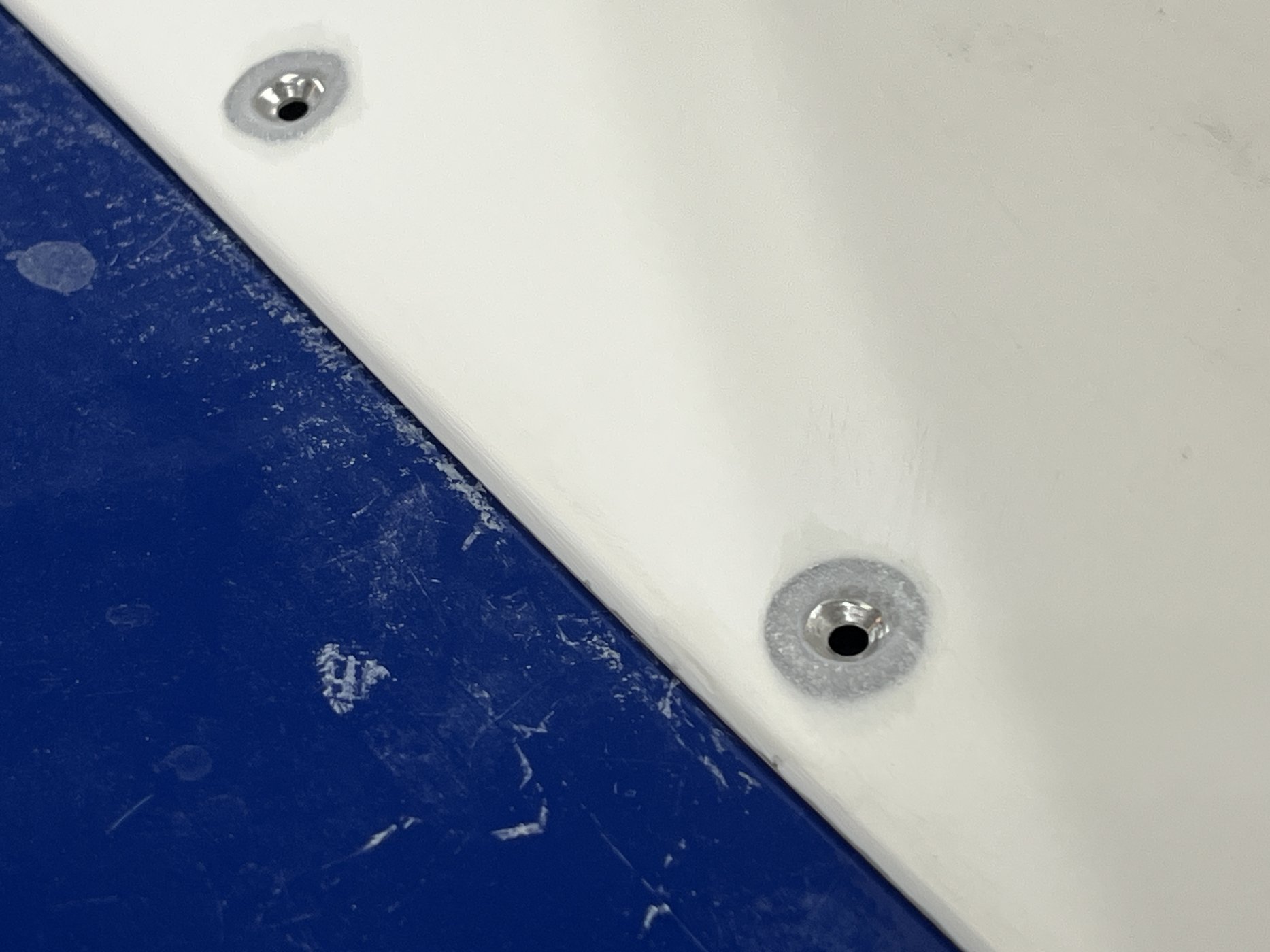
Once painted, the washers will be invisible, and only the heads of the screws will be seen, which will likely be touched with a dab of body paint, making them look like flush rivets to the casual observer. Stainless 1-inch #6-30 button-head screws and Nyloc nuts with large washers on the bottom side are used.
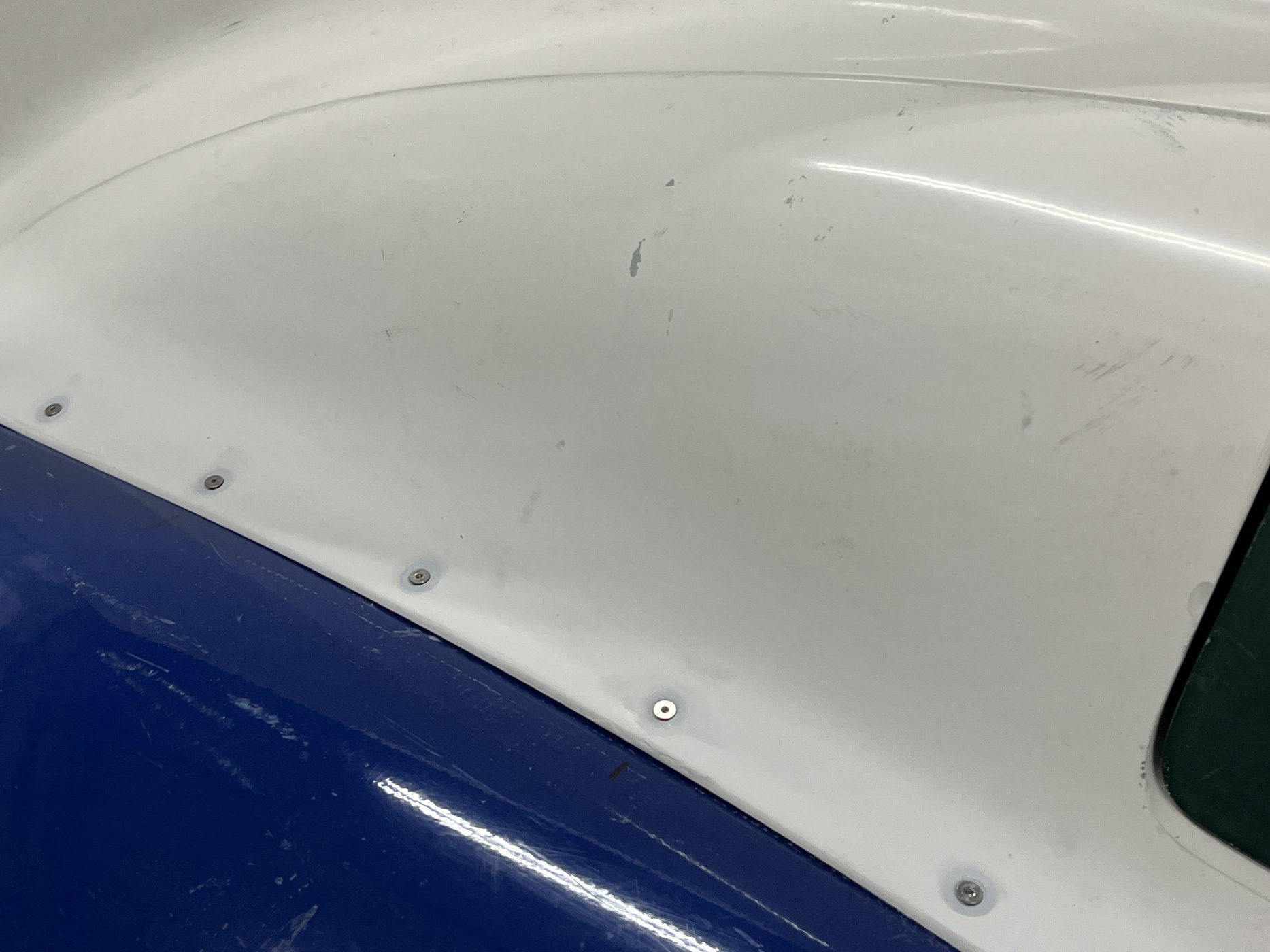
This was a lot of work to make the headrest and tail fin removable, but it will simplify construction and painting moving forward.
Countersunk screws in fiberglass will inevitably cause cracks to develop unless measures are taken to distribute the force of the screw’s head. We used countersunk Timmerman washers to address this concern.
First, a half-inch Forstner bit was used to remove the gel coat and drill just deep enough so that the Timmerman washers set fractionally below the surface.
Second, a Dremel tool with a tapered grinder was used to open the hole so that the washer could be set in place.
Third, a layer of fiberglass about an inch and a half wide was laid on the bottom side to reinforce the holes.
Next, the area around the openings was sanded to blend the fiberglass/flox rather than leaving a sharp line. The washers were epoxied in place. Once dry, the surface was sanded smooth, and the tapered openings on the washers were cleared of material.
Once painted, the washers will be invisible, and only the heads of the screws will be seen, which will likely be touched with a dab of body paint, making them look like flush rivets to the casual observer. Stainless 1-inch #6-30 button-head screws and Nyloc nuts with large washers on the bottom side are used.
This was a lot of work to make the headrest and tail fin removable, but it will simplify construction and painting moving forward.
Similar threads

- Replies
- 1
- Views
- 429

- Replies
- 1
- Views
- 2K