Doug’s RCR Jaguar D Type Build.

Doug M

Supporter
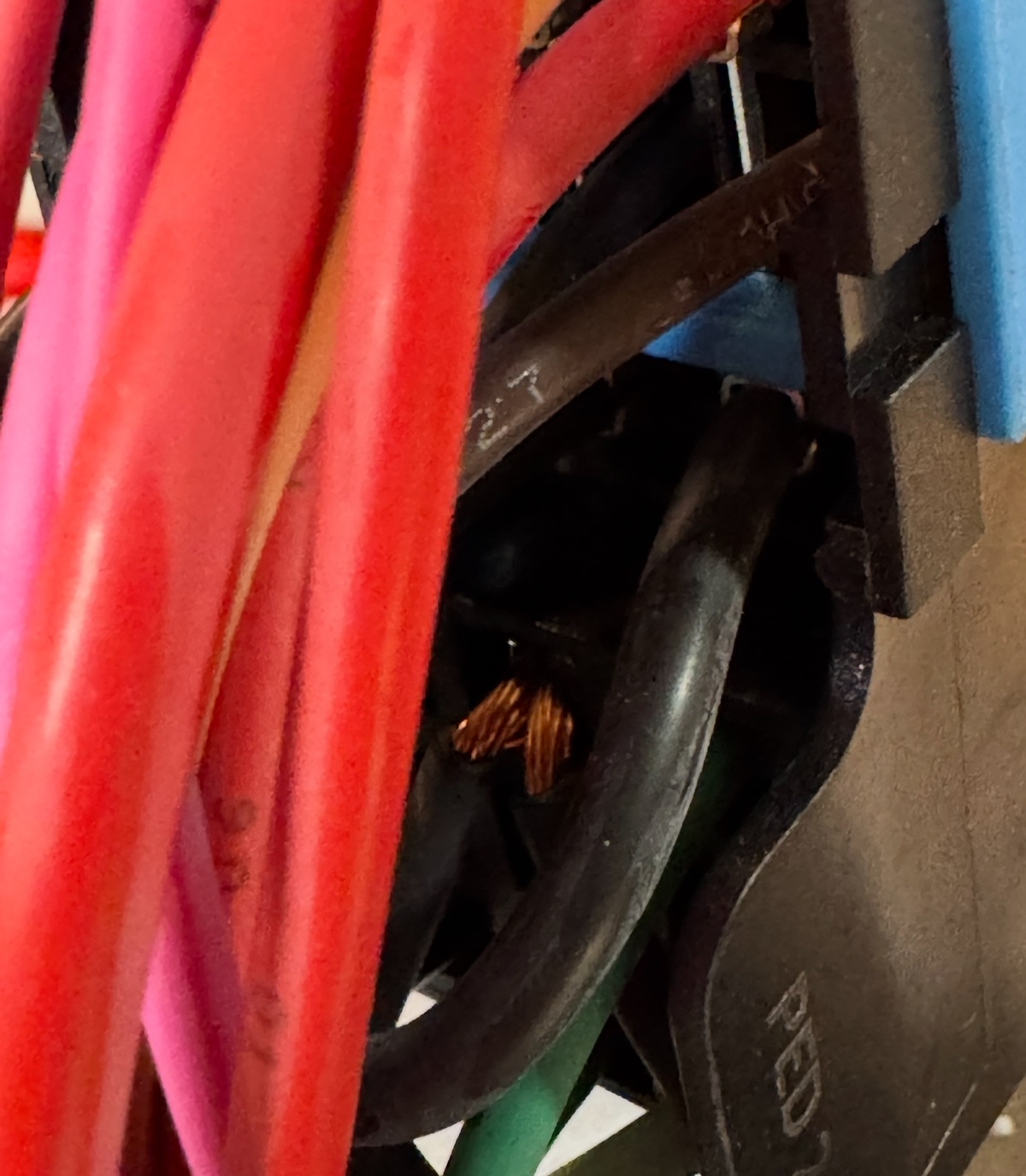
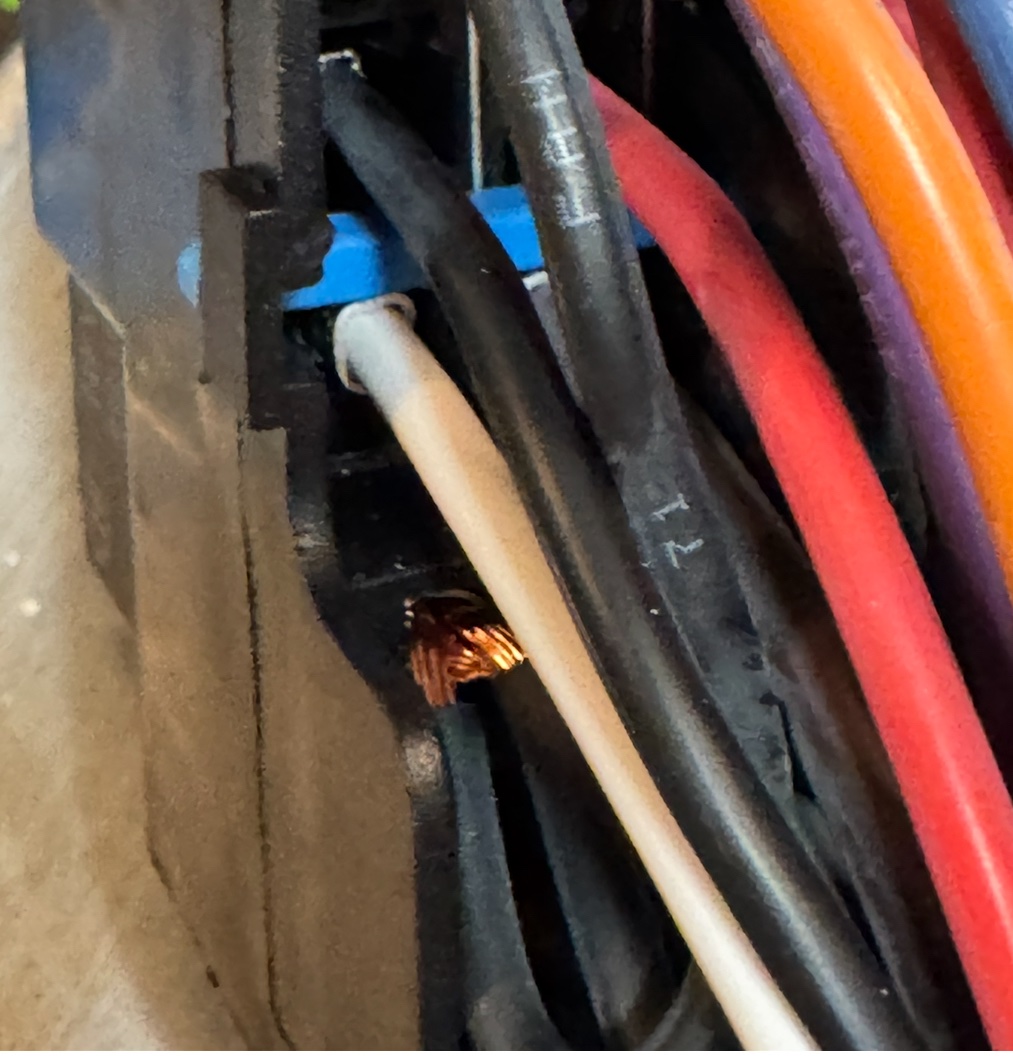
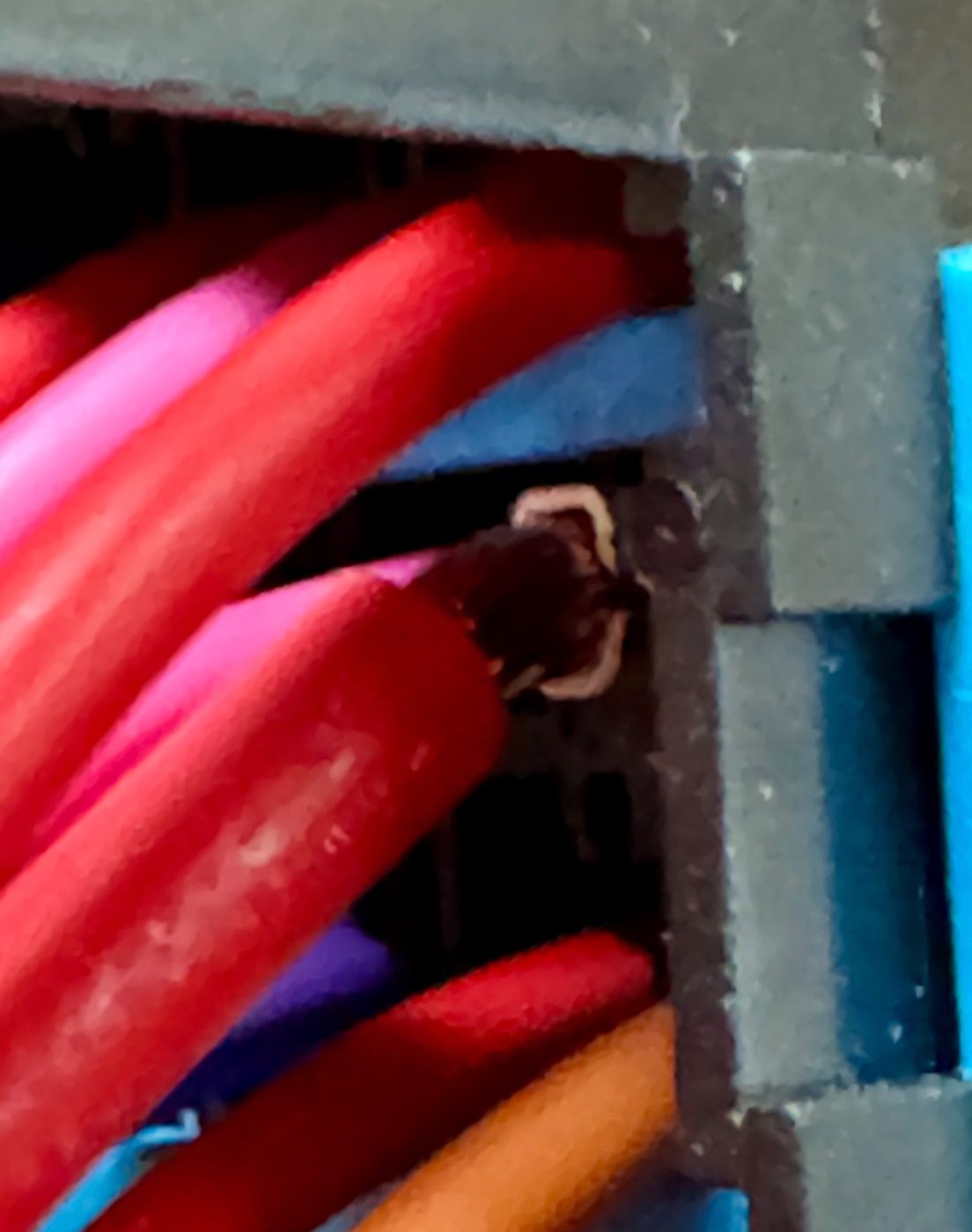
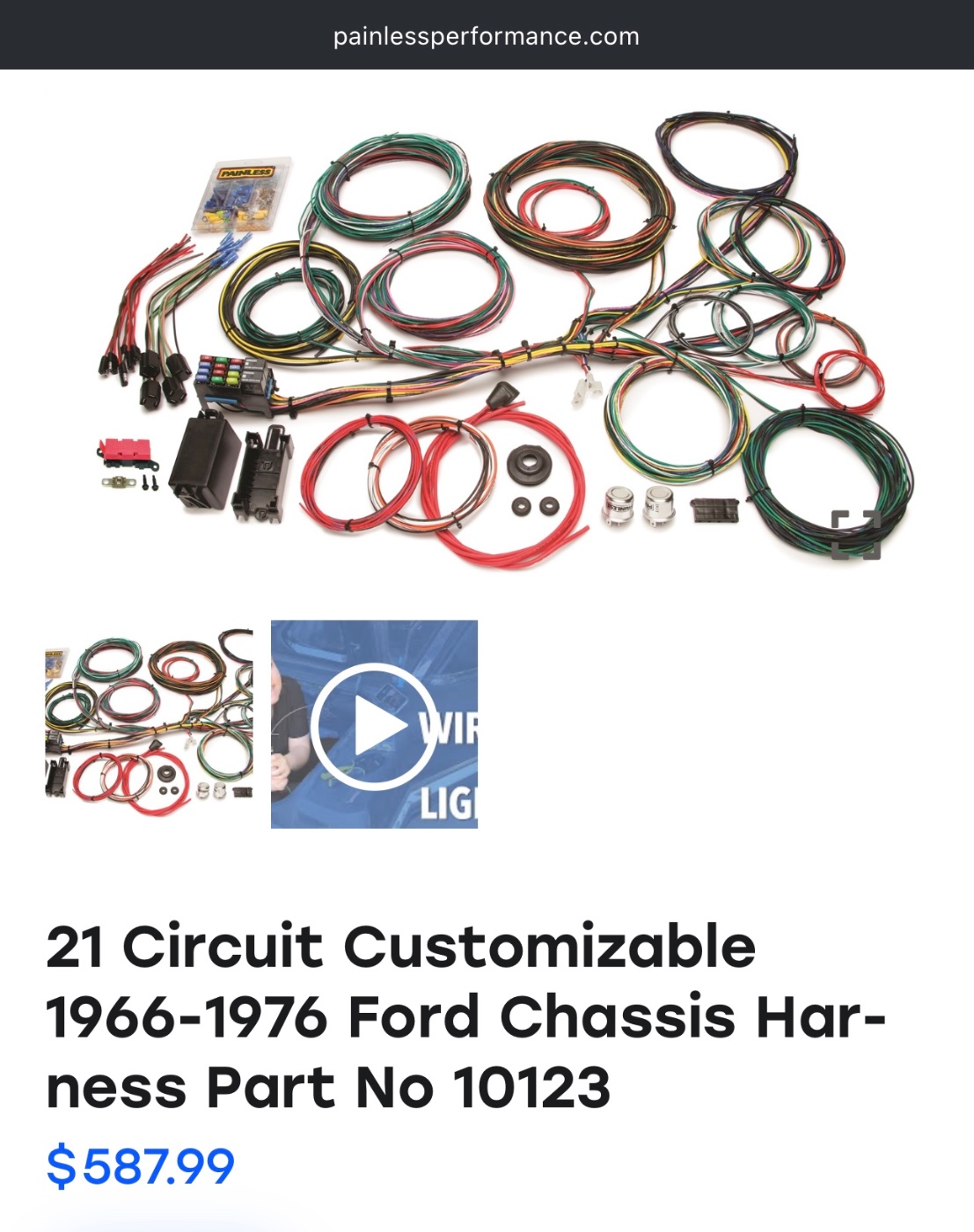
Quick update on my wiring harness installation. I ended up ordering and returning two on the same kits from Speedway Motors because of manufacturing defects. It appeared that some of the crimps in the fuse block weren’t tight enough, or too much wire insulation was cut off. Not sure if it would have been a future fire hazard or shorting issue, but I didn’t want to risk it. I ended up finding a Painless kit that had the exact same fuse block, so I didn’t have to modify my design. It cost three times as much, but has more circuits, options, and better instructions, so I think it was a wise move.
IMG_9415.jpeg
IMG_9414.jpeg
IMG_9413.jpeg
IMG_9412.jpeg
 

Chuck

Supporter
Thanks. I went for the GPS version since, at the time I ordered it, I wasn’t sure which transmission I’d be able to use. Just seemed like it solved a lot of short term and potential long term problems.
Agree. I much prefer the GPS version. Much easier to install and dead on accurate. But Ryan prefers the analog. We will see what happens.
 

Doug M

Supporter
This is another ‘went down the rabbit hole a bit’ post, and the current OCD project involved more dash panel details. I had planned on the often used marker light for dash illumination, however, I’ve noticed these little round light housings more often than the other type.

IMG_0041.jpeg


After much digging, I found that these round lights were from the Jaguar Mark V and such from the early 50s. They were a two piece shell with a blue lamp inside, and apparently are now almost impossible to find.

IMG_0019.jpeg


But by pure luck, I found an aluminum pill case on Amazon that looked the part and ordered several with the assumption I would botch the first few attempts. I wasn’t wrong. But, with some careful drilling and filing, it looks like it’ll work pretty well once it’s repainted and wired up.

IMG_0020.jpeg
IMG_0034.jpeg


—Edit—-

Here’s another interesting (to me) option… this particular D Type uses both types. May go this route also since I’m going for the ‘well loved’ race car look. Also, might be handy to have a brighter light option sometimes.
IMG_0042.jpeg
 
Last edited:
This is another ‘went down the rabbit hole a bit’ post, and the current OCD project involved more dash panel details. I had planned on the often used marker light for dash illumination, however, I’ve noticed these little round light housings more often than the other type.

View attachment 149238

After much digging, I found that these round lights were from the Jaguar Mark V and such from the early 50s. They were a two piece shell with a blue lamp inside, and apparently are now almost impossible to find.

View attachment 149240

But by pure luck, I found an aluminum pill case on Amazon that looked the part and ordered several with the assumption I would botch the first few attempts. I wasn’t wrong. But, with some careful drilling and filing, it looks like it’ll work pretty well once it’s repainted and wired up.

View attachment 149241View attachment 149242

—Edit—-

Here’s another interesting (to me) option… this particular D Type uses both types. May go this route also since I’m going for the ‘well loved’ race car look. Also, might be handy to have a brighter light option sometimes.
View attachment 149243
Is an internally illuminated gauge out of the question?
 

Doug M

Supporter
Is an internally illuminated gauge out of the question?
For me, it’s just fun to see what I can make from nothing. I enjoy the challenge.

The gauges I bought do have internal bulbs, but from what I can tell, the originals may not have been internally illuminated. But, I’m probably going to install a hidden selector switch to allow me to turn on the gauges internal lighting for times when it might be a safer option to go modern instead of period, such as night driving on two lane rural roads where deer tend to be plentiful.

I’m enjoying making it look and feel authentic, but I appreciate the modern advancements too.
 

Doug M

Supporter
2A0BA472-B24C-40F3-8E88-6F540BF3D361.jpeg
After learning and relearning, rethinking, overthinking, scribbling on many sheets of graph paper, and some occasional strong language, I decided to dismantle my work from a few years ago and redesign and rebuild the rear section of the D Type.

New fuel tank supports and a ‘tray’ were designed and fabricated, which resulted in the much needed improved clearance for the rear differential, which in turn gave me a better routing path for the emergency brake cables, better mounting location for the fuel lines and electric fuel pump, a better path to run the wiring to the rear of the car, and I also had plenty of room to route the cooling lines for the transmission, so the transmission oil cooler was moved from the front of the car to the back, which cleaned things up under the bonnet. Even had an easy job of installing the rear axle breather tube and filter. Extra mounting points for the inner rear splash panels were also worked into the design, which will make them easier to remove for future ease of maintenance.

It was a lot of extra work, but I’m happy with the results and feel I’ve improved as a builder since this project started.
 

Chuck

Supporter
This is another ‘went down the rabbit hole a bit’ post, and the current OCD project involved more dash panel details. I had planned on the often used marker light for dash illumination, however, I’ve noticed these little round light housings more often than the other type.

View attachment 149238

After much digging, I found that these round lights were from the Jaguar Mark V and such from the early 50s. They were a two piece shell with a blue lamp inside, and apparently are now almost impossible to find.

View attachment 149240

But by pure luck, I found an aluminum pill case on Amazon that looked the part and ordered several with the assumption I would botch the first few attempts. I wasn’t wrong. But, with some careful drilling and filing, it looks like it’ll work pretty well once it’s repainted and wired up.

View attachment 149241View attachment 149242

—Edit—-

Here’s another interesting (to me) option… this particular D Type uses both types. May go this route also since I’m going for the ‘well loved’ race car look. Also, might be handy to have a brighter light option sometimes.
View attachment 149243
Doug:

The black cover you made is actually for the headlight bright beam. Under the cover was a blue light. The cover was originally made out of brass and painted black. It was to keep the blue indicator from distracting the driver.

Typically the oil pressure and water temp were back lighted. Speedo not. I also prefer the look of the external light illuminating the two larger gauges as shown in your pic.

I think I posted info on a source for the blue bright beam light, but could be mistaken. My plan is, like you, to fabricate a cover to look like the original.
 

Chuck

Supporter
Doug:

The black cover you made is actually for the headlight bright beam. Under the cover was a blue light. The cover was originally made out of brass and painted black. It was to keep the blue indicator from distracting the driver.

Typically the oil pressure and water temp were back lighted. Speedo not. I also prefer the look of the external light illuminating the two larger gauges as shown in your pic.

I think I posted info on a source for the blue bright beam light, but could be mistaken. My plan is, like you, to fabricate a cover to look like the original.
Well, I am confused. Just saw a video clip indicating that the black covered light is to illuminate the speedo with a 'black light' effect. That is contrary to what I had seen in other sources.

So you may be correct Doug.

But looking at the picture of the original you posted of the white marker light centered over the speedo and tachometer, why would there be a second black light over the speedo? In a race the tach is critical, speedo secondary. Something doesn't make sense.

Back to the books. . . . .
 

Doug M

Supporter
Well, I am confused. Just saw a video clip indicating that the black covered light is to illuminate the speedo with a 'black light' effect. That is contrary to what I had seen in other sources.

So you may be correct Doug.

But looking at the picture of the original you posted of the white marker light centered over the speedo and tachometer, why would there be a second black light over the speedo? In a race the tach is critical, speedo secondary. Something doesn't make sense.

Back to the books. . . . .
Chuck, just now seeing your posts. Thank you! Yeah, the redesign took time and effort but I’m very glad I did it. It was worth doing right, no doubt.

Your theories for the dash light are interesting and both make sense. I was sort of assuming that the original light was bright enough to illuminate both gauges (though probably just barely)… probably explains why some originals had white tape marking the shift point on the tach… or the tach gauge installed at an angle where the needle is straight down when the max rpm is reached… easier to see in very dim light.

I admit my main concern was just illuminating the speedometer since I’ll be using an automatic transmission. I’ve also been contemplating adding a small hidden selector switch on the dash somewhere so I can choose between ‘authentic illumination’ and ‘backlit gauges’ depending on driving conditions. Though LED lights are so small and bright nowadays, I can probably get creative and just have a push button that lights up the dash panel for a ‘quick gauge check’ and then back to a stock illumination scheme.
 

Doug M

Supporter
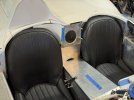
I tend to overly obsess over some design aspects far more than others, and for whatever reason, the rear center area between the two seats was something that took a long time for me to get reasonably correct. From my research, it seems that the design varied for different D Types, though I couldn’t nail down a rhyme or reason other than it being dictated by the varying shape of the transmission cover, which also didn’t seem to have a rhyme or reason (probably transmission choice related, but who knows). The one thing that did seem consistent was the mystery hole between the seats.

IMG_4237.jpeg


Through the kindness of a stranger on the internet who owns an actual D Type, I was able to obtain a measurement for the ‘mystery hole’, and from that ‘Rosetta stone’ I could roughly figure out reasonably proper proportions for everything else. I chose a design that worked well with the overly large size of the RCR center tunnel and got to it.

IMG_4591.jpeg


Only modification I made to the monocoque tub was to cut out a small section like Chuck did with his build.

My current fabrication skills and limited tools prevented me from doing an elegant one piece design like Chuck did, so I opted for a lot of pieces and drilling a lot of holes.
IMG_4590.jpeg

IMG_4231.jpeg


Side pieces built. Slightly off-kilter to accommodate the off-kilter cockpit design.
IMG_4232.jpeg
IMG_4233.jpeg
IMG_4298.jpeg
IMG_4273.jpeg


Center section is now done aside from cleaning, adding rivets, and eventual painting. Since I’m using bucket seats and not the traditional D Type style ‘seat squabs’, I’ll probably add some curved aluminum trim pieces behind the seats to try and make it look a little less weird.

IMG_4426.jpeg
 

Attachments

  • IMG_4426.jpeg
    IMG_4426.jpeg
    352 KB · Views: 39
Last edited:

Doug M

Supporter
PS… apparently the ‘mystery hole’ in the center section in the original cars was for bucking rivet access during assembly.

IMG_4592.webp
 

Chuck

Supporter
I tend to overly obsess over some design aspects far more than others, and for whatever reason, the rear center area between the two seats was something that took a long time for me to get reasonably correct. From my research, it seems that the design varied for different D Types, though I couldn’t nail down a rhyme or reason other than it being dictated by the varying shape of the transmission cover, which also didn’t seem to have a rhyme or reason (probably transmission choice related, but who knows). The one thing that did seem consistent was the mystery hole between the seats.

View attachment 152126

Through the kindness of a stranger on the internet who owns an actual D Type, I was able to obtain a measurement for the ‘mystery hole’, and from that ‘Rosetta stone’ I could roughly figure out reasonably proper proportions for everything else. I chose a design that worked well with the overly large size of the RCR center tunnel and got to it.

View attachment 152119

Only modification I made to the monocoque tub was to cut out a small section like Chuck did with his build.

My current fabrication skills and limited tools prevented me from doing an elegant one piece design like Chuck did, so I opted for a lot of pieces and drilling a lot of holes.
View attachment 152120
View attachment 152121

Side pieces built. Slightly off-kilter to accommodate the off-kilter cockpit design.
View attachment 152122View attachment 152123View attachment 152124View attachment 152125

Center section is now done aside from cleaning, adding rivets, and eventual painting. Since I’m using bucket seats and not the traditional D Type style ‘seat squabs’, I’ll probably add some curved aluminum trim pieces behind the seats to try and make it look a little less weird.

View attachment 152128

Good progress! Those seats look good and fit nicely.
 

Doug M

Supporter
Since the aluminum in the lackluster hinges are a bit on the softer side, my goal was to keep the weight down on the doors. Typical covering method for these seems to be metal over the fiberglass, then either painting the metal or covering it in a vinyl material of some type. I decided to skip the metal stage and the painting stage to save weight.

Some ABS plastic was bought on Amazon, and much like the metal method, I cut and routed a mold form from wood. The plastic was trimmed and a heat gun and clamps were used to shape the plastic to cover the door.

After the pieces were made, I sprayed them with a few coats of clear matte covering to kill the shininess and glued them to the doors with panel adhesive.

Also, after some trial and much error, I opted to replace my previously made handle lever setup with a simple cable. It was just the more reliable and easier to maintain solution for long term use. Also, no chance of noise from rattling metal.

Function over form, as they say.

IMG_4440.jpeg
IMG_4333.jpeg
IMG_4336.jpeg
IMG_4626.jpeg
IMG_4724.jpeg
 

Doug M

Supporter
As the build progresses, lessons are learned, problems are solved, and the plans evolve.

To make things far more convenient to operate a right hand drive car when you only have a right hand, I’ve committed to both an aftermarket electronic push button shifter (with the discreet buttons option) for the BW-65 automatic transmission and an electric push button emergency brake. All of the buttons will be installed on the right side of the steering wheel.

Despite adding these very modern conveniences, which negated any need for a gear shift or brake lever, I still wanted this car to look reasonably period accurate when parked. Drawing from my years of building models as well as props and sets for theatre and film, and also factoring in future maintenance needs, I decided to be a big faker and make everything fake.

The transmission tunnel cover provided by RCR would certainly do the job, but it was bulky and heavy and, once the T-Bar divider was permanently installed, it would prove a challenge to remove if needed, even with two hands.

So the first step was to make a multi piece cover. The side pieces were angled to be more similar to the original. The cover itself was miraculously successful on the first try and will be secured with a few small screws.

IMG_4443.jpeg


IMG_4444.jpeg
IMG_4445.jpeg
 

Doug M

Supporter
I’ve always liked the ‘cylinder’ style transmission cover vs the ‘funnel’ shape. Posterboard templates were cut and experimented with, then the pieces were cut from 1/16 aluminum. A scrap piece of PVC pipe and many clamps were used to form the aluminum, which took a few tries. A budget shrinker/stretcher came in handy to form the trim piece. A few other small trim pieces were made to fix my mistakes.

The transmission tunnel cover was finished off with an inoperable manual shifter and parking brake lever in their reasonably proper locations. It will eventually be painted matte black.

IMG_4857.jpeg


IMG_4575.jpeg
IMG_4486.jpeg
IMG_4498.jpeg
IMG_4624.jpeg
IMG_4578.jpeg
IMG_4583.jpeg
IMG_4580.jpeg
IMG_4584.jpeg

Side by side of the robust 1/4 inch aluminum one piece RCR design vs the lighter and easier to remove cover.
 
Last edited:
Back
Top