
Trunk Latch, Part II.
With the receiver in place, the precise location of the latch could be determined.
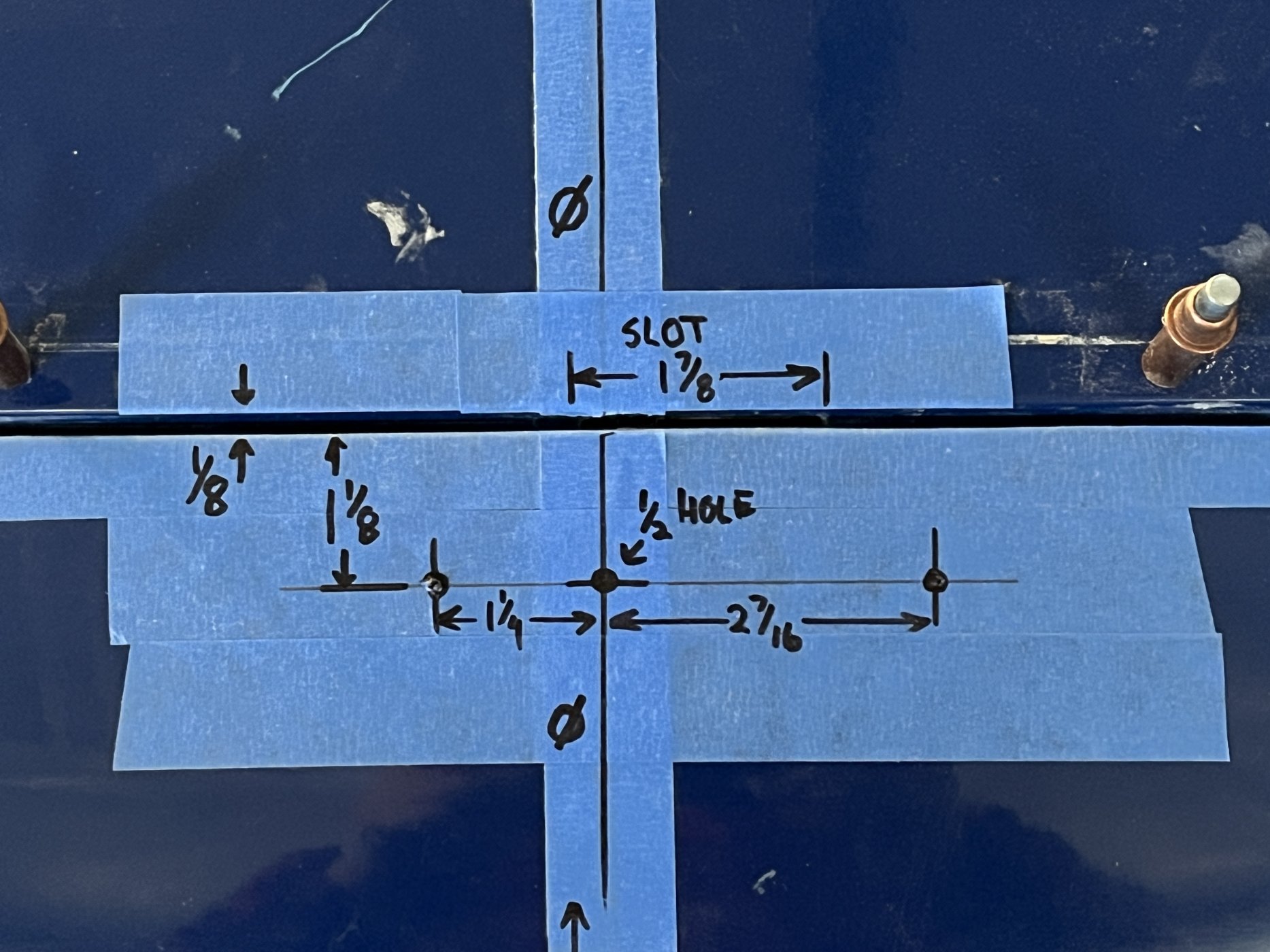
Some prototypes show visible screws securing the latch mechanism, while others do not, as seen in the previously posted pictures. We opted to use a pair of truss-head screws with fiber washers.
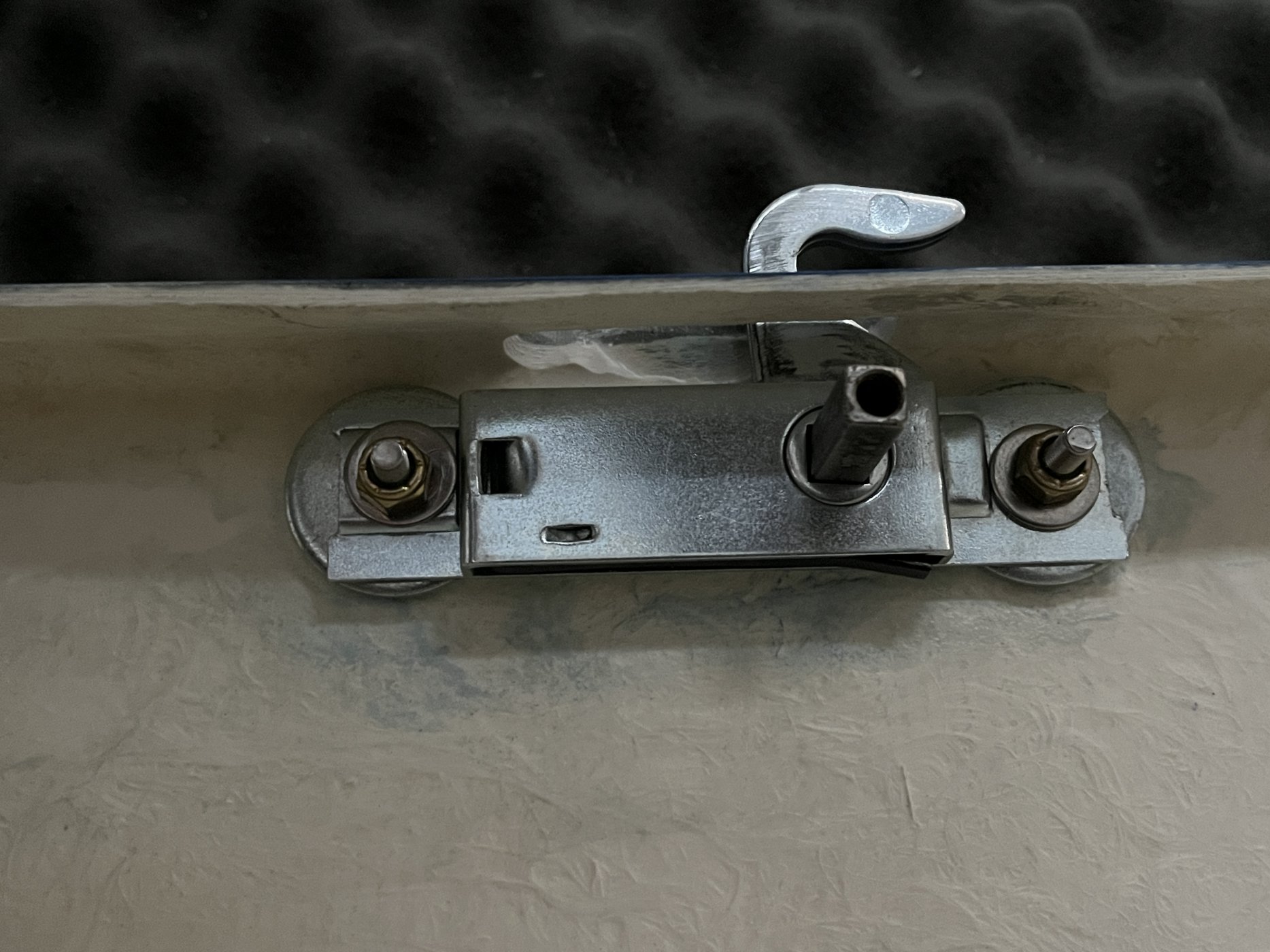
The mechanism is raised from the inner surface with a pair of thick fender washers on each side. The large holes in the mechanism permit some adjustment of the gap. An eighth-inch gap was left between the lid and the body for future placement of weather-sealing material.
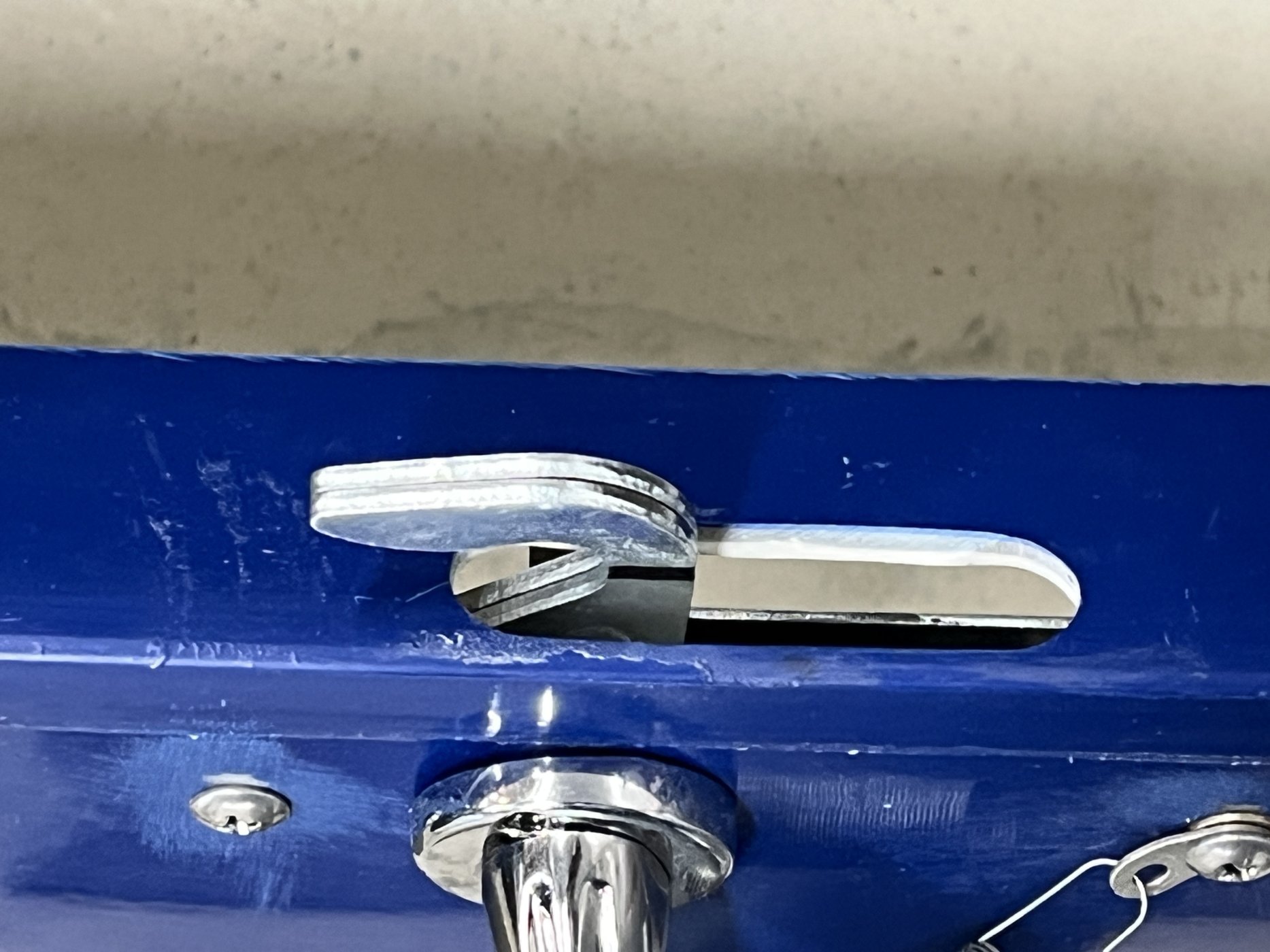
Many of the originals had a spring added to the handle, presumably to ensure it did not inadvertently open, driving down the Mulsanne straight at 160 miles per hour. This was a nice little detail we added using a Weber carb return spring.
The escutcheon fits perfectly and will eventually be held in place with a pair of screws after the body is painted.
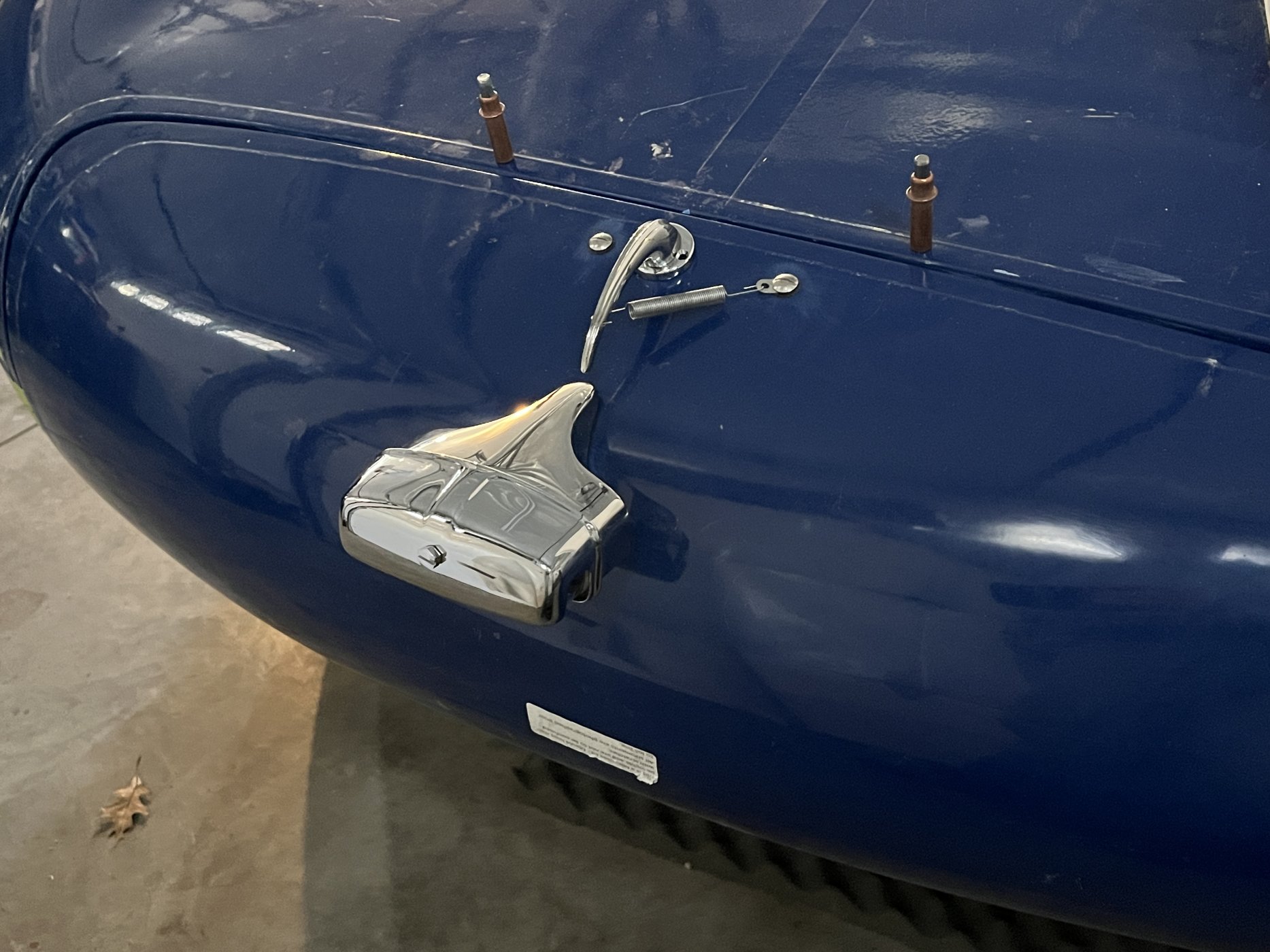
Our goal was to complete the mechanical aspects of this project by year’s end. With the bonnet, rear clip, boot door, side doors, wiring, and drivetrain in place, we did it only eight years after starting this blog! Next on the agenda is the interior fabric (after I learn how to sew), fiberglass work, and paint. Would completion one year from now be too optimistic?
With the receiver in place, the precise location of the latch could be determined.
Some prototypes show visible screws securing the latch mechanism, while others do not, as seen in the previously posted pictures. We opted to use a pair of truss-head screws with fiber washers.
The mechanism is raised from the inner surface with a pair of thick fender washers on each side. The large holes in the mechanism permit some adjustment of the gap. An eighth-inch gap was left between the lid and the body for future placement of weather-sealing material.
Many of the originals had a spring added to the handle, presumably to ensure it did not inadvertently open, driving down the Mulsanne straight at 160 miles per hour. This was a nice little detail we added using a Weber carb return spring.
The escutcheon fits perfectly and will eventually be held in place with a pair of screws after the body is painted.
Our goal was to complete the mechanical aspects of this project by year’s end. With the bonnet, rear clip, boot door, side doors, wiring, and drivetrain in place, we did it only eight years after starting this blog! Next on the agenda is the interior fabric (after I learn how to sew), fiberglass work, and paint. Would completion one year from now be too optimistic?


