
Chuck's Jaguar D Type Build

Chuck

Supporter
Trunk Latch, Part II.

With the receiver in place, the precise location of the latch could be determined.
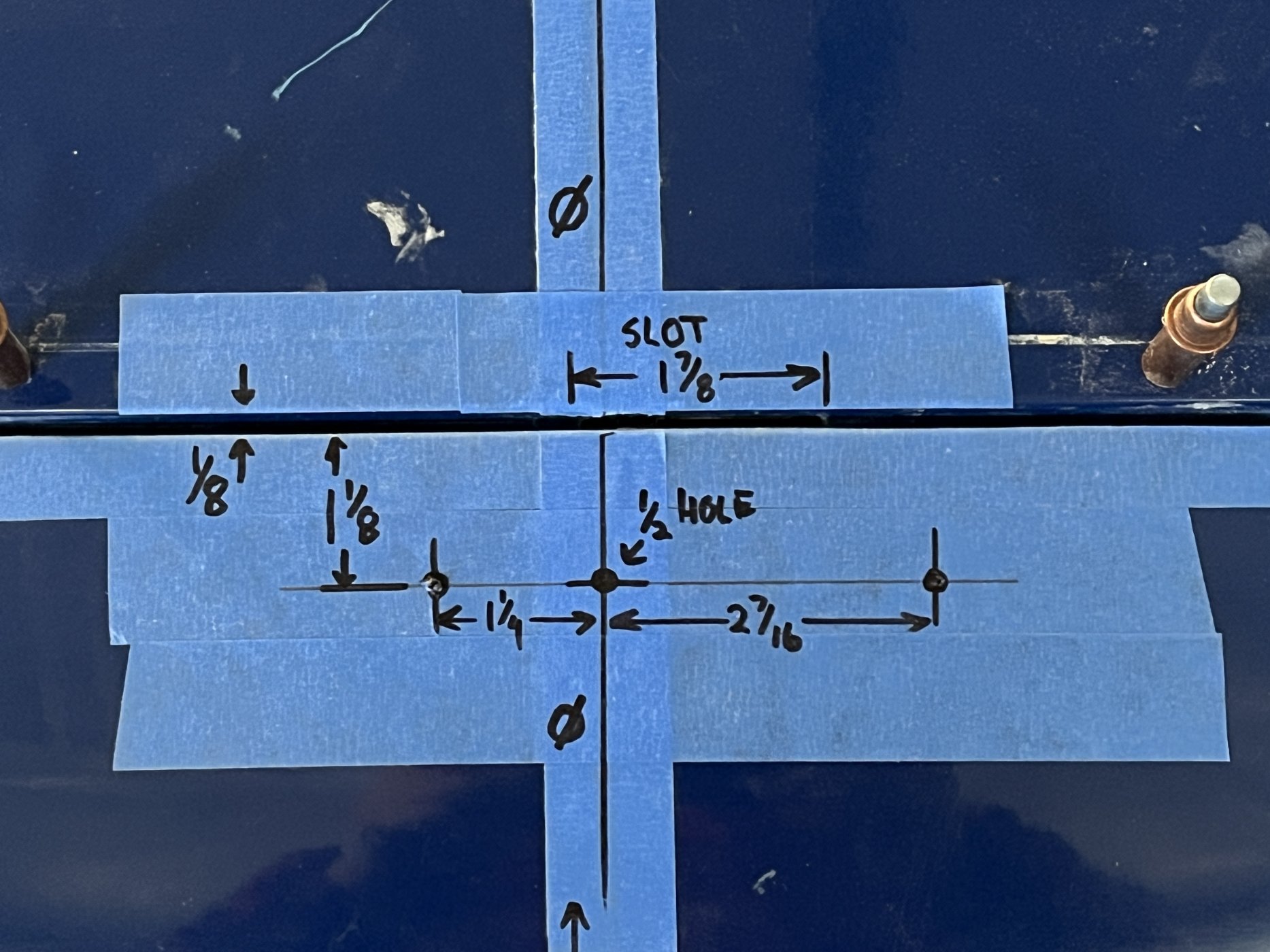
IMG_2445.JPG


Some prototypes show visible screws securing the latch mechanism, while others do not, as seen in the previously posted pictures. We opted to use a pair of truss-head screws with fiber washers.

The mechanism is raised from the inner surface with a pair of thick fender washers on each side. The large holes in the mechanism permit some adjustment of the gap. An eighth-inch gap was left between the lid and the body for future placement of weather-sealing material.
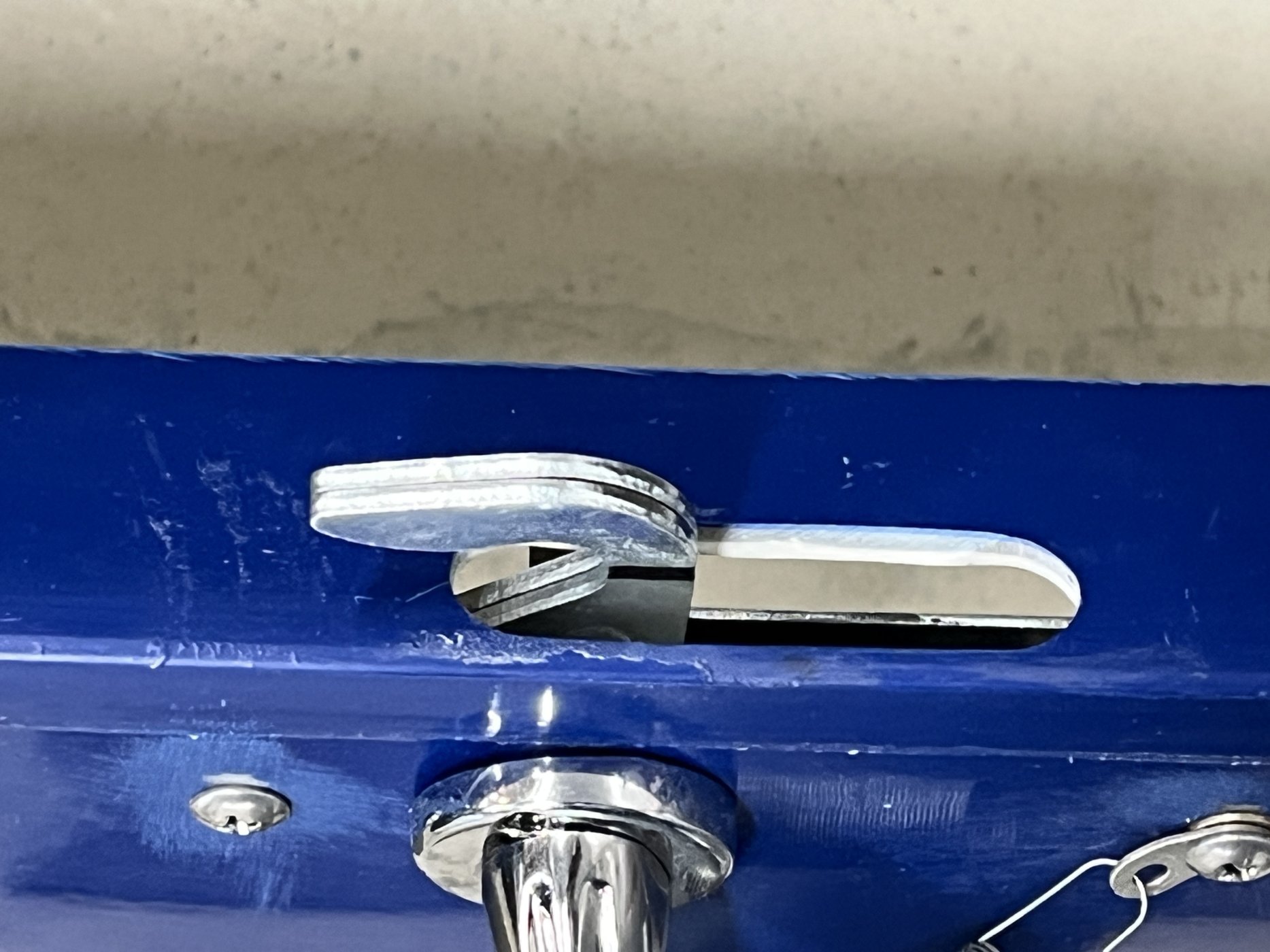
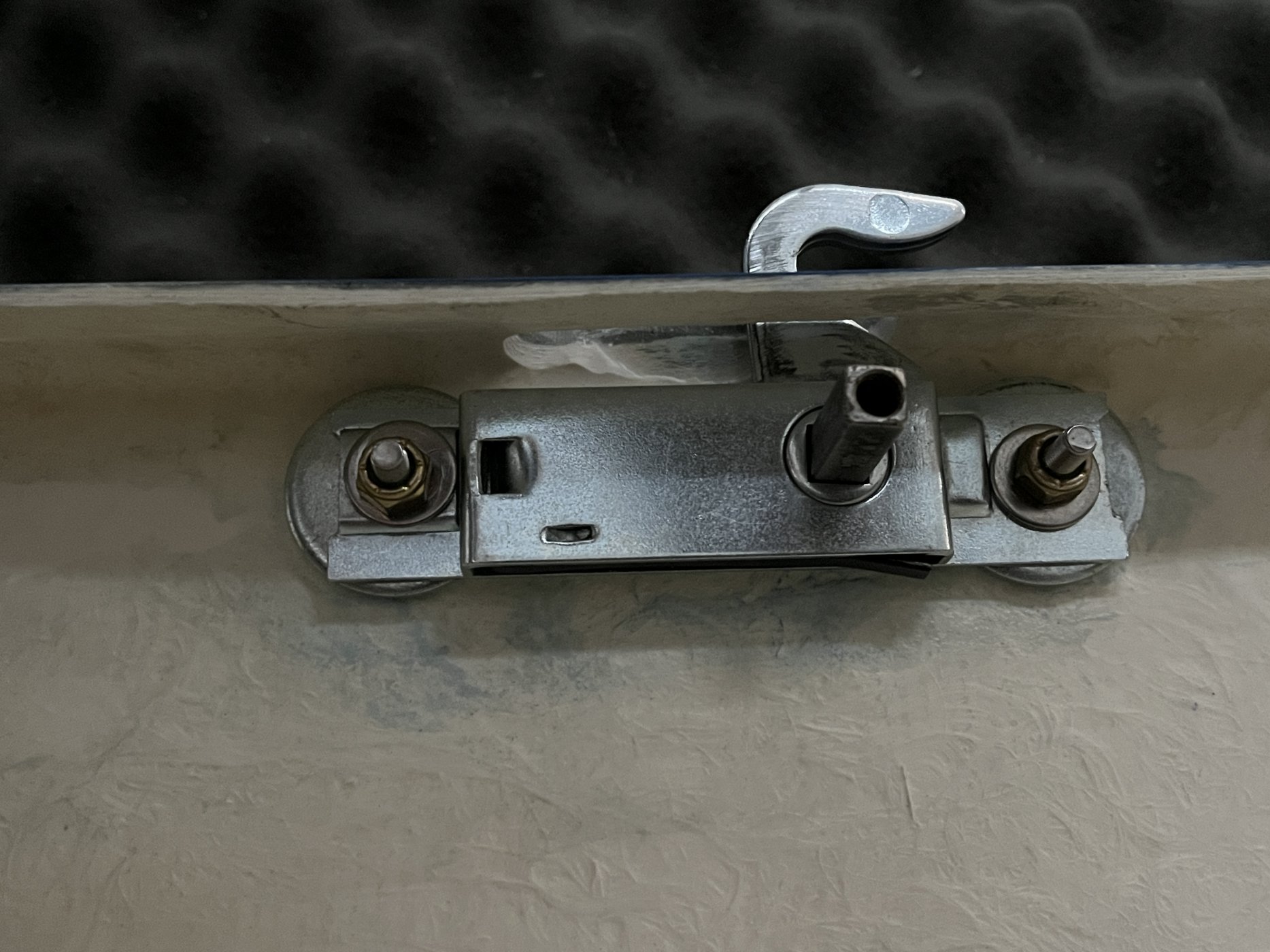
IMG_2471.JPG


IMG_2559.JPG


Many of the originals had a spring added to the handle, presumably to ensure it did not inadvertently open, driving down the Mulsanne straight at 160 miles per hour. This was a nice little detail we added using a Weber carb return spring.

The escutcheon fits perfectly and will eventually be held in place with a pair of screws after the body is painted.
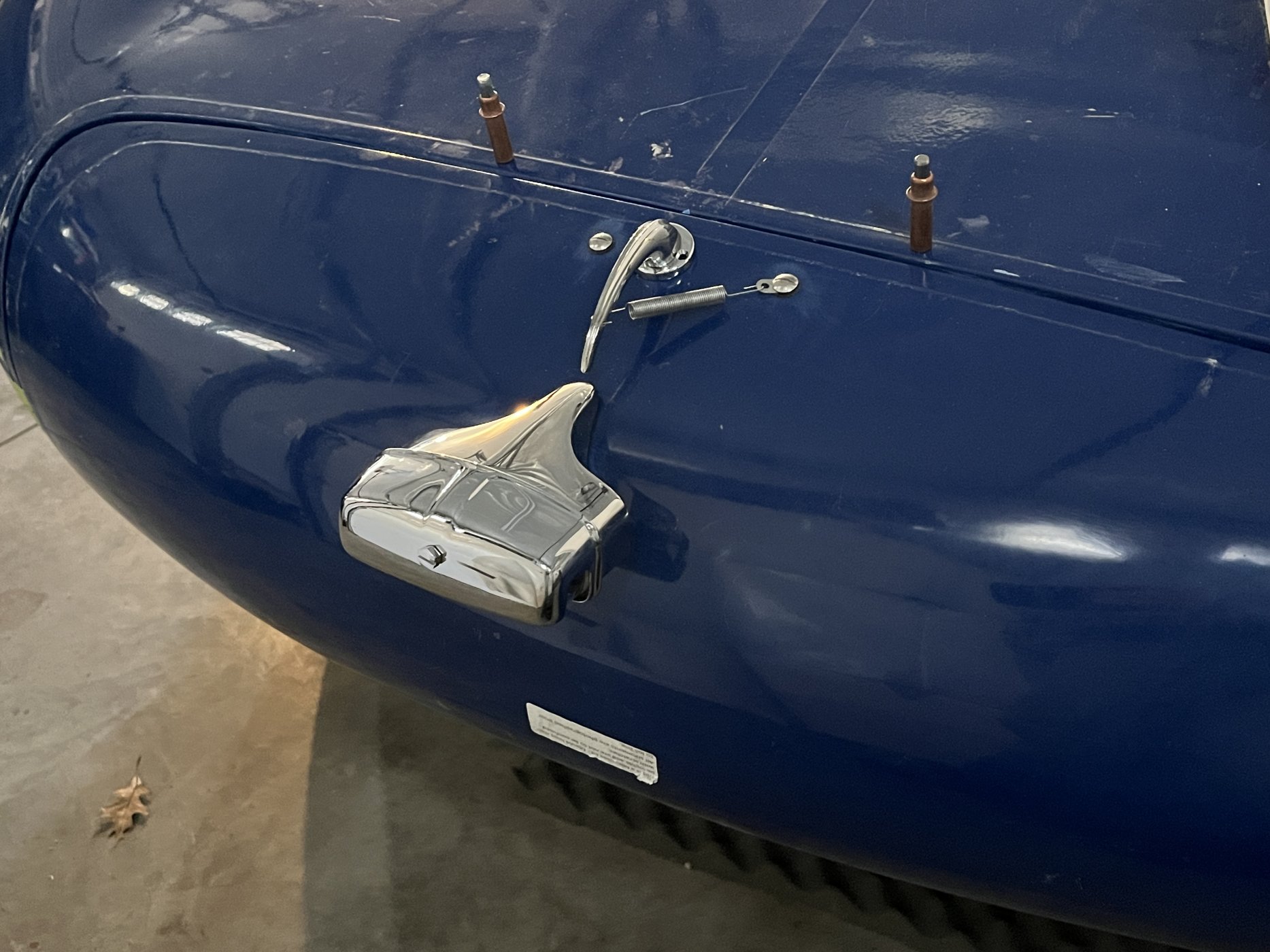
IMG_2557.JPG


Our goal was to complete the mechanical aspects of this project by year’s end. With the bonnet, rear clip, boot door, side doors, wiring, and drivetrain in place, we did it only eight years after starting this blog! Next on the agenda is the interior fabric (after I learn how to sew), fiberglass work, and paint. Would completion one year from now be too optimistic?


Chuck

Supporter
Headlight Lenses, Part I.

The headlight lenses that came with the kit fit poorly. Efforts to adjust them with a heat gun were not successful, so we decided to fabricate a form and mold our own.

A section of heavy posterboard, the same dimensions as the RCR lenses – about an inch oversized around the entire perimeter – was cut and taped in place. This provided the foundation.

Packing tape, which does not adhere to the wet fiberglass to be applied, was placed around the perimeter of the posterboard cutout.

IMG_2534.JPG


High-density foam was sprayed over the posterboard cutout. Once dry, it was carved to the proper shape using first a multi-tool, which worked very well, and then 40-grit sandpaper.

IMG_2536.JPG


Bondo was applied to fill imperfections in the foam, and a thin coat was spread over the entire form. It was sanded until perfectly smooth. A plastic trash bag was placed over the shaped form, pulled very tight to eliminate any wrinkles, and taped in place. This provided the foundation for three layers of fiberglass. Green peel ply was placed over the wet fiberglass and left to dry overnight.

IMG_2548.JPG


IMG_2554.JPG


The fiberglass and the form were removed. The fiberglass was trimmed so that it was approximately 1 inch beyond the opening on all sides. When set in place, it fit perfectly.

IMG_2576.JPG


At this point, we had a starting point for the lens mold.
 

Chuck

Supporter
Headlight Lenses, Part II

The fiberglass molds had some flexibility, so they were placed back onto the posterboard/foam/Bondo forms and secured with hot glue to make the fiberglass more rigid. A layer of white felt was applied to the fiberglass form using 3M 77 spray glue, making it ready for use.

IMG_2606.JPG


IMG_2608.JPG


We gathered the materials needed for the first attempt while my better half was away for a few hours.

IMG_2614.JPG


The plexiglass setting on a parchment paper-covered cookie sheet was heated to 220 degrees. Although it was soft after five minutes, it was not soft enough to shape. We turned up the oven to 230, then 240, and eventually stopped at 290 degrees. Several websites caution that around 350 degrees it starts to produce a flammable gas, so we did not want to take any chances. Obviously, one should never do this in a gas oven.

Finally, pliable enough, it was set on the form. You have less than a minute to complete this task, as the Plexiglass hardens quickly. Although the concept worked, the outcome was not satisfactory. Forcing the material into place over such a large convex surface with only two hands was not working. Back to the drawing boards.

The decision was made to fabricate a female mold so that the acrylic could be sandwiched to the proper shape evenly. Three layers of fiberglass were used. This produced better results, but the female mold flexed too much for a good result. Another trip back to the drawing boards.

We decided to add a couple more layers of glass, which significantly improved its rigidity. By now, this project has been in the works for several weeks. But we finally had a set of molds that we hope will work.

IMG_2749.JPG
 
May I ask what was not satisfactory with the first attempt?
My protective lenses where made with the same method but using an aluminium sheet instead for the pc to form on.
Heated it the oven the same way you did
 
Chuck, you made the most difficult part of the job, may I suggest a complementary technic. With the initial shape you made, you may try to make a femal mold with plaster. It shall be relatively thick to be manipulate without problem, you may reinforce it with small plywood pieces. Then you just smooth the surfce, it is easy because soft. The mold shall be perfectly dry, then you put the mold in the oven with the plexiglass or better the polycarbonate (Lexan) foil on top. I do not not if the oven shall be already in temperature or if you have to stract from cold. You just wait and the plastic foil will go down gently in the mold shape in a few minutes.
 

Randy Folsom

Supporter
Chuck, you made the most difficult part of the job, may I suggest a complementary technic. With the initial shape you made, you may try to make a femal mold with plaster. It shall be relatively thick to be manipulate without problem, you may reinforce it with small plywood pieces. Then you just smooth the surfce, it is easy because soft. The mold shall be perfectly dry, then you put the mold in the oven with the plexiglass or better the polycarbonate (Lexan) foil on top. I do not not if the oven shall be already in temperature or if you have to stract from cold. You just wait and the plastic foil will go down gently in the mold shape in a few minutes.
Thx for sharing. Looking forward to trying your plaster mold technique to make replacement side windows and light covers for my RCR GT40. I want to make tinted versions.
 

Chuck

Supporter
May I ask what was not satisfactory with the first attempt?
My protective lenses where made with the same method but using an aluminium sheet instead for the pc to form on.
Heated it the oven the same way you did
The problem on the first attempt was shaping the plexiglass over a convex surface. With just the male mold, I could not shape it fast enough and keep it in contact with the mold. Next, I tried using clips on the glass edges against the mold, which left imprints. Since there was a one-inch lip, this marginally worked, and the imprints could be cut away. Once cut out, the lenses were usable but still had slight imperfections. That is when I decided to make the female mold.

If the plexi were simply being folded this would have been much easier.
 

Chuck

Supporter
Chuck, you made the most difficult part of the job, may I suggest a complementary technic. With the initial shape you made, you may try to make a femal mold with plaster. It shall be relatively thick to be manipulate without problem, you may reinforce it with small plywood pieces. Then you just smooth the surfce, it is easy because soft. The mold shall be perfectly dry, then you put the mold in the oven with the plexiglass or better the polycarbonate (Lexan) foil on top. I do not not if the oven shall be already in temperature or if you have to stract from cold. You just wait and the plastic foil will go down gently in the mold shape in a few minutes.
Had not considered using plaster. Can it handle temperatures up to 350 degrees F, 175 C, without cracking? If so, the male fiberglass mold could be used to make a plaster mold. Setting it in the oven and watching it take on the proper shape would simplify the process. Good idea!
 
Had not considered using plaster. Can it handle temperatures up to 350 degrees F, 175 C, without cracking? If so, the male fiberglass mold could be used to make a plaster mold. Setting it in the oven and watching it take on the proper shape would simplify the process. Good idea!
I'm a DIY person myself, but after struggling to make good headlight fairings on my Ferrari 250 GTO recreation, I found a guy who specializes in this part. I just sent him my molds (made from shaped aluminum sheet) and he used them to make perfect covers at a reasonable price.

Mark Clapp
816-286-6982 [email protected]

I thought this information might be helpful to others.
 

Brian Kissel

Staff member
Admin
Lifetime Supporter
Thanks Joel. Mark was active on the forum years ago. I haven’t seen him signed in for sometime . Doesn’t mean he doesn’t visit, he just hasn’t signed on recently. Hd does make a nice product for sure.


Regards Brian
 

Doug M

Supporter
Chuck, revisiting a previous post of yours… thought I’d put it here for other builders too vs an email. In regard to securing the fuel filler cover, looks like that red D Type on Instagram uses both a clip and magnets… though I’m not sure how often that method was used. Also, found a stainless steel clip on McMaster Carr that could be modified to do the job. I may try that route.

Also, an RCR D Type was found on another instagram account. Looks like they cut and bent some aluminum to make a custom clip.


IMG_4370.jpeg
IMG_4418.jpeg
IMG_4419.gif
IMG_4420.jpeg
 

Chuck

Supporter
Thanks, did some additional Research.... Says Buna-n is not good for use in direct sunlight.
Blas
My mistake. I went to the shop and retrieved the material used on the GT40 a decade ago. It is Neoprene, not buna. Here is a link to a similar product:


It is available from multiple sources. It has held up well over the past decade. I am sure it is referenced on my GT40 build blog, where I think I mentioned applying a silicone-based Armor All to the top surface after the Neoprene is installed to prevent it from sticking to the back of the acrylic lens when it is removed.

IMG_2807.JPG
 
Last edited:

Chuck

Supporter
Chuck, revisiting a previous post of yours… thought I’d put it here for other builders too vs an email. In regard to securing the fuel filler cover, looks like that red D Type on Instagram uses both a clip and magnets… though I’m not sure how often that method was used. Also, found a stainless steel clip on McMaster Carr that could be modified to do the job. I may try that route.

Also, an RCR D Type was found on another instagram account. Looks like they cut and bent some aluminum to make a custom clip.


View attachment 151867View attachment 151868View attachment 151869View attachment 151870
Wonder if those are rubber stops rather than magnets on the red car?

That clip looks interesting. We know it is spring steel. Perhaps it could be cut in half and one leg used in a setup similar to the original?
 
Last edited:

Doug M

Supporter
Wonder if those are rubber stops rather than magnets on the red car?

That clip looks interesting. We know it is spring steel. Perhaps it could be cut in half and one leg used in a setup similar to the original?
Now that you said it, it probably is just rubber stops. Makes more sense.
 

Chuck

Supporter
Ok, I wrote and asked the Red D Type owner… definitely rubber stops.
I ordered some material from McMaster to see if we could fabricate a latch that matches the original. It is a simple thing if we can find a satisfactory springy material.

LatchFuelDoor.JPG

Once the headlight lenses are finished may start on this latch project. Will keep you posted.
 
Back
Top