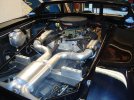
Classic HorsePower Scratch GT40

Devin

Supporter
How did the dash fit that I sold you?
David, as with everything…I made it fit! It took a bit of trimming as I wanted to expose the lower structure of the dash support metalwork replicating the original race cars. I couldn’t have gotten this far without the parts I got from you and this forum!
IMG_1517.jpeg
 

Devin

Supporter
Started wet sanding the rear clam today. I knew this was a curvy dame but once you start having to sand every inch, you realize that there isn’t very many flat areas to use a sanding board on.

IMG_1526.jpeg
 

Devin

Supporter
This weekend’s work was on the rear clam latch pockets as well as placing the front & rear clam bumpers to set the clam height and lower panel gaps. Next I’ll mix a batch of epoxy resin & colloidal powder for fastening the backing plate to the pocket opening.
IMG_1589.jpeg

IMG_1590.jpeg

IMG_1591.jpeg
 

Mark H.

Supporter
I thought it looked familiar. I have a V-8 Lotus Europa project with a G86 transaxle and used the stock shifter box and cables too, but upgraded with a shorter throw shifter kit which was a big improvement. Just a comment.
 

Attachments

  • DSC00236.JPG
    DSC00236.JPG
    733.1 KB · Views: 53

Devin

Supporter
Hi Devin what latch are you using?
Replica Hartwell…if I would have know they weren’t adjustable like actual Hartwells, I would have gone with another choice. They look ok but the quality isn’t what I expected for what I paid. PM me if you want more details.
 

Devin

Supporter
Latch mock-up after epoxy resin dried. Some sanding and fiber filler around the backside should finish these pockets up nicely. Believe I will wait until final paint to drill and mount the upper latch in place.
IMG_1593.jpeg
 

Devin

Supporter
Quick evening project…conversion/upgraded short throw shifter from the stock plastic Porsche stick shifter. Spent too much time trying to gently convince the old plastic retainer/bearings to come out last night…went with the more expedient YouTube way of cutting the plastic retainer clips and quickly liberating the shifter. After a quick trial fit and small modification to the recommended installation and lubing all friction points, it installed in minutes and works great. The feel is so much more precise and will look better through the future bespoke open shift gate (to replicate the original types).
IMG_1643.jpeg
 
Last edited:

Devin

Supporter
Finished up my rear clam hinge and limit cables. Due to my “easy to remove” hinge pivot design, I needed to make a quick latch to keep the rear pivot support bar from inadvertently slipping out of the hinge beak when opening it to the vertical position. I wanted to keep with my aviation/racing heritage, so I utilized a pair of quick release safety pins to lock the latch into position. Once over center, I installed a pair of limit cables (12”) that are tethered to the clamshell rear tail support fiberglass structure. It worked out great to keep the clam nearly full vertical but yet keep the tail a good distance from any potential curb or parking spot concrete barrier (~5” clearance).
IMG_1653.jpeg

IMG_1669.jpeg

IMG_1670.jpeg
 

Devin

Supporter
I’m thinking about using a prop rod like Ford used on my late Mustang hoods, instead of cables. I’m a little concerned about a gust of wind blowing it shut.
Yea was thinking that I would carry an adjustable/folding prop just for shows and extended times it would be open. Mine is fairly heavy once over center so needed a positive heavy duty stop for any time I open it.
 

Devin

Supporter
Sunday funday resulted in rear clam to spider gap work. After beveling the clam areas that were too wide of a gap, I back taped the wide gap areas with aluminum tape between the spider and clam for a backing reinforcement for the filler. For the filler I used a high recommendation product that has Kevlar reinforced strands in the filler which makes the edge very durable and resistant to damages, even more so than the fiberglass itself. I will add an additional application on the underside once the clam is removed again. This product is best shaped and easiest to work with in the first couple of hours of application otherwise it becomes as hard as the epoxy resin and difficult to shape. A final session of a small amount of lightweight filler will be needed to smooth out the transition and level the areas on either side of these panels.

IMG_1713.jpeg
 
I’m in the same boat with my clam gaps…good in some spots, but needing to be widened or thinned in others. Why go this route, rather that slicing and moving the edge?
 

Devin

Supporter
Joe, I could have done that as well but saw this method done on another online project and the clam edge was already a little irregular shaped (not a consistent gap nor cut) and was easy to get the backing tape into position. I also need to extend the bottom of the doors about 1/8” to close those gaps and bought enough of the Kevlar filler to do more than the doors for such a small gap adjustment. BTW this filler is not cheap (compared to fiberglass strand) so guess i could have save the money and continued to cut and adjust with the epoxy & mat method. Overall I believe this filler probably saves more time in the end without having to worry about shrinkage, additional bodywork or leveling that entire area of a cut.

 
Back
Top